
Loading, please wait...
LOT 0216
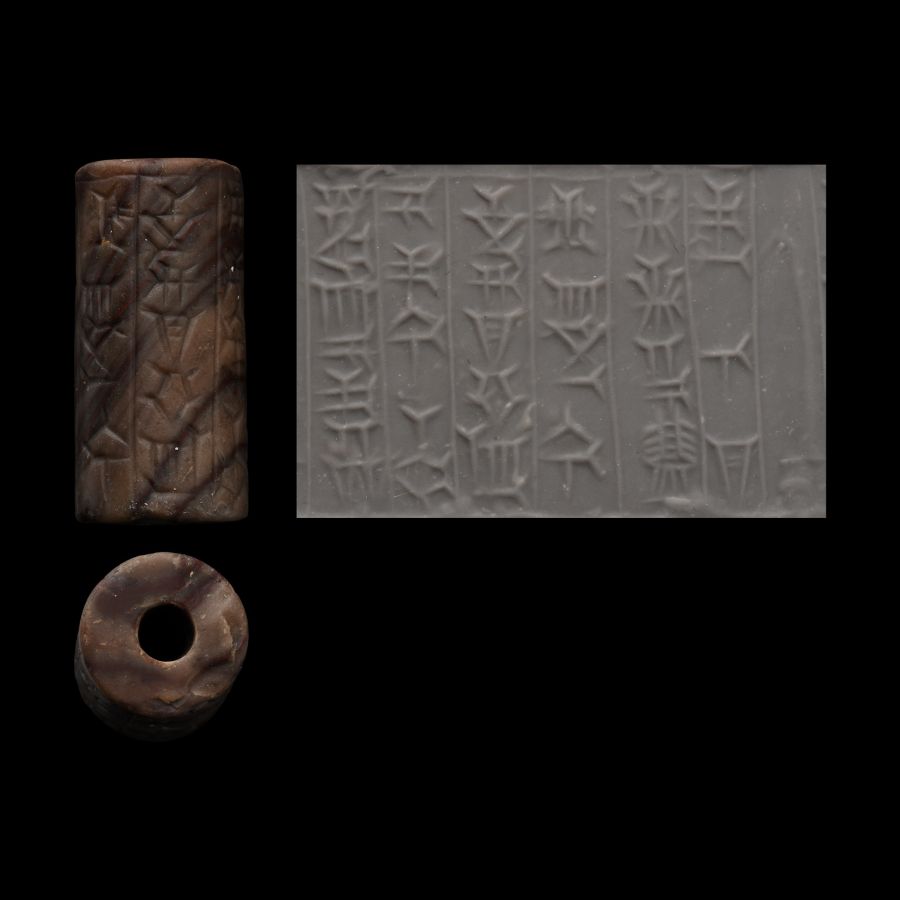
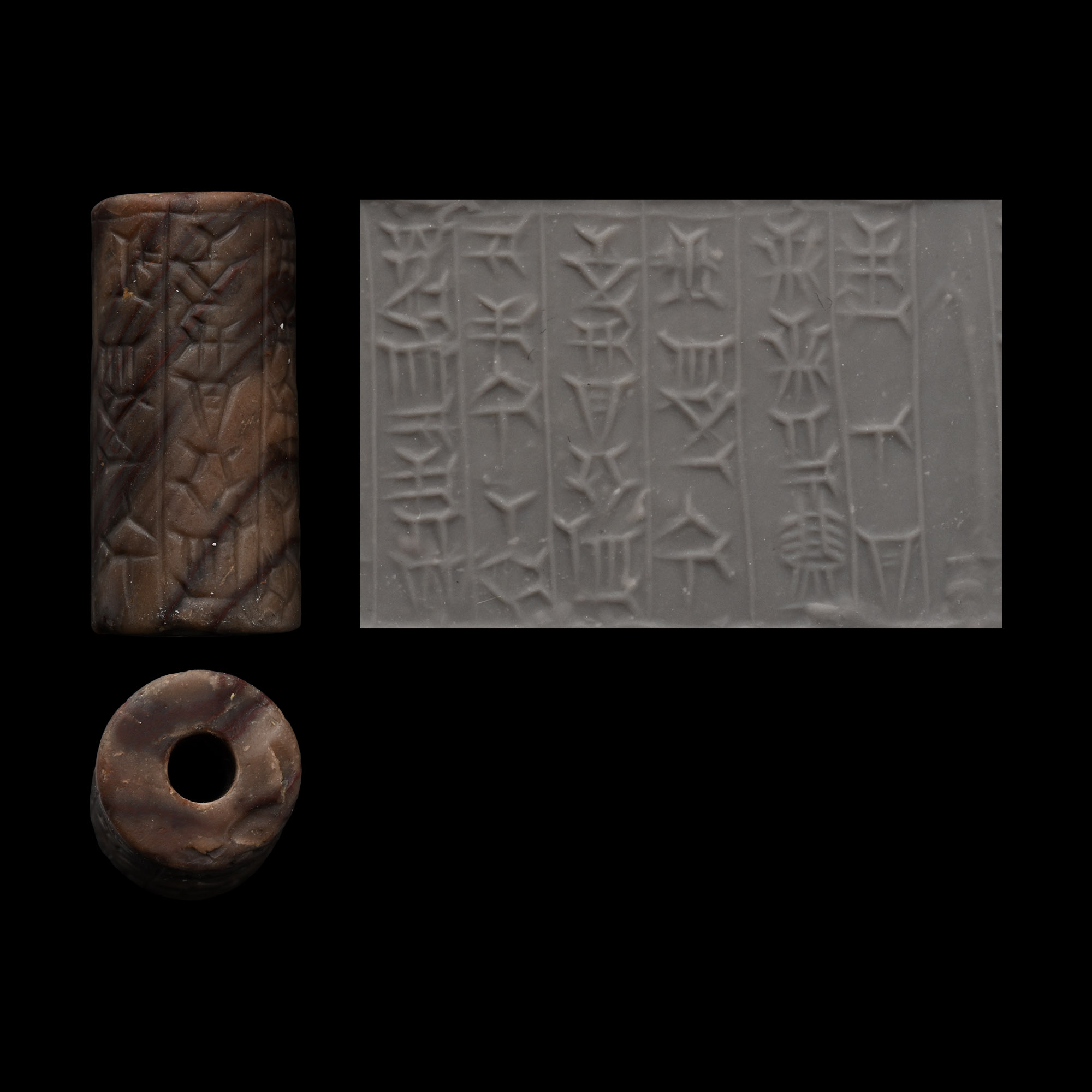
Kassite Stone Cylinder Seal with 'Merciful is An-Amurru, Giver of Health' Inscription
CIRCA 1530-1200 B.C.
1 in. (7.91 grams, 26 mm).
With six columns of cuneiform inscription, reading 'Merciful is An-Amurru, giver of health -- his reverent servant, Ahushina, son of Itti-Ea-...'; accompanied by a museum-quality impression.
ProvenanceFrom the collection of the late S, London, UK, 1970-2000.
Examined by Professor Wilfrid George Lambert FBA (1926-2011), historian, archaeologist, and specialist in Assyriology and Near Eastern archaeology, in the 1990s.
This lot has been cleared against the Art Loss Register database, and is accompanied by an illustrated lot declaration signed by the Head of the Antiquities Department, Dr Raffaele D'Amato.
TimeLine Auctions follows a vetting process to ensure the authenticity and legality of all items, reinforcing our commitment to integrity and responsible trading. Each antiquity, antique, and coin lot undergoes thorough examination by a vetting committee of at least ten external specialists, professional trade association members, scientists, and archaeologists: Our Vetting Process
AUCTIONS:
TimeLine is a leading auction house specialising in antiquities, ancient art, collectables, natural history, coins, medals, and books. Our auctions offer museums, collectors, historians, and enthusiasts the opportunity to acquire unique and historically significant pieces.
LOT 0216
Kassite Stone Cylinder Seal with 'Merciful is An-Amurru, Giver of Health' Inscription
Sold for (Inc. bp): £1,430
-
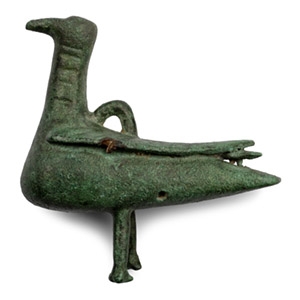
Large Amlash Bronze Bird Pendant
Circa 1200-1000 B.C.Estimate: £500 - 700 (+bp*)
Opening Bid: £250
Modelled in the round with loop to the shoulder, heart-shaped wings, hatched detailing. 208 grams, 82 mm
Private collection of Mr K.A., acquired in the 1990s-early 2000s. This lot has been cleared against the Art Loss Register database, and is accompanied by an illustrated lot declaration signed by the Head of the Antiquities Department, Dr Raffaele D'Amato. -
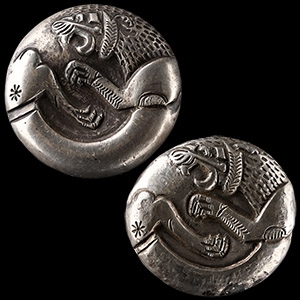
Neo-Elamite Silver Repousse Finial Pair
6th century B.C.Estimate: £6,000 - 8,000 (+bp*)
Opening Bid: £3,000
Each bell-shaped in profile with broad socket; underside with savage beast in profile, coiled to fit the tondo, with high-relief claws and head. 184 grams total, 49-51 mm
Private collection of a London gentleman, acquired between 1965-2020. Accompanied by an academic report by Dr Raffaele D'Amato. This lot has been checked against the Interpol Database of stolen works of art and is accompanied by search certificate number no.12781-239316. This lot has been cleared against the Art Loss Register database, and is accompanied by an illustrated lot declaration signed by the Head of the Antiquities Department, Dr Raffaele D'Amato.
These intricate lion head appliqués offer a glimpse into the ancient artistry and symbolism of Khuzistan (Susiana). They are embodying the cultural reverence for lions as symbols of power and protection. These omphaloi could have been used as furniture decoration or on top of a religious staff or sceptre. The lion heads are common in Neo-Elamite art. The heads of our lions find good parallels with a gold bracelet with lion-head terminals from the Jubaji tomb (Wicks, pl.8). -

Western Asiatic Bronze Blade
2nd-1st millennium B.C.Sold for (Inc. bp): £286
With a short tang and long blade with swept shoulders, raised midrib. 454 grams, 52.2 cm
Acquired 1980-2015. Ex Abelita family collection. This lot has been cleared against the Art Loss Register database, and is accompanied by an illustrated lot declaration signed by the Head of the Antiquities Department, Dr Raffaele D'Amato.
In the last ninety years, many such tanged blades have been considered coming from production centres of North-West Iran, like Amlash and Marlik, where similar specimens were found. Without context an accurate dating is impossible, but the shape recalls the rapiers of Bronze Age or Early Iron Age.
