
Loading, please wait...
LOT 1296
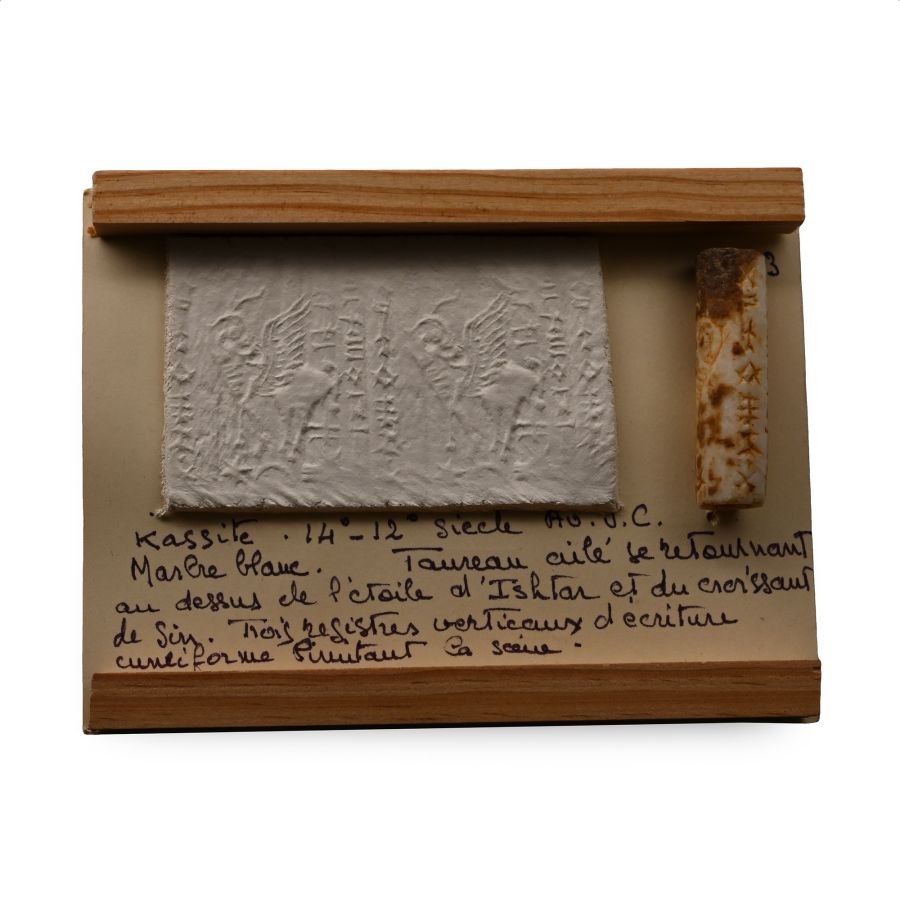
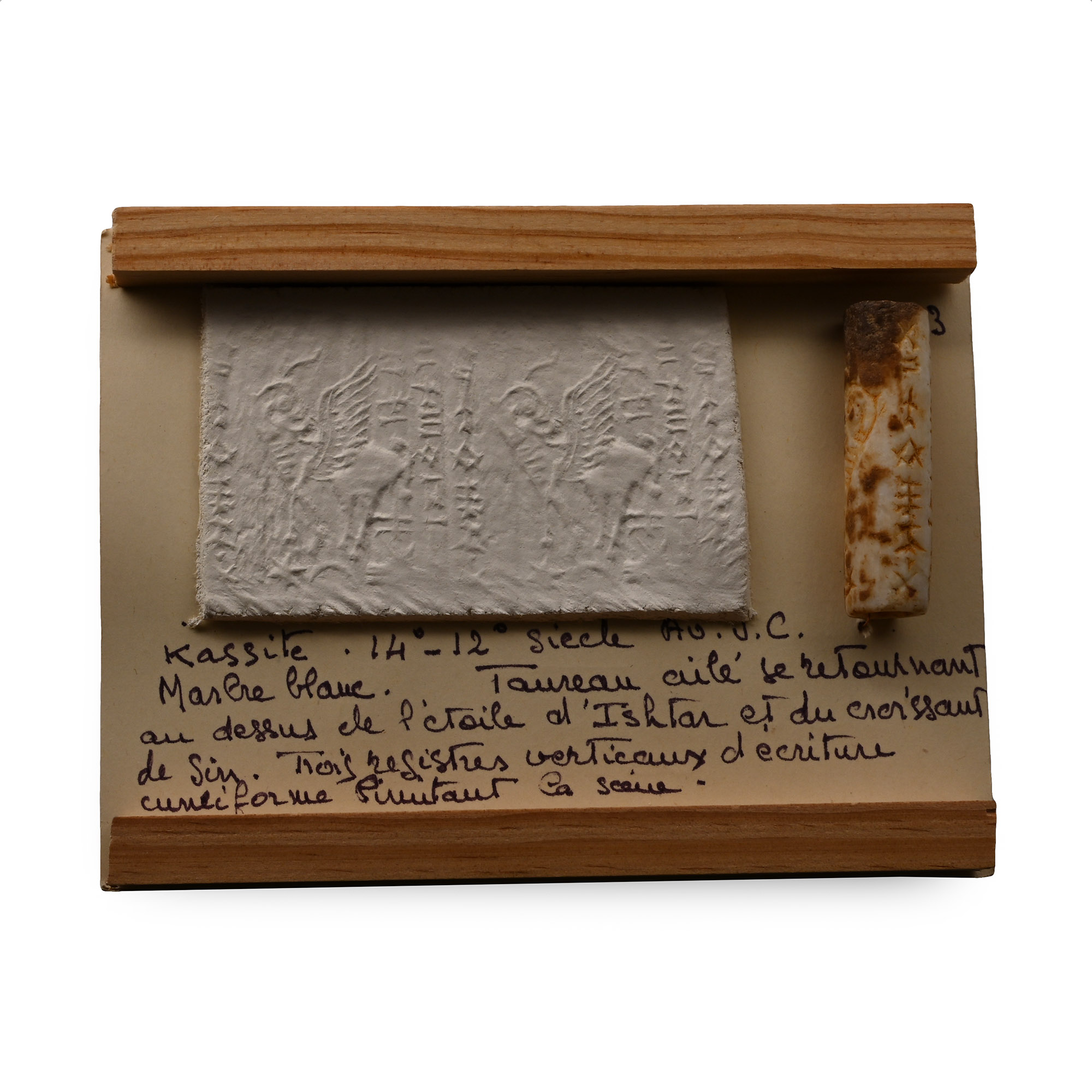
Kassite Mottled Stone Cylinder Seal with Inscription
14TH-12TH CENTURY B.C.
4 3/4 x 3 1/2 in. (36 grams total, 12.1 x 9.1 cm).
With frieze depicting a winged ram beneath the 'star of Ishtar' with four columns of cuneiform text; mounted on a reinforced card with impression and collector's handwritten notes. [No Reserve]
ProvenanceAntonovitch Gallery, Paris, 1978.
Chesnes Gallery, Lyon, 1982.
Acquired at Drouot, Paris, 2022.
Private collection, London.
This lot has been cleared against the Art Loss Register database, and is accompanied by an illustrated lot declaration signed by the Head of the Antiquities Department, Dr Raffaele D'Amato.
TimeLine Auctions follows a vetting process to ensure the authenticity and legality of all items, reinforcing our commitment to integrity and responsible trading. Each antiquity, antique, and coin lot undergoes thorough examination by a vetting committee of at least ten external specialists, professional trade association members, scientists, and archaeologists: Our Vetting Process
AUCTIONS:
TimeLine is a leading auction house specialising in antiquities, ancient art, collectables, natural history, coins, medals, and books. Our auctions offer museums, collectors, historians, and enthusiasts the opportunity to acquire unique and historically significant pieces.
-
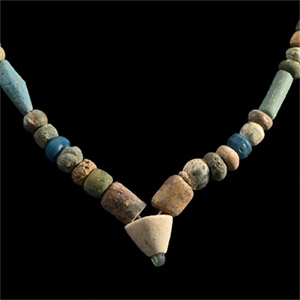
Achaemenid Light Blue Glass and Ceramic Bead Necklace String
6th-4th century B.C. and laterSold for (Inc. bp): £72
Composed of graduated mixed beads, central feature a large conical bead; restrung. 25.5 grams, 39.7 cm
From the London, UK, art market in the 1990s. This lot has been cleared against the Art Loss Register database, and is accompanied by an illustrated lot declaration signed by the Head of the Antiquities Department, Dr Raffaele D'Amato. -
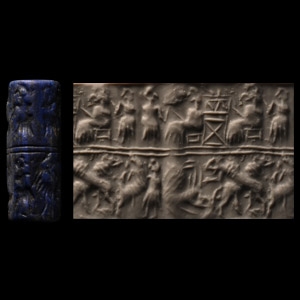
Sumerian Lapis Lazuli Cylinder Seal with Gods and Attendant
Early Dynastic III, 2600-2340 B.C.Sold for (Inc. bp): £1,105
With two sections, upper section with two seated figures and two attendants, lower section with standing figure among animals; supplied with a museum-quality impression. 12.4 grams, 33 mm
From the collection of the late S, London, UK, 1970-2000. Examined by Professor Wilfrid George Lambert FBA (1926-2011), historian, archaeologist, and specialist in Assyriology and Near Eastern archaeology, in the 1990s. This lot has been cleared against the Art Loss Register database, and is accompanied by an illustrated lot declaration signed by the Head of the Antiquities Department, Dr Raffaele D'Amato. -
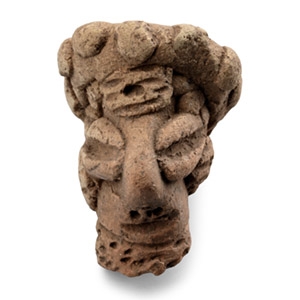
Hittite Ceramic Idol Head
2nd millennium B.C.Sold for (Inc. bp): £52
Head with applied headdress, eyes and earrings, pointillé nostrils and collar. 11 grams, 30 mm
Fine condition.
Ex an important Dutch collection; acquired on the European art market in the 1970s. From the private collection of John Meredith, acquired since the 1990s; thence by descent. This lot has been cleared against the Art Loss Register database, and is accompanied by an illustrated lot declaration signed by the Head of the Antiquities Department, Dr Raffaele D'Amato.
