
Loading, please wait...
_900x900.jpg "Kashmir Terracotta Head of a Bodhisattva")
_200x200.jpg "Kashmir Terracotta Head of a Bodhisattva")
_900x900.jpg "Kashmir Terracotta Head of a Bodhisattva")
_200x200.jpg "Kashmir Terracotta Head of a Bodhisattva")
_900x900.jpg "Kashmir Terracotta Head of a Bodhisattva")
_200x200.jpg "Kashmir Terracotta Head of a Bodhisattva")
.jpg "Kashmir Terracotta Head of a Bodhisattva")
.jpg "Kashmir Terracotta Head of a Bodhisattva")
.jpg "Kashmir Terracotta Head of a Bodhisattva")
LOT 0311
Kashmir Terracotta Head of a Bodhisattva
HUND REGION, 6TH-7TH CENTURY A.D.
16 3/4 in. (5.76 kg total, 42.5 cm high including stand).
Modelled in the round with heavily-lidded eyes, aquiline nose, thin-lipped mouth; band of conch shells to the brow hanging from a brow-band with segmented bulb above supporting a radiating plaque and sphere, flanked by two rosette collars each supporting a skull; mounted on a custom-made stand. [No Reserve]
ProvenanceAmerican collection, probably from the 1990s.
Private collection, London.
Accompanied by a thermoluminescence analysis report by Oxford Authentication.
This lot has been checked against the Interpol Database of stolen works of art and is accompanied by search certificate number no.13252-253040.
For contemporary portraits of Bodhisattva (6th-7th centuries A.D.) cf. Shah M.A., ‘Revisiting the chronology of the early sculptural art of Kahsmir, India’ in Archaeology Ethnology and Anthropology of Eurasia,42 (3) 2014, pp.80-86, figs.1,6.
FootnotesMany terracotta fingers, toes and hair curls from such statues have been found at sites in Kashmir, like Harwana. Such terracotta objects depict the influences of Gandharan art in the Kashmir valley. The terracotta objects found at the sites depict the strong influences of the Gandhara school of art in the Kashmir valley. The bodily limbs of Lord Buddha and bodhisattva in terracotta and their art, besides the isolated plague represent the replica of the miniature stupa.
CONDITIONTimeLine Auctions follows a vetting process to ensure the authenticity and legality of all items, reinforcing our commitment to integrity and responsible trading. Each antiquity, antique, and coin lot undergoes thorough examination by a vetting committee of at least ten external specialists, professional trade association members, scientists, and archaeologists: Our Vetting Process
AUCTIONS:
TimeLine is a leading auction house specialising in antiquities, ancient art, collectables, natural history, coins, medals, and books. Our auctions offer museums, collectors, historians, and enthusiasts the opportunity to acquire unique and historically significant pieces.
LOT 0311
Kashmir Terracotta Head of a Bodhisattva
Estimate £8,000 - 10,000€9,280 - 11,600 (for guidance only)$10,800 - 13,500 (for guidance only)
-
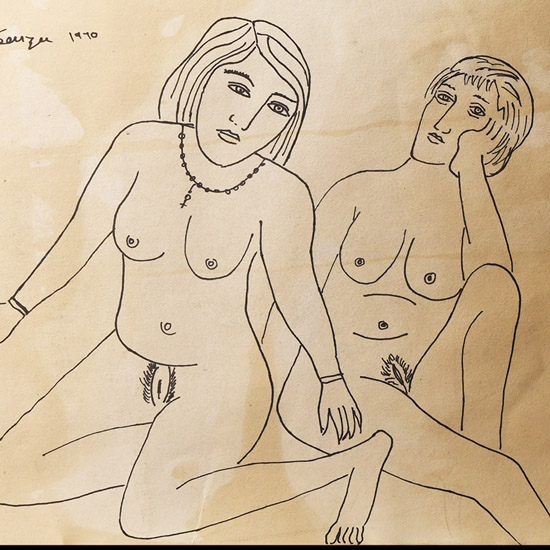
Indian Erotic Sketch Attributed to F.N. Souza
Dated 1970 A.D. or laterSold for (Inc. bp): £442
A framed, untitled erotic sketch portraying two nude women; ink on paper; attributed to F.N. Souza, dated 1970. 92 grams, 51 x 39 cm
Fine condition.
Personal collection of Harmadar Singh Thind; thence by descent. Ex private family collection of a West London gentleman.
Francis Newton Souza (1924-2002) was an Indian-American British artist, born in Goa, India. He went on to become one of India's most influential modern artists. Souza was a founding member of the Progressive Artists' Group, which largely disbanded after he moved to London in 1949. His work is executed in a style which exhibits both decadence and primitivism. The world record at auction for the artist's iconic works stands at $4,085,000. -
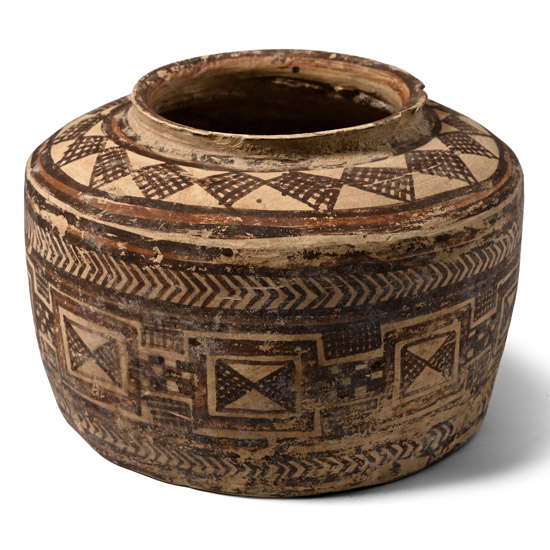
Indus Valley Decorated Terracotta Jar
3rd-2nd millennium B.C.Estimate: £500 - 700 (+bp*)
Opening Bid: £250
Drum-shaped in profile with broad shoulder and mouth, flared rim; concentric painted bands to the shoulder and sidewall, with hatched and geometric detailing. 324 grams, 11.8 cm wide
Ex London, UK, gallery, 1971-early 2000s. London, UK, collection. -
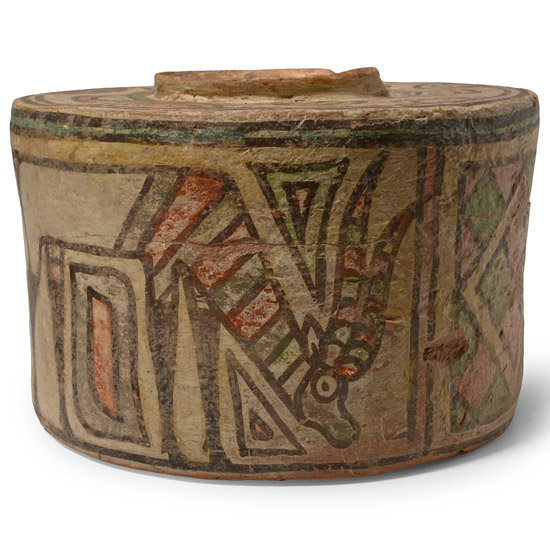
Indus Valley Painted Terracotta Vessel
3rd millennium B.C.Estimate: £300 - 400 (+bp*)
Opening Bid: £135
Drum-shaped vessel with a small mouth, the body with a standing lion and a grazing gazelle with panels of geometric decorations in between, the upper face with concentric circles and hemicircles. 933 grams, 16 cm
From a collection acquired on the UK art market from various auction houses and collections mostly before 2000. From an important Cambridgeshire estate; thence by descent. Private collection, London, UK.
