
Loading, please wait...
LOT 1719
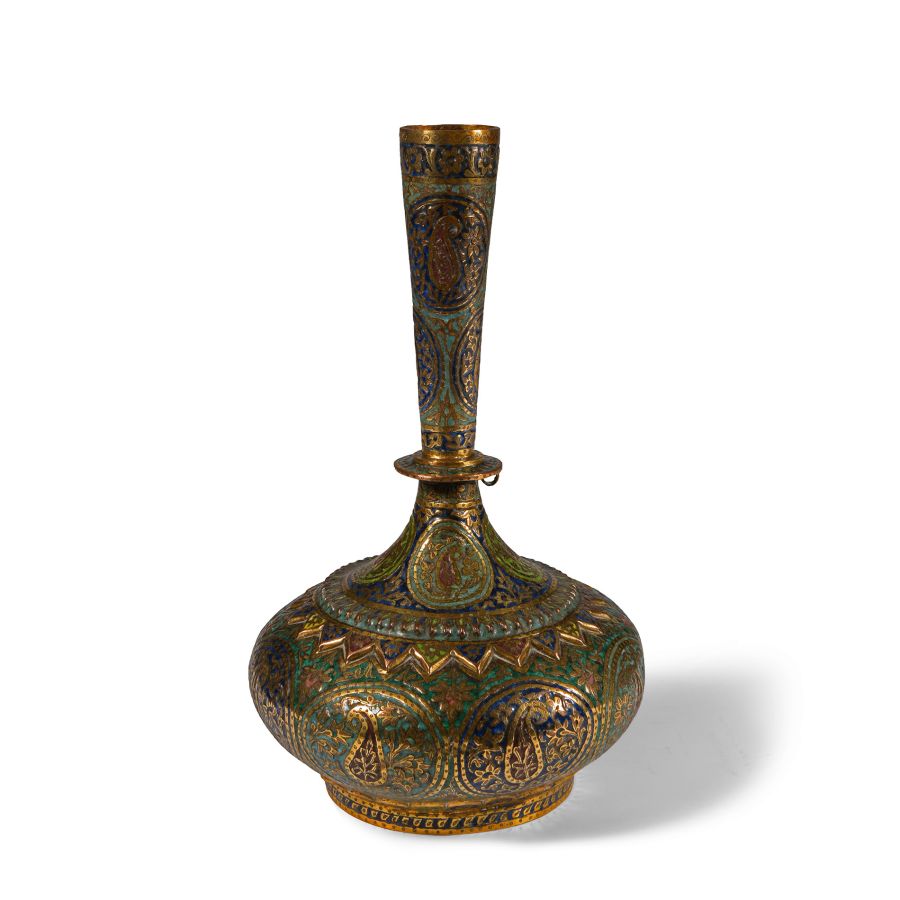
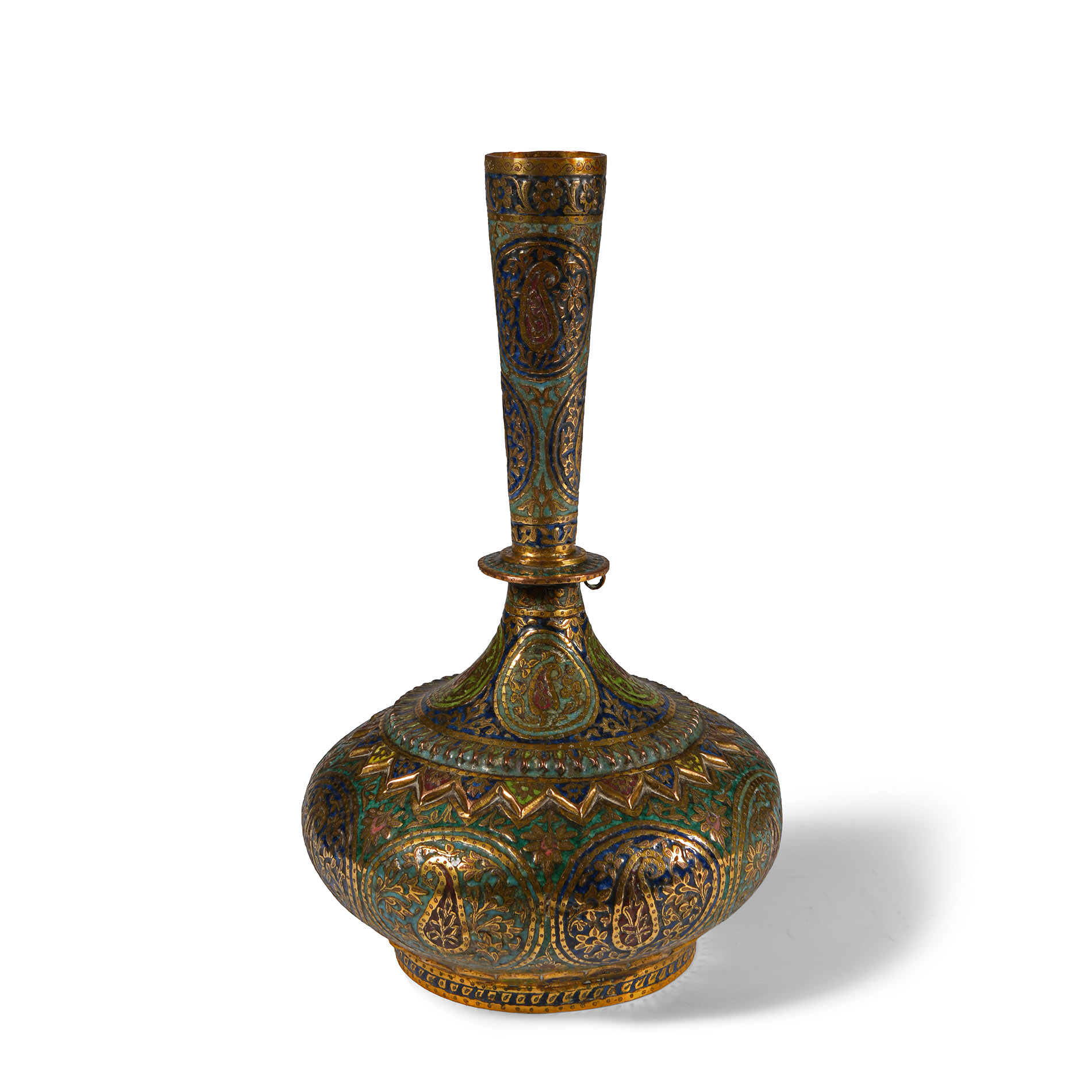
Kashmir Gilt Enamelled Vessel
LATE 19TH CENTURY A.D.
10 1/2 in. (742 grams, 26.5 cm).
With squat body and tall expanding neck, flange collar; ornamented with panels of repoussé floral ornament reserved against a coloured enamel field.
ProvenanceLondon, UK gallery, 1971-early 2000s.
CONDITIONTimeLine Auctions follows a vetting process to ensure the authenticity and legality of all items, reinforcing our commitment to integrity and responsible trading. Each antiquity, antique, and coin lot undergoes thorough examination by a vetting committee of at least ten external specialists, professional trade association members, scientists, and archaeologists: Our Vetting Process
AUCTIONS:
TimeLine is a leading auction house specialising in antiquities, ancient art, collectables, natural history, coins, medals, and books. Our auctions offer museums, collectors, historians, and enthusiasts the opportunity to acquire unique and historically significant pieces.
LOT 1719
Kashmir Gilt Enamelled Vessel
Estimate £300 - 400€350 - 460 (for guidance only)$410 - 540 (for guidance only)
-
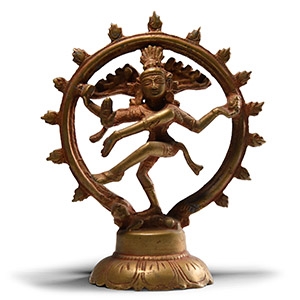
Indian Brass Shiva Figurine
19th century A.D.Sold for (Inc. bp): £26
Shiva as Lord of Dance (Nataraja): the upper left hand holding agni (the fire that will destroy the universe), the lower right hand making abhayamudra (the gesture that allays fear), the dwarf like figure being trampled by his right foot representing apasmara purusha (illusion, which leads mankind astray) and the raised left foot, signifying refuge for the troubled soul. 523 grams, 15.5 cm high
Ex London, UK, oriental collection. From the collection of a Lincolnshire, UK, gentleman. -
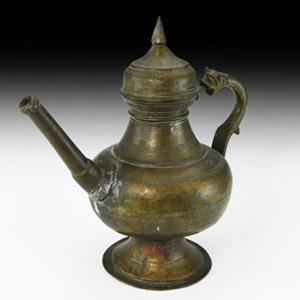
Deccan Bronze Ewer with Cat-Head Handle
Late 19th century A.D.Sold for (Inc. bp): £91
Featuring a squat body, domed lid with hinge and central spike, strap handle with cat's head detailing, long spout with writhen mouth and flared foot; spout repaired. 2.4 kg, 33 cm
Fair condition; spout repaired.
Acquired on the European art market in the 1990s. Ex property of a Suffolk collector. -
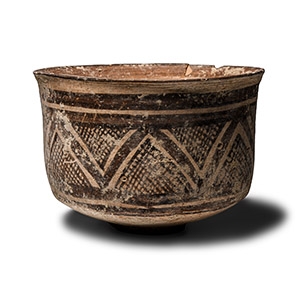
Indus Valley Terracotta Bowl
3rd millennium B.C.Sold for (Inc. bp): £91
Bell-shaped in profile with painted inner rim, band of hatched ornament to the body. 2.44 grams, 12.4 cm wide
Ex M. Schoyen London, UK, collection, 1990-2000s.
