
Loading, please wait...


LOT 3192
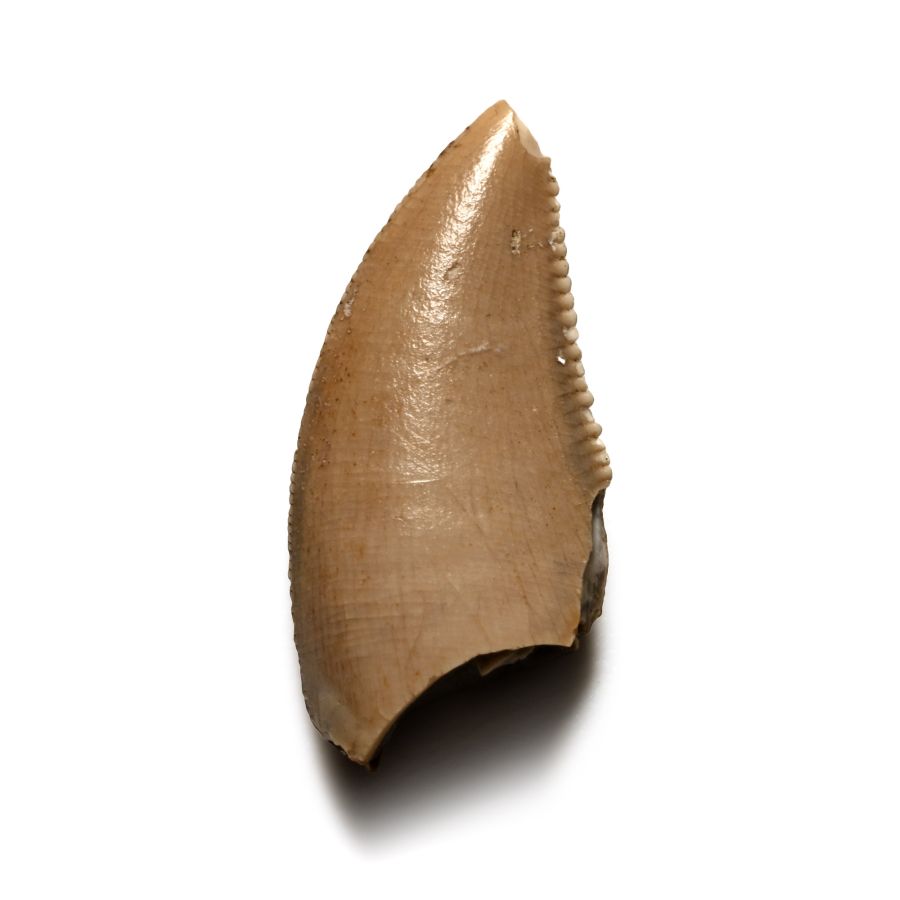
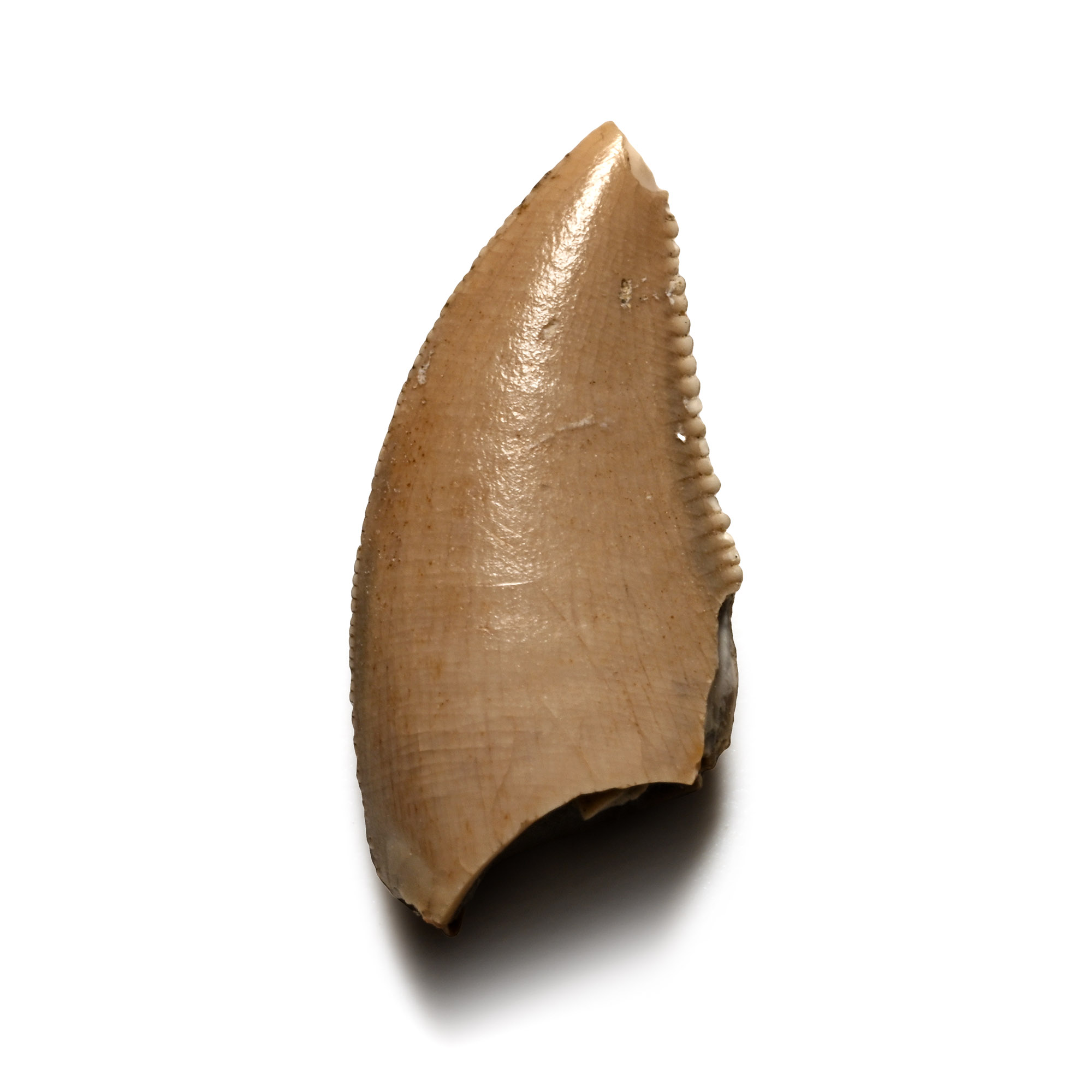
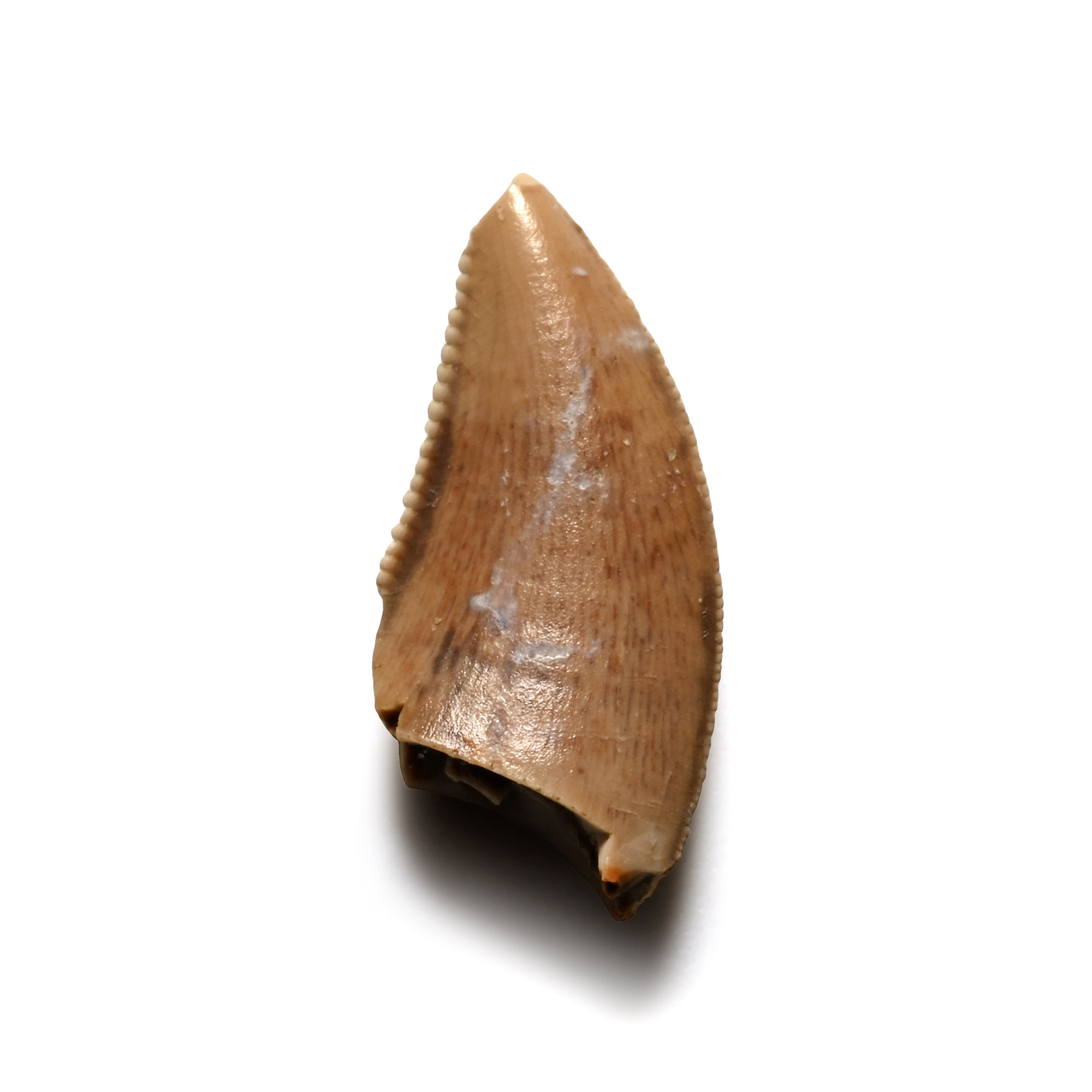
Juvenile Majungasaurus Dinosaur Fossil Tooth
CRETACEOUS PERIOD, CIRCA 70-66 MILLION YEARS B.P.
1/2 in. (0.28 grams, 14 mm).
Majungasaurus crenatissimus with light brown enamel and featuring clear serrations on both curving edges, the serrations on the back edges being larger. [No Reserve]
ProvenanceFrom a Gloucestershire, UK, fossil specialist.
From a West London gentleman collector.
Majungasaurus was the largest predator in its environment and the last non-avian dinosaur to go extinct during the Cretaceous-Paleogene extinction event, possibly specialising in hunting sauropods. It had a short snout, possibly very short forelimbs, and stocky hind legs; adults were around 7 meters long and weighed over 1 tonne.
CONDITIONTimeLine Auctions follows a vetting process to ensure the authenticity and legality of all items, reinforcing our commitment to integrity and responsible trading. Each antiquity, antique, and coin lot undergoes thorough examination by a vetting committee of at least ten external specialists, professional trade association members, scientists, and archaeologists: Our Vetting Process
AUCTIONS:
TimeLine is a leading auction house specialising in antiquities, ancient art, collectables, natural history, coins, medals, and books. Our auctions offer museums, collectors, historians, and enthusiasts the opportunity to acquire unique and historically significant pieces.
LOT 3192
Juvenile Majungasaurus Dinosaur Fossil Tooth
Estimate £50 - 70€58 - 81 (for guidance only)$68 - 95 (for guidance only)
-
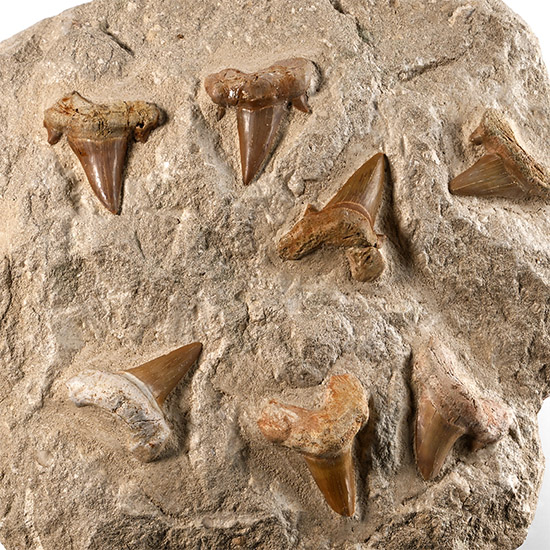
Multiple Otodus Extinct Shark Fossil Teeth Display
Eocene Epoch, circa 53-33 million years B.P.Estimate: £30 - 40 (+bp*)
Opening Bid: £5
With seven Otodus obliquus teeth mounted on a synthetic or matrix base. 3.73 kg, 19.5 cm wide
Ex Cambridgeshire, UK, collection. -
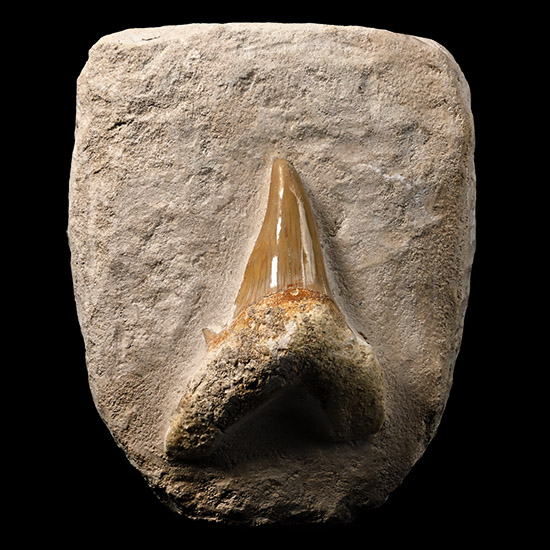
Fossil Otodus Extinct Shark Tooth Display
Eocene Epoch, circa 53-33 million years B.P.Estimate: £30 - 40 (+bp*)
Opening Bid: £5
Large Otodus obliquus tooth set on a tongue-shaped matrix. 876 grams, 11.1 cm
Ex Cambridgeshire, UK, collection. -
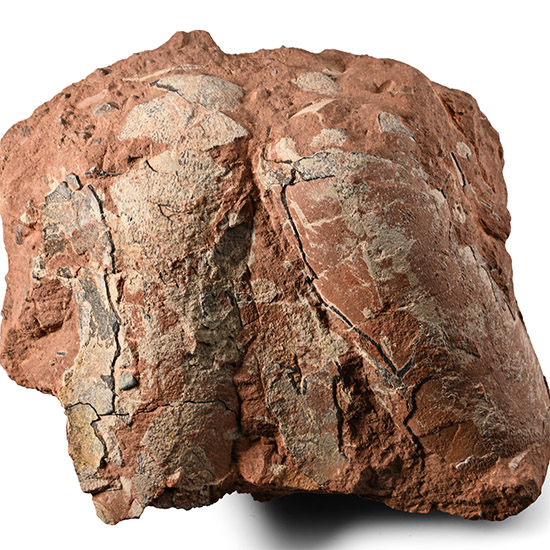
Fossil Oviraptor Egg Pair
Late Cretaceous Period, circa 88-71 million years B.P.Estimate: £500 - 700 (+bp*)
Opening Bid: £250
Matrix containing the majority of two elongated Oviraptor philocerataops eggs, retaining their leathery surface. 4.82 kg, 24 cm
From the Nanxiong formation, China. Previously with Shishang Corporation, Taiwan. From a West London gentleman collector; acquired from a professional fossil company in Taiwan.
Oviraptor, or 'egg thief', was a small feathered bipedal theropod. Being omnivorous, it fed on plants, insects, eggs and fish. Famously mis-named upon its initial discovery in association with a nest of eggs in 1924, it is now accepted that the oviraptor was nesting, not raiding; palaeontologists have since discovered oviraptor in association with eggs containing fossil oviraptor embryos.
