
.jpg "Justinian I AE 20 Nummi or Half Follis.")
LOT 3090
Justinian I AE 20 Nummi or Half Follis. Dated RY 25 (AD 551/2). Theoupolis (Antioch) mint.
D N IVSTINI-ANVS P P AV, helmeted and cuirassed bust facing, holding globus cruciger in right hand, shield over left shoulder; cross to right / Large K; cross above, A N N O XXЧ (date) flanking, mint monogram below. DOC 242; MIBE 154; SB 230. Good Very Fine.(7.96gr, 28mm, 12h.).
ProvenanceAcquired on the UK market.
Property of a London antiquarian.
TimeLine Auctions follows a vetting process to ensure the authenticity and legality of all items, reinforcing our commitment to integrity and responsible trading. Each antiquity, antique, and coin lot undergoes thorough examination by a vetting committee of at least ten external specialists, professional trade association members, scientists, and archaeologists: Our Vetting Process
AUCTIONS:
TimeLine is a leading auction house specialising in antiquities, ancient art, collectables, natural history, coins, medals, and books. Our auctions offer museums, collectors, historians, and enthusiasts the opportunity to acquire unique and historically significant pieces.
-
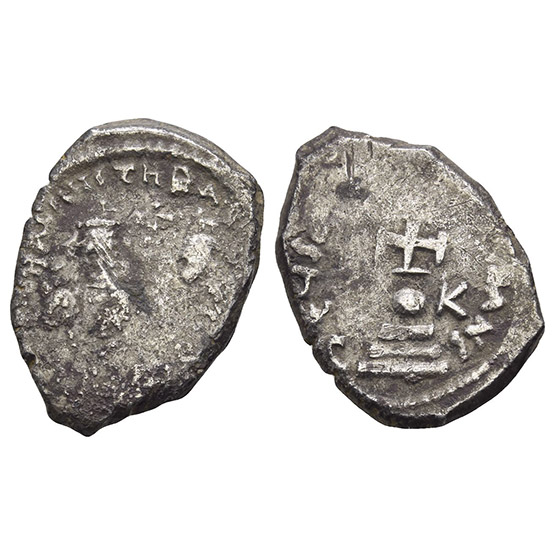
Heraclius, with Heraclius Constantine AR Hexagram. Struck AD 615-630. Constantinople mint.
Sold for (Inc. bp): £52
[∂∂ NN Һ]ЄRACLΙЧS Єτ ҺЄR[A CONSτ], Heraclius and Heraclius Constantine seated facing on double throne, each holding globus cruciger; cross between / ∂ЄЧS A[∂IЧτA ROM]ANI, cross potent set upon globus set upon three steps; K to right. DOC 64; MIBE 140; SB 798. 6.46gr, 23mm, 7h.
Good Fine.
From the collection of a gentleman, acquired on the London art market in the 1990s. -
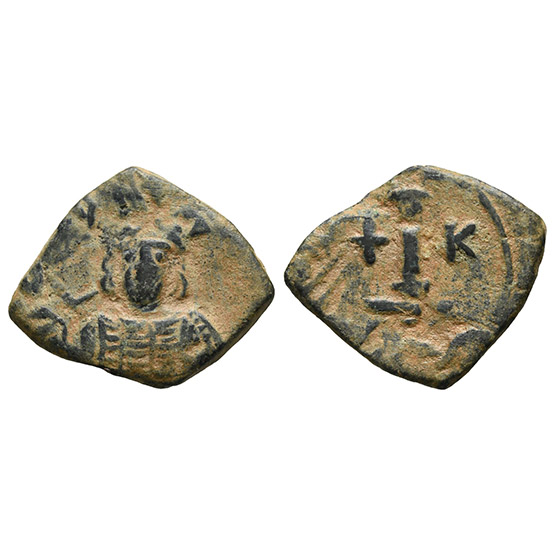
Constantine IV Pogonatus AE 10 Nummi or Decanummium. Struck circa AD 668-673. Constantinople mint.
Sold for (Inc. bp): £20
Beardless, helmeted and cuirassed bust of Constantine IV facing, holding globus cruciger in right hand / Large I between cross and K; [above, cross?]. Cf. DOC 38; cf. MIB 88; cf. SB 1182. 3.72gr, 24mm, 7h.
Very Fine. Overstruck on an uncertain type.
Acquired on the UK market. Property of a London antiquarian. -
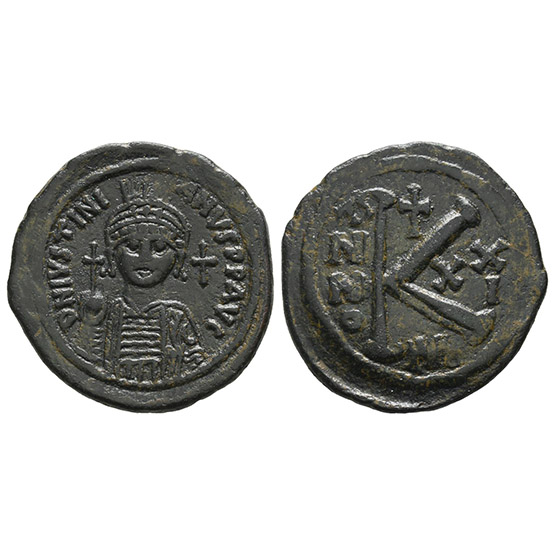
Justinian I AE 20 Nummi or Half Follis. Dated RY 21 (AD 547/8). Nicomedia mint.
Sold for (Inc. bp): £91
D N IVSTINI-ANVS P P AVC, helmeted, diademed and cuirassed bust of Justinian I facing, holding globus cruciger in his right hand and with shield, decorated with horseman spearing fallen foe, over his left shoulder; to right, cross / Large K between A N N O and XX I (date); above, cross; below, NI. DOC 148; MIBE 116a1; SB 203. 10.65gr, 30mm, 12h.
Very Fine.
Acquired on the UK market. Property of a London antiquarian.
