
.jpg "Justin II, with Sophia AE 40 Nummi or Follis.")
LOT 3092
Justin II, with Sophia AE 40 Nummi or Follis. Dated RY 9 (AD 573/4). Nicomedia mint. 2nd officina.
D N IV[...], nimbate figures of Justin, holding globus cruciger, and Sophia, holding cruciform sceptre, seated facing on double throne; cross above / Large M; cross above, ANNO ςI II (date) across field; B below, NIKO in exergue. DOC 99c; MIBE 46a; SB 369. Very Fine.(15.63gr, 31mm, 7h.).
ProvenanceProperty of a Cambridgeshire, UK, gentleman.
TimeLine Auctions follows a vetting process to ensure the authenticity and legality of all items, reinforcing our commitment to integrity and responsible trading. Each antiquity, antique, and coin lot undergoes thorough examination by a vetting committee of at least ten external specialists, professional trade association members, scientists, and archaeologists: Our Vetting Process
AUCTIONS:
TimeLine is a leading auction house specialising in antiquities, ancient art, collectables, natural history, coins, medals, and books. Our auctions offer museums, collectors, historians, and enthusiasts the opportunity to acquire unique and historically significant pieces.
-
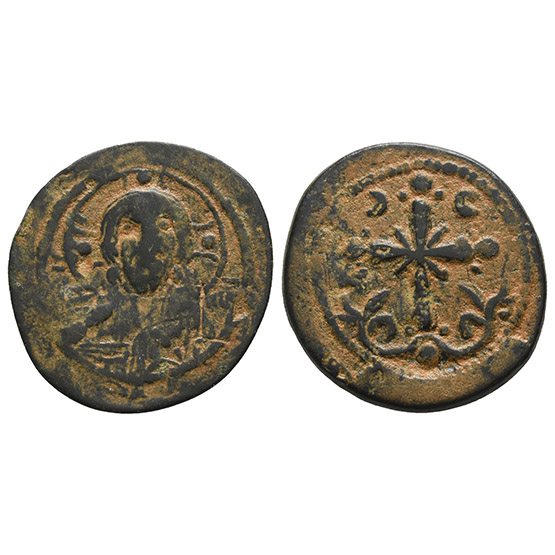
Byzantine AE Anonymous Follis. Time of Nicephorus III, AD 1078-1081. Constantinople mint. Class I.
Sold for (Inc. bp): £20
IC XC, bust of Christ, nimbate, facing; His right hand raised, book of gospels in His left / Latin cross with central saltire, globus and two pellets at the end of each extremity; crescents to upper left and right, floral scroll to lower left and right. DOC Class I; SB 1889. 5.49gr, 26mm, 6h.
Near Very Fine.
Property of a Cambridgeshire, UK, gentleman. -
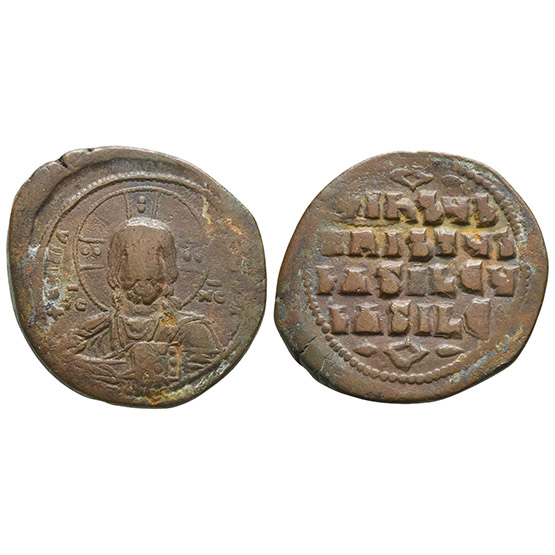
Byzantine AE Anonymous Follis. Time of Basil II and Constantine VIII, AD 976-1028. Constantinople mint. Class A2.
Sold for (Inc. bp): £39
✠ ЄMMA-NOVHΛ, nimbate bust of Christ Pantokrator facing, wearing tunic and himation, raising right hand in benediction and holding Book of Gospels in His left; two dots in each limb of the nimbate cross; IC XC in fields / ✠ IҺSЧS XRISTЧS ЬASILЄЧ ЬASILЄ, legend in four lines across field; ornament above and below. DOC A2.22; SB 1818 (Class A3). 16.68gr, 34mm, 6h.
Near Very Fine.
Acquired on the UK art market since the early 2000s. Property of a Lincolnshire gentleman, thence by descent. -
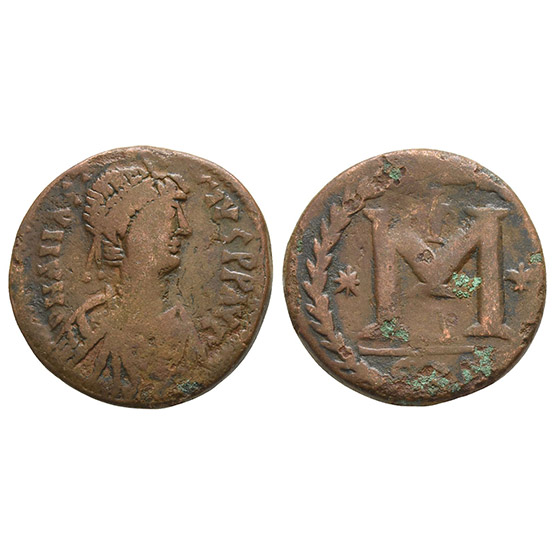
Anastasius I AE 40 Nummi or Follis. Struck circa AD 498-circa AD 518. Constantinople mint. 4th officina.
Sold for (Inc. bp): £46
D N ANASTA-SIVS P P AVG, diademed, draped, and cuirassed bust to right / Large M, cross above; stars flanking; Δ below, CON in exergue; all within wreath. DOC -; MIBE -; SB -. 8.90gr, 23mm, 6h.
Good Fine. Extremely rare emission of Anastasius I and unpublished in the major references.
From the collection of a gentleman, acquired on the London art market in the 1990s.
