
.jpg "Justin II and Sophia AE 20 Nummi or Half Follis.")
LOT 3095
Justin II and Sophia AE 20 Nummi or Half Follis. Dated RY 10 (AD 574/5). Thessalonica mint.
D N IVSTI-NVS P P AVG, Justin, holding globus cruciger, and Sophia, holding cruciform sceptre, seated facing on double throne, both wearing nimbus crown / Large K; cross and ΘC above, date across field; TЄS below. DOC 78; MIBE 70e; SB 366. Good Fine.(5.68gr, 24mm, 11h.).
ProvenanceAcquired on the UK art market since the early 2000s.
Property of a Lincolnshire gentleman, thence by descent.
TimeLine Auctions follows a vetting process to ensure the authenticity and legality of all items, reinforcing our commitment to integrity and responsible trading. Each antiquity, antique, and coin lot undergoes thorough examination by a vetting committee of at least ten external specialists, professional trade association members, scientists, and archaeologists: Our Vetting Process
AUCTIONS:
TimeLine is a leading auction house specialising in antiquities, ancient art, collectables, natural history, coins, medals, and books. Our auctions offer museums, collectors, historians, and enthusiasts the opportunity to acquire unique and historically significant pieces.
-
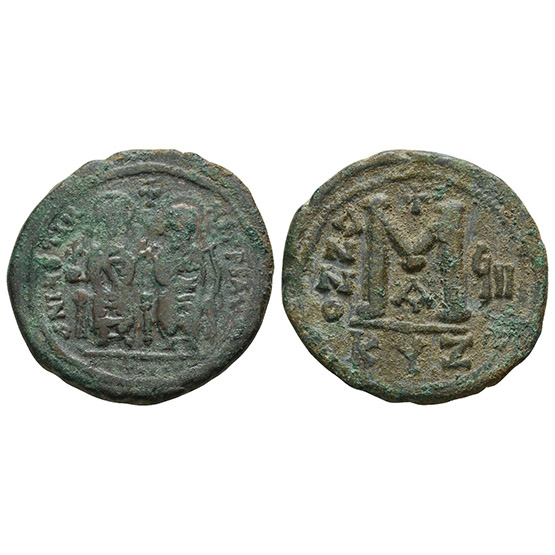
Justin and Sophia AE 40 Nummi or Follis. Dated RY 8 (572/3). Cyzicus mint. 1st officina.
Sold for (Inc. bp): £20
∂ N IVSTIN-ΝS P PS AV, nimbate figures of Justin, holding globus cruciger, and Sophia, holding cruciform sceptre, seated facing on double throne; cross above / Large M; cross above; A N N O ςII (date) across field; A below, KYZ in exergue. DOC 121a; MIBE 50c; SB 372. 11.96gr, 31mm, 7h.
Very Fine.
Acquired on the UK art market since the early 2000s. Property of a Lincolnshire gentleman, thence by descent. -
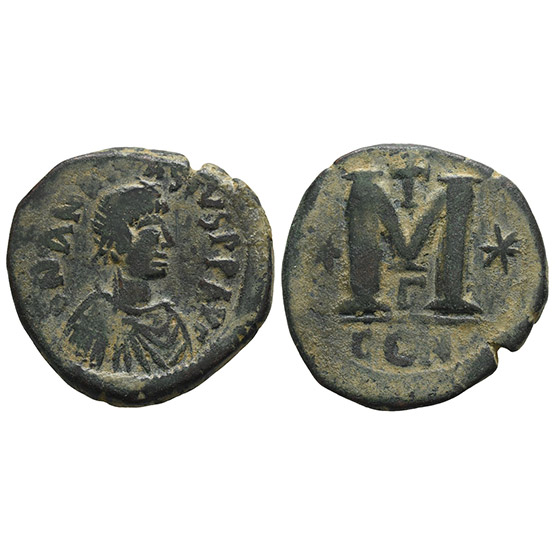
Anastasius I AE 40 Nummi or Follis. Struck AD 512-517. Constantinople mint. 3rd officina.
Sold for (Inc. bp): £20
D N ANASTASIVS P P AVG, diademed, draped, and cuirassed bust to right / Large M; cross above, stars flanking; Γ below, CON in exergue. DOC 23d; MIBE 27; SB 19. 17.89gr, 32mm, 7h.
Very Fine.
Acquired on the UK market. Property of a London antiquarian. -
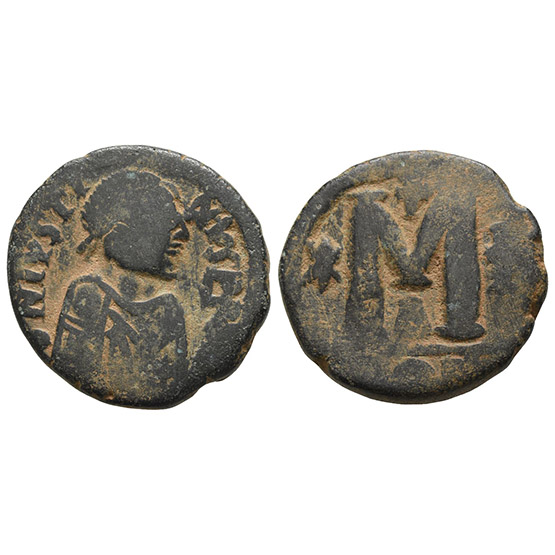
Justin I AE 40 Nummi or Follis. AD 518-527. Constantinople mint. 1st officina.
Sold for (Inc. bp): £26
D N IVSTI-NVS P P [...], diademed, draped, and cuirassed bust to right / Large M; cross above, six-rayed star and cross flanking; A below, CON in exergue. DOC 9a; MIBE 12; SB 63. 15.97gr, 30mm, 6h.
Good Fine.
From the collection of a gentleman, acquired on the London art market in the 1990s.
