
Loading, please wait...
LOT 1306
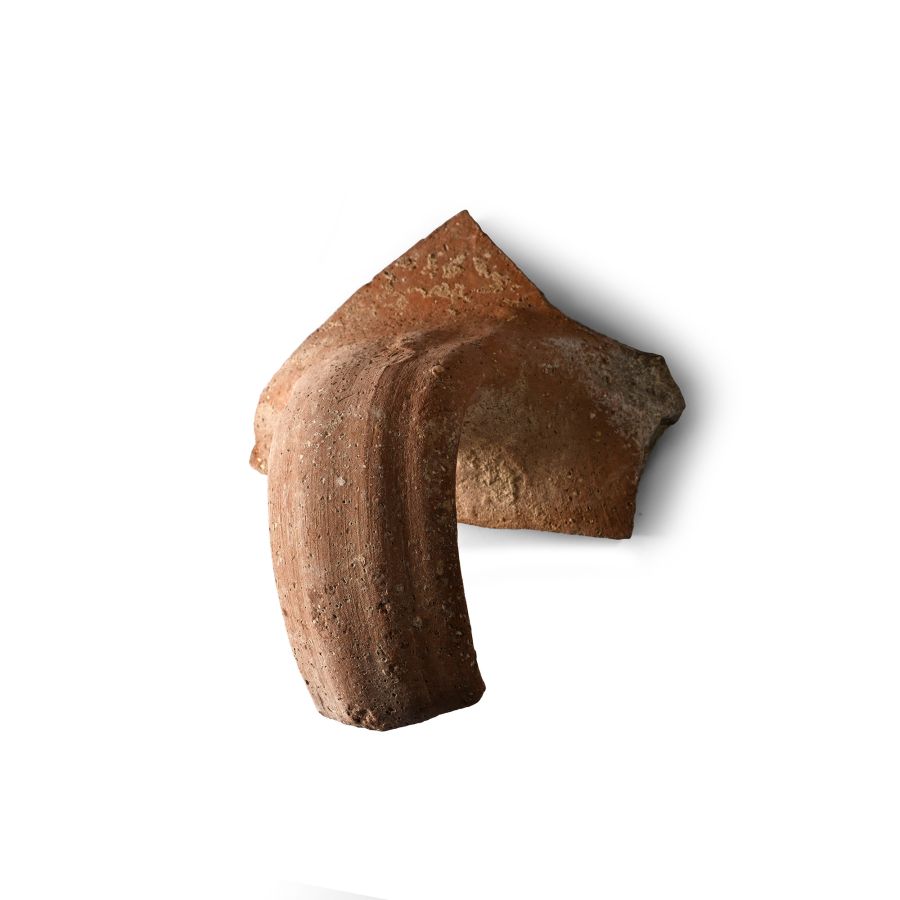
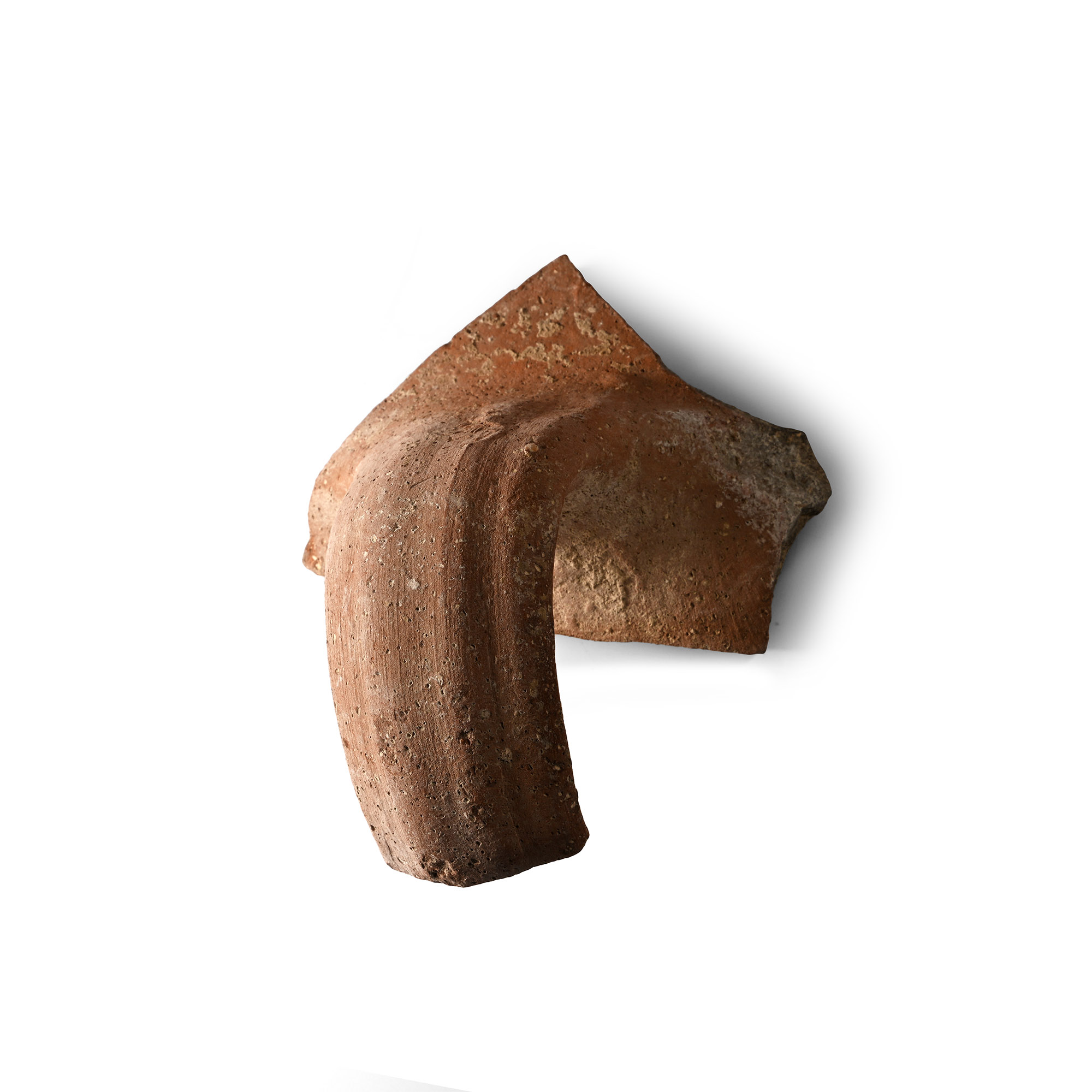
Judaean Terracotta Amphora Handle with Royal Seal Impression
LATE 8TH-MID 7TH CENTURY B.C.
4 1/2 in. (163 grams, 11.7 cm).
The handle fragment from a Tufnell type 484 jar, bearing a stamp to the upper handle with the top rays of a winged solar disc and part of the right wing. [No Reserve]
ProvenanceEx S.M. London collection, UK, 1970-1990s.
Accompanied by a description from Peter Gert Van der Veen, senior lecturer of Levantine Archaeology, Johannes Gutenberg-Universität, Mainz.
This lot has been cleared against the Art Loss Register database, and is accompanied by an illustrated lot declaration signed by the Head of the Antiquities Department, Dr Raffaele D'Amato.
TimeLine Auctions follows a vetting process to ensure the authenticity and legality of all items, reinforcing our commitment to integrity and responsible trading. Each antiquity, antique, and coin lot undergoes thorough examination by a vetting committee of at least ten external specialists, professional trade association members, scientists, and archaeologists: Our Vetting Process
AUCTIONS:
TimeLine is a leading auction house specialising in antiquities, ancient art, collectables, natural history, coins, medals, and books. Our auctions offer museums, collectors, historians, and enthusiasts the opportunity to acquire unique and historically significant pieces.
LOT 1306
Judaean Terracotta Amphora Handle with Royal Seal Impression
Sold for (Inc. bp): £260
-

Achaemenid Chalcedony Stamp Seal
Circa 530 B.C.Sold for (Inc. bp): £4,680
Ellipsoid in plan and plano-convex in section, reverse with invocation scene: on a baseline a kilted figure advancing towards an altar with flames, holding a cup and a plate; altar flanked by two crouching winged bulls with human heads; perching eagle to right with amphora; above a winged sun-disc and rectangular object; supplied with a museum-quality impression. 18.4 grams, 32 mm
From the Fadel family collection, London, UK, 1970s. This lot has been checked against the Interpol Database of stolen works of art and is accompanied by search certificate number no.12769-237265. This lot has been cleared against the Art Loss Register database, and is accompanied by an illustrated lot declaration signed by the Head of the Antiquities Department, Dr Raffaele D'Amato.
The seal shows elements belonging to the period of the Achaemenid dynasty: the winged solar disc, symbol of the supreme god, Ormadz; the fire altar in the centre, a typically Zoroastrian element. The costume of the offerant is also decidedly Persian, with a short tunic at the knees and trousers of the saravara type. -
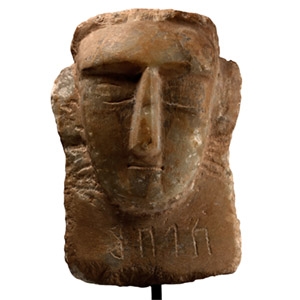
South Arabian Alabaster Sculpture of a Man with Inscription
3rd-1st century B.C.Sold for (Inc. bp): £910
On a rectangular background, shallow sockets and grooved eyebrows, elongated nose and face, mouth faintly indicated by a straight incised line, large, protruding ears; traces of beard under the chin, vertical lines representing hair; name engraved in Arabian letters beneath the chin; mounted on a custom-made display stand. 3.62 kg total, 27.1 cm including stand
UK collection, 1990s. Acquired on the UK art market, before 2000. Private collection, Mr M.V., a London-based businessman. This lot has been cleared against the Art Loss Register database, and is accompanied by an illustrated lot declaration signed by the Head of the Antiquities Department, Dr Raffaele D'Amato.
Within South Arabia, there was a well-developed ancient tradition of carving funerary sculptures from a calcite-alabaster stone. The eyes and eyebrows of the heads were usually inlaid or (like probably here) highlighted with red or black pigment. The figure is inscribed on the base with the name of the dedicant, or with the personal name of the dead person. -
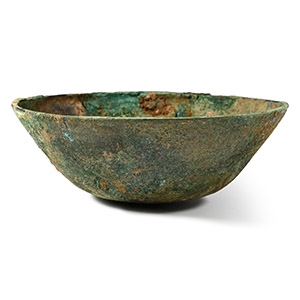
Luristan Bronze Bowl
1st millennium B.C.Sold for (Inc. bp): £111
Broad and shallow with rounded base. 260 grams, 16.9 cm
Ex London, UK, collections, 1990s-2000s. This lot has been cleared against the Art Loss Register database, and is accompanied by an illustrated lot declaration signed by the Head of the Antiquities Department, Dr Raffaele D'Amato.
The people of Luristan were nomads, constantly moving in summer and winter pastures, and needed metal utensils and tools. Therefore, in addition to weapons, these excellent metal workers produced, in considerable numbers, light and elegant bronze vases and cups.
