
Loading, please wait...
LOT 0232
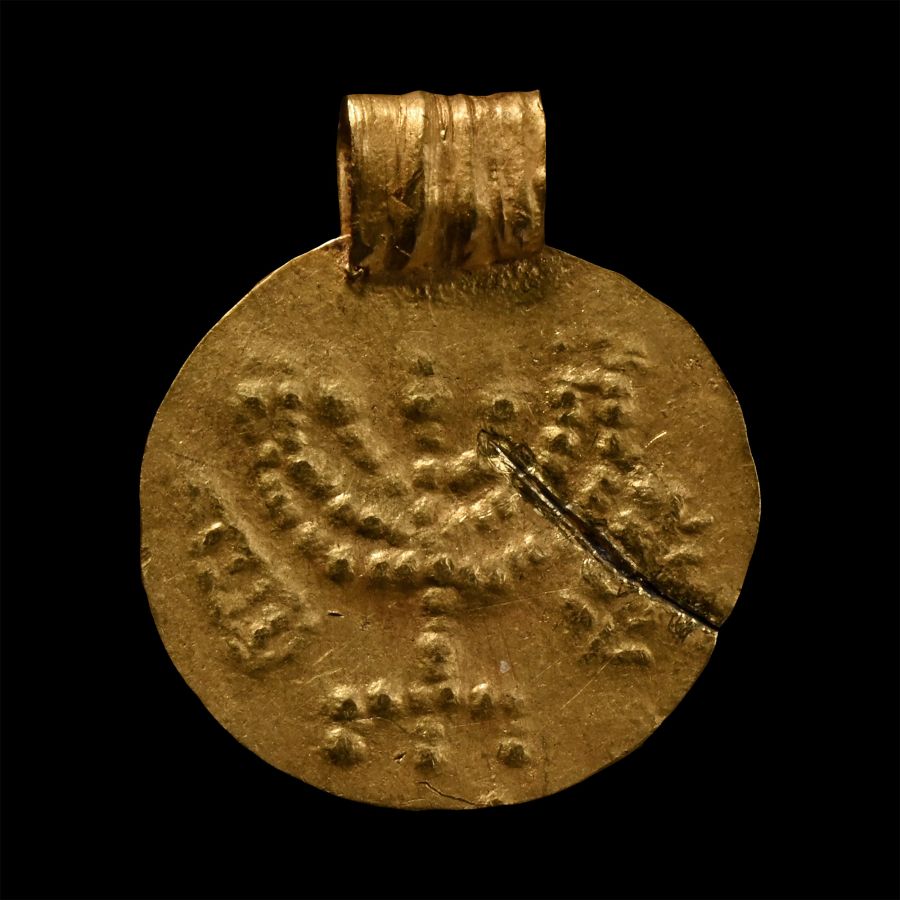
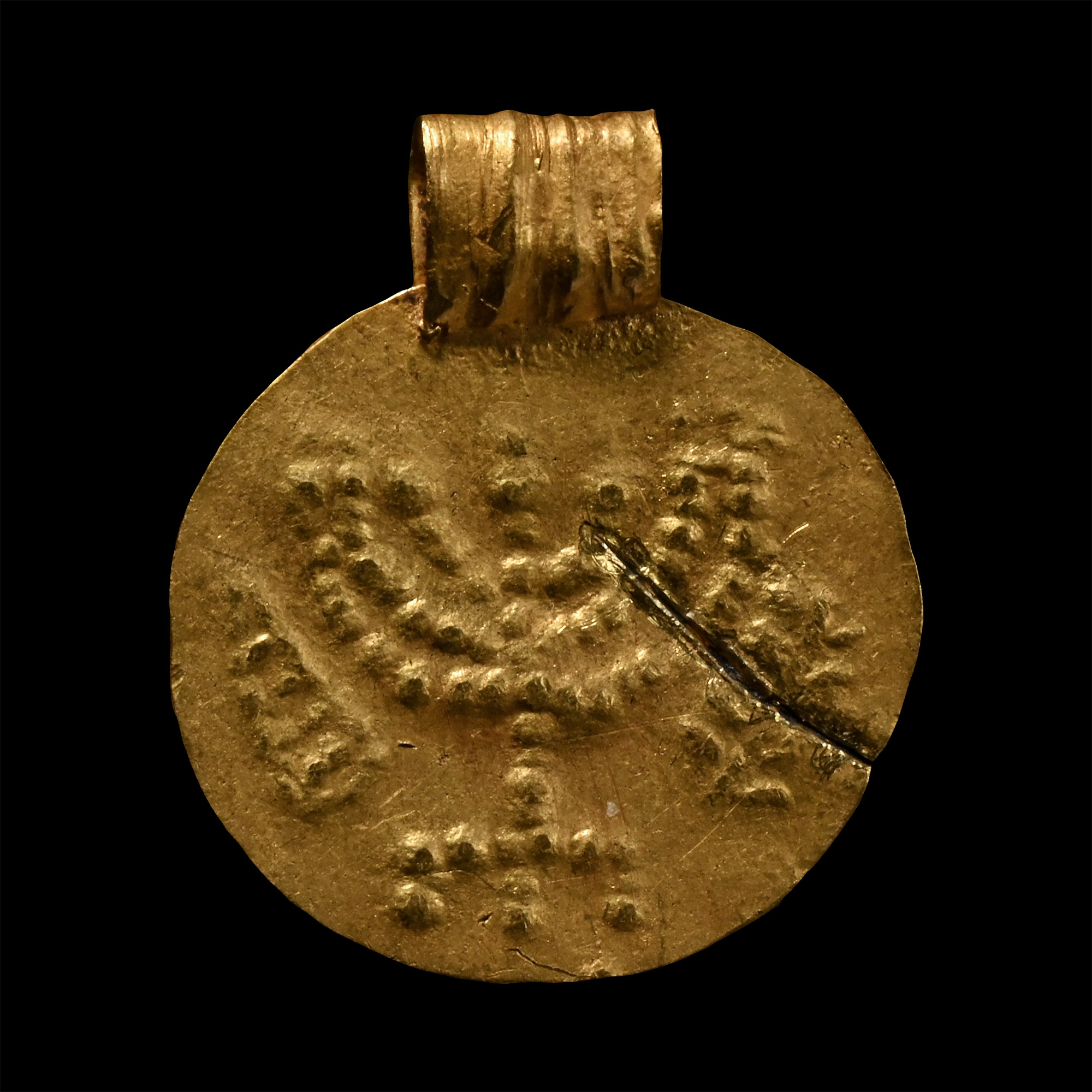
Judaean Gold Pendant with Menorah
3RD-4TH CENTURY A.D.
5/8 in. (1.19 grams, 17 mm).
Foil disc with integral suspension loop, repoussé menorah motif in pointillé technique. [No Reserve]
ProvenancePrivate collection formed in Europe in the 1980s.
Westminster collection, central London, UK.
TimeLine Auctions follows a vetting process to ensure the authenticity and legality of all items, reinforcing our commitment to integrity and responsible trading. Each antiquity, antique, and coin lot undergoes thorough examination by a vetting committee of at least ten external specialists, professional trade association members, scientists, and archaeologists: Our Vetting Process
AUCTIONS:
TimeLine is a leading auction house specialising in antiquities, ancient art, collectables, natural history, coins, medals, and books. Our auctions offer museums, collectors, historians, and enthusiasts the opportunity to acquire unique and historically significant pieces.
-
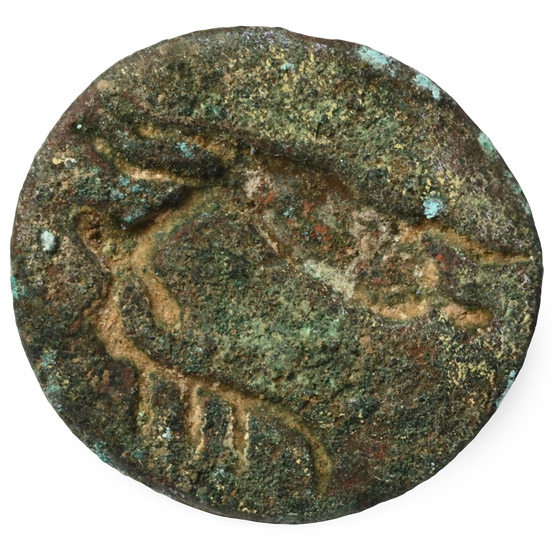
Large Central Asian Floral Backed Bronze Floral Seal
3rd-1st century B.C.Estimate: £100 - 140 (+bp*)
Opening Bid: £50
Discoid seal with incuse design; accompanied by an old scholarly note, typed and signed by W.G. Lambert, late Professor of Assyriology, University of Birmingham, 1970-1993, which states: 'Stamp Seal of Bronze 23 x 24 x 10 mm This is a flat disc with a loop handle. pierced, from the same sheet metal attached to the back. The face shows a deeply engraved stag in a flying gallop. This is reported to have come from west-central Asia, and it fits the area and date c. 300-1 B.C.[sic] It has some incrustation on the surface which could be removed, but is in very good condition.' 6.06 grams, 24 mm
Ex 'S' collection, 1970s-1990s. -
.jpg)
Mesopotamian Cuneiform Tablet Fragment
2nd millennium B.C.Sold for (Inc. bp): £104
Fragmentary section of a tablet with impressed characters; repaired. 123 grams, 81 mm
Specialised collection of cuneiform texts, the property of a London gentleman and housed in London before 1992. Thence by descent to family members. Examined by Professor Wilfrid George Lambert FBA (1926-2011), historian, archaeologist, and specialist in Assyriology and Near Eastern archaeology, in the late 1980s and early 1990s. This small collection is exceptional for the variety of types, including some very rare and well preserved examples. -
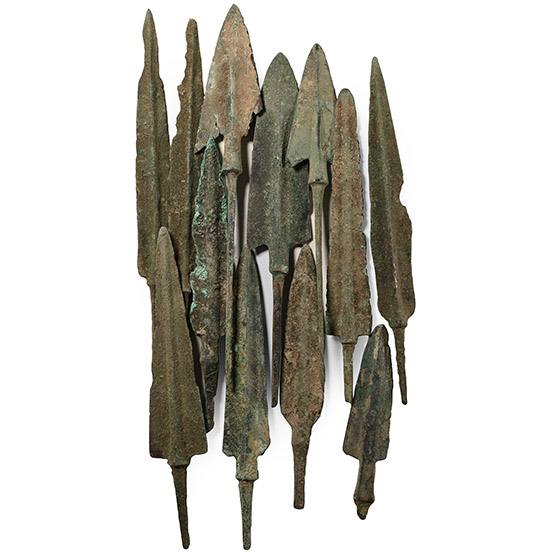
Luristan Bronze Arrowhead Collection
13th-6th century B.C.Sold for (Inc. bp): £234
Comprising triangular types with thick midrib, heater-shaped, leaf-shaped, and other types. 340 grams total, 8.7-17.5 cm
Ex London art market, 1980-1990s.
One category of the represented arrowheads has a sharp, flat blade, the ends of which extend to form wings or barbs, and a prominent midrib extending into a long tang that often has a stop; the blade shape varies from deltoid to more triangular. Another form has no barbs, but it has a prominent midrib extending to the tang, and a narrow leaf-shaped blade.
