
Loading, please wait...
LOT 0231
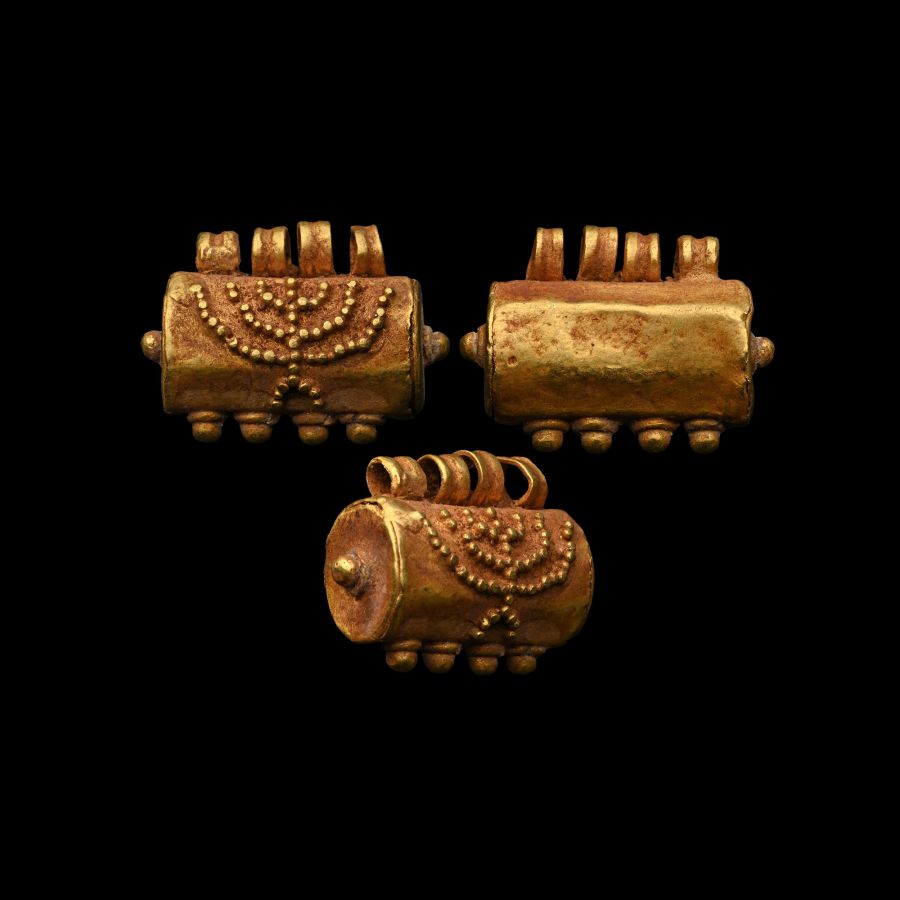
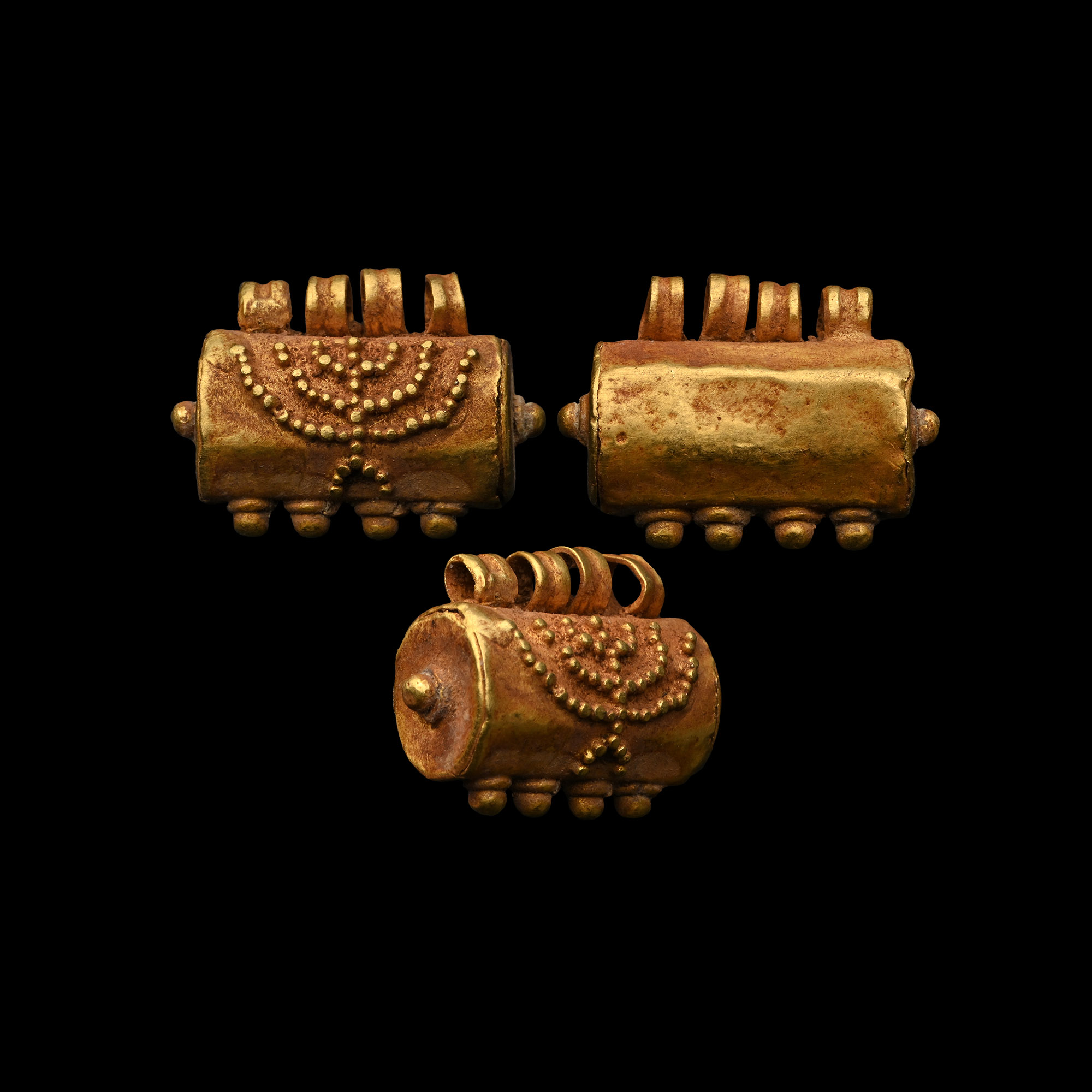
Judaean Gold Amulet Case with Menorah
4TH CENTURY A.D.
3/4 in. (3.74 grams, 19 mm).
Hollow-formed sheet-gold pendant amulet with suspension loops to the upper edge, collared granules to the lower edge and each end, granulated menorah motif to the obverse.
ProvenanceFrom and important collection of a London, UK, gentleman, 1990s.
This lot has been checked against the Interpol Database of stolen works of art and is accompanied by search certificate number no.13142-246959.
For the type see The Metropolitan Museum, object number 74.51.3319.
CONDITIONTimeLine Auctions follows a vetting process to ensure the authenticity and legality of all items, reinforcing our commitment to integrity and responsible trading. Each antiquity, antique, and coin lot undergoes thorough examination by a vetting committee of at least ten external specialists, professional trade association members, scientists, and archaeologists: Our Vetting Process
AUCTIONS:
TimeLine is a leading auction house specialising in antiquities, ancient art, collectables, natural history, coins, medals, and books. Our auctions offer museums, collectors, historians, and enthusiasts the opportunity to acquire unique and historically significant pieces.
LOT 0231
Judaean Gold Amulet Case with Menorah
Estimate £5,000 - 7,000€5,800 - 8,120 (for guidance only)$6,750 - 9,450 (for guidance only)
-
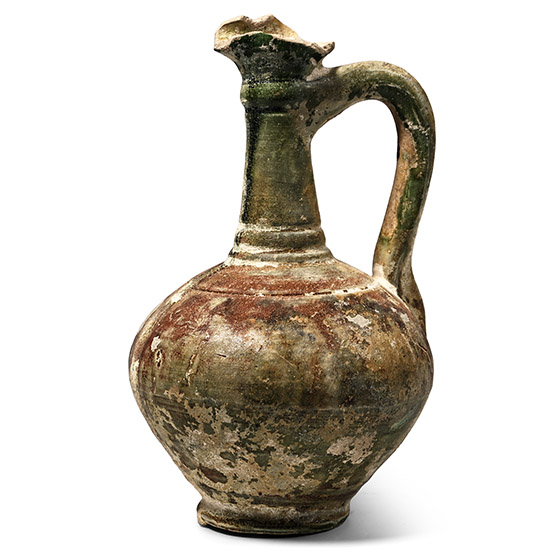
Western Asiatic Green Glazed Pottery Jug
12th-14th century A.D.Sold for (Inc. bp): £117
Comprising an onion-shaped body with basal ring and broad curved shoulder, tiered neck, strap handle; mouth and pouring lip chipped. 390 grams, 18.2 cm
From the collection of a gentleman, 1988-2000s. -
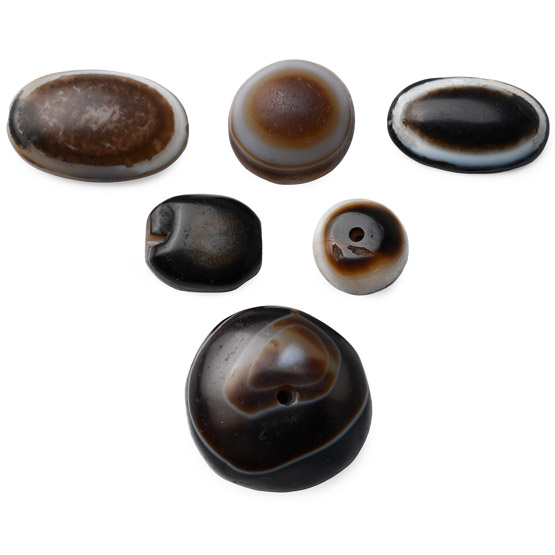
Large Bactrian Banded Agate Bead and Cabochon Group
Circa 1st millennium B.C.-early 1st millennium A.D. and laterEstimate: £300 - 400 (+bp*)
Opening Bid: £150
Comprising of barrel, round and oval shape; one cabochon. 37 grams total, 14-27 mm
Acquired on the UK art market. Private collection, England. -
.jpg)
Achaemenid Silver Phiale with Central Rosette
5th century B.C.Sold for (Inc. bp): £3,705
Squat lotiform bowl with wide everted rim, central domed mesomphalos with rosette detailing, some restoration to the rim; with custom-made box. 240 grams, 13.7 cm wide
Ex London, UK gallery, 1971-early 2000s. Private collection, London, UK. This lot has been checked against the Interpol Database of stolen works of art and is accompanied by search certificate no.13067-248447.
This bowl is possibly part of a set of nearly identical vessels, probably used at the table of a high-status household, potentially that of a satrap. Persian governors (satrapes) used banquets to display their wealth and power by imitating royal banquets. It was a great honour for them to receive a drinking vessel such as this as a gift from the King of the Kings, thereby establishing their status as royal dinner guests. No doubt it took practice to drink adeptly from a vessel like this, yet the omphalos in the base would have made it easier to hold with one hand, with the middle finger hooked inside the indentation and the thumb stretched out to grip the vessel at or near the rim.
