
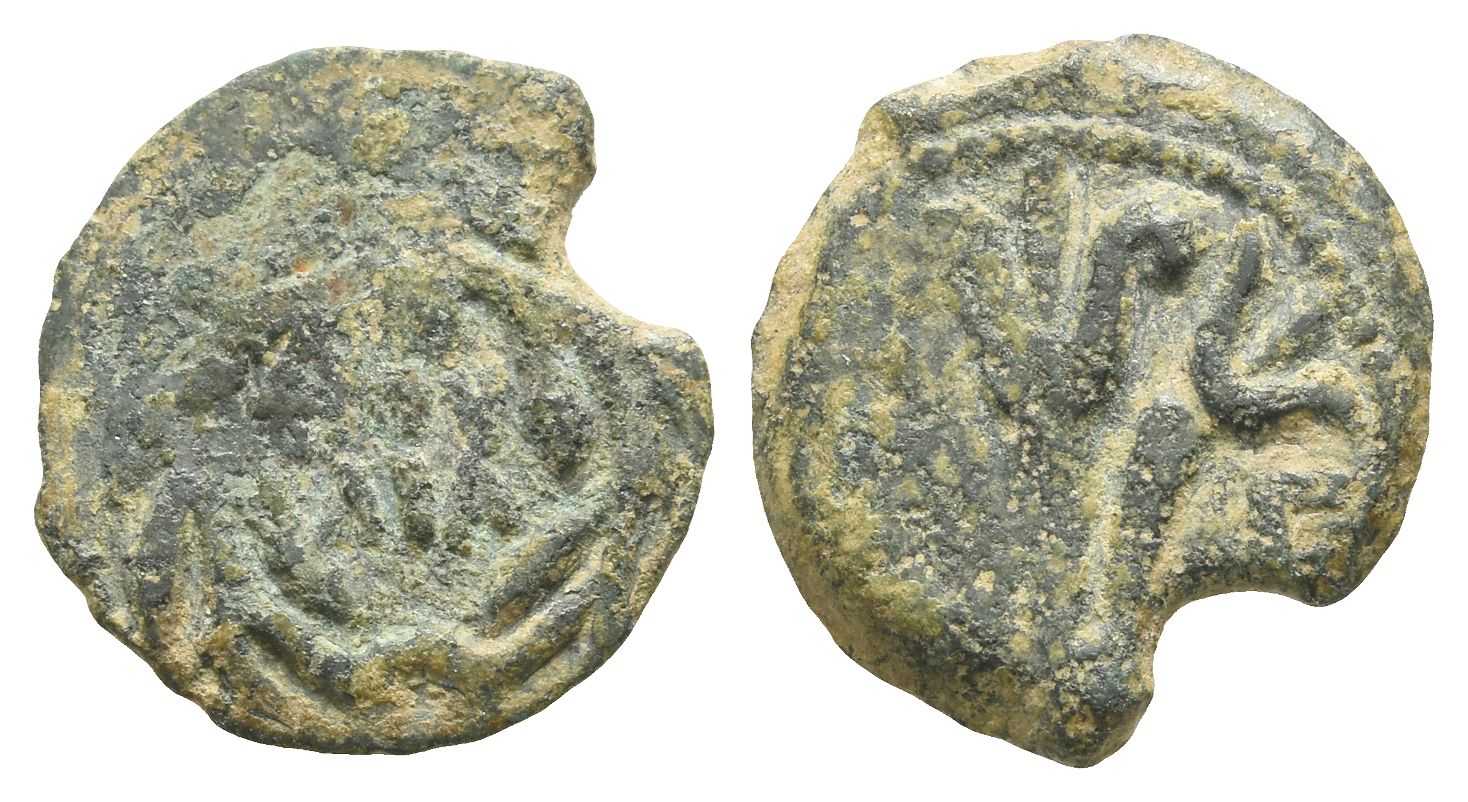
LOT 3473
Judaea. Procurators, Valerius Gratus AE Prutah. Dated RY 3 of Tiberius (16/7 CE). Jerusalem mint.
In the name of Julia Augusta (Livia). IOVΛIA in two lines within wreath with large central jewel / Three lilies in bloom; [L] Γ (date) across field. RPC I 4961; Meshorer 321; Hendin 6364. Near Very Fine. Edge chipped.(1.66gr, 16mm, 6h.).
ProvenanceAcquired on the UK art market before 2000.
Property of an Essex, UK, gentleman.
TimeLine Auctions follows a vetting process to ensure the authenticity and legality of all items, reinforcing our commitment to integrity and responsible trading. Each antiquity, antique, and coin lot undergoes thorough examination by a vetting committee of at least ten external specialists, professional trade association members, scientists, and archaeologists: Our Vetting Process
AUCTIONS:
TimeLine is a leading auction house specialising in antiquities, ancient art, collectables, natural history, coins, medals, and books. Our auctions offer museums, collectors, historians, and enthusiasts the opportunity to acquire unique and historically significant pieces.
-
.jpg)
Philip II AE 24mm of Nisibis, Mesopotamia. AD 247-249.
Sold for (Inc. bp): £33
AYTOK M IOVΛI ΦIΛIΠΠOC CЄB, radiate and cuirassed bust to left / IOY CЄΠ KOΛΩ NЄCIBI MHT, Tyche of Antioch seated facing; above, ram (Aries) leaping to right, head to left; all within tetrastyle shrine; below, river-god Euphrates swimming to right. RPC VIII Online Unassigned ID 2962; SNG Copenhagen 240. 8.93gr, 24mm, 12h.
Good Very Fine.
Property of a North London, UK, gentleman. -
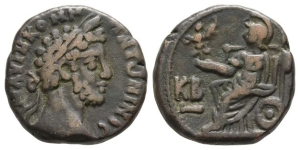
Commodus BI Tetradrachm of Alexandria, Egypt. Dated RY 22 (AD 181/2).
Sold for (Inc. bp): £39
M AYPH KOMM ANTƱΝΙΝΟC, laureate head to right / Roma seated to left, holding Nike in right hand and sceptre in left; at her side, shield; KB L (date) to left. RPC IV.4 3388; Dattari (Savio) 3861; Köln 2207; K&G 41.29; Emmett 2521.22. 11.20gr, 24mm, 12h.
Very Fine. Dark brown patina.
From the collection of a gentleman, acquired on the London art market in the 1990s. -
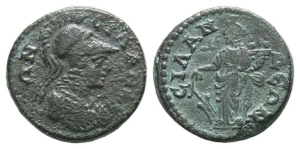
Lydia, Silandus AE 18mm. Time of Septimius Severus to Caracalla, AD 193-217. Pseudo-autonomous issue.
Sold for (Inc. bp): £13
CIΛANΔЄΩN, helmetted and cuirassed bust of Athena to right, wearing aegis / CIΛANΔЄΩN, Tyche standing to left, holding rudder and cornucopia. RPC V.2 Unassigned ID 76882; GRPC Lydia 18. 3.90gr, 18mm, 6h.
Near Very Fine.
Ex Münzzentrum Rheinland. Property of a Kent, UK, gentleman.
