
LOT 3287
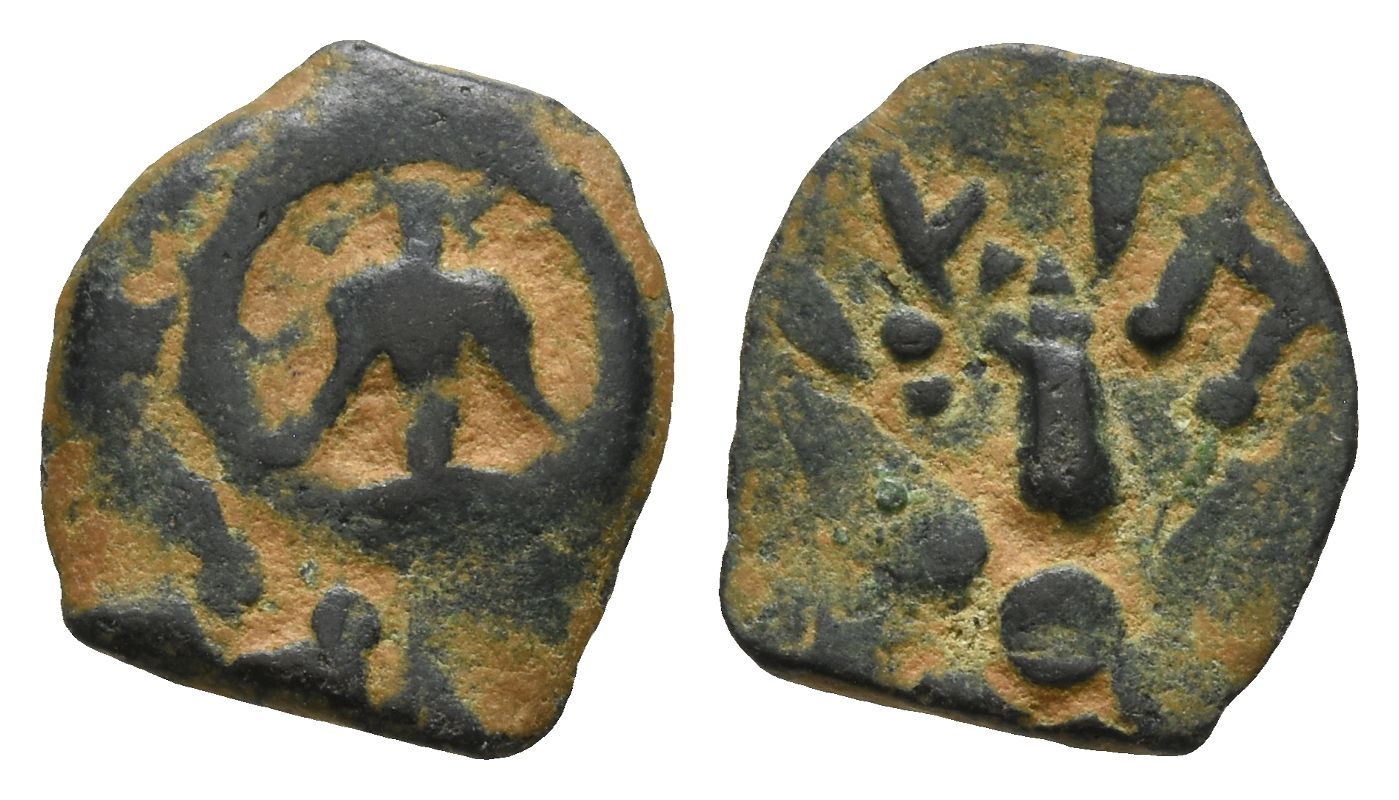
Judaea. Hasmoneans, Alexander Jannaios (Yehonatan) or Successors AE Half Prutah or Lepton. 103-76 BCE or later. Jerusalem mint.
Upright anchor within circle; legend around / Star, legend around. Cf. Meshorer Group L9-10; cf. Hendin 6195; cf. HGC 10, 644. Very Fine.(0.89gr, 12mm, 12h.).
ProvenanceFrom the collection of a gentleman, acquired on the London art market in the 1990s.
TimeLine Auctions follows a vetting process to ensure the authenticity and legality of all items, reinforcing our commitment to integrity and responsible trading. Each antiquity, antique, and coin lot undergoes thorough examination by a vetting committee of at least ten external specialists, professional trade association members, scientists, and archaeologists: Our Vetting Process
AUCTIONS:
TimeLine is a leading auction house specialising in antiquities, ancient art, collectables, natural history, coins, medals, and books. Our auctions offer museums, collectors, historians, and enthusiasts the opportunity to acquire unique and historically significant pieces.
LOT 3287
Judaea. Hasmoneans, Alexander Jannaios (Yehonatan) or Successors AE Half Prutah or Lepton.
Sold for (Inc. bp): £13
-
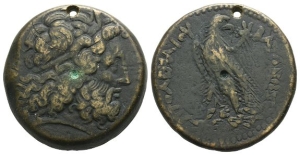
Ptolemaic Kingdom of Egypt, Ptolemy III Euergetes AE Tetrobol. 246-222 BC. Alexandreia mint. Series 4B.
Sold for (Inc. bp): £52
Horned head of Zeus-Ammon to right, wearing tainia with basileion / ΠΤΟΛΕΜΑΙΟΥ ΒΑΣΙΛΕΩΣ, eagle with closed wings standing to left, head to right, on thunderbolt; filleted cornucopia over shoulder, E between legs. CPE B366; Svoronos 974; SNG Copenhagen 224-6 (Ptolemy IV). 46.38gr, 36mm, 12h.
Very Fine. Pierced for suspension.
From the private collection of John Meredith, acquired since the 1990s; thence by descent. -
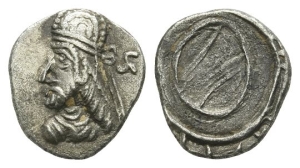
Kingdom of Persis. Uncertain king II AR hemidrachm. 1st century BC-1st century AD.
Sold for (Inc. bp): £20
Bearded bust to left, wearing diadem and Parthian-style tiara with two rows of pellets around pellet-in-crescent; triskeles behind / Diadem with no ties. Cf. K&M 4/59 (“Fürst Y”); cf. Tyler-Smith, Parcel type 1, 216 (obol; diadem with ties); Alram 619 var. (diadem with ties); Sunrise -. 1,31gr, 14mm.
Very Fine.
From the collection of a London antiquarian, formed since the 1980s. -
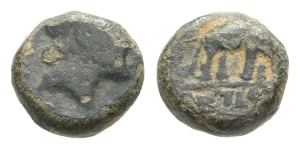
Seleukid Empire, Antiochos III(?) AE 9mm. Circa 222-187 BC.
Sold for (Inc. bp): £7
Laureate head of Apollo to right / ΑΝΤΙΟ[...], elephant standing to left (or right). Cf. SC 979; cf. HGC 9, 560. 1.11gr, 9mm, 3h.
Near Very Fine.
Property of a North London, UK, gentleman.
