
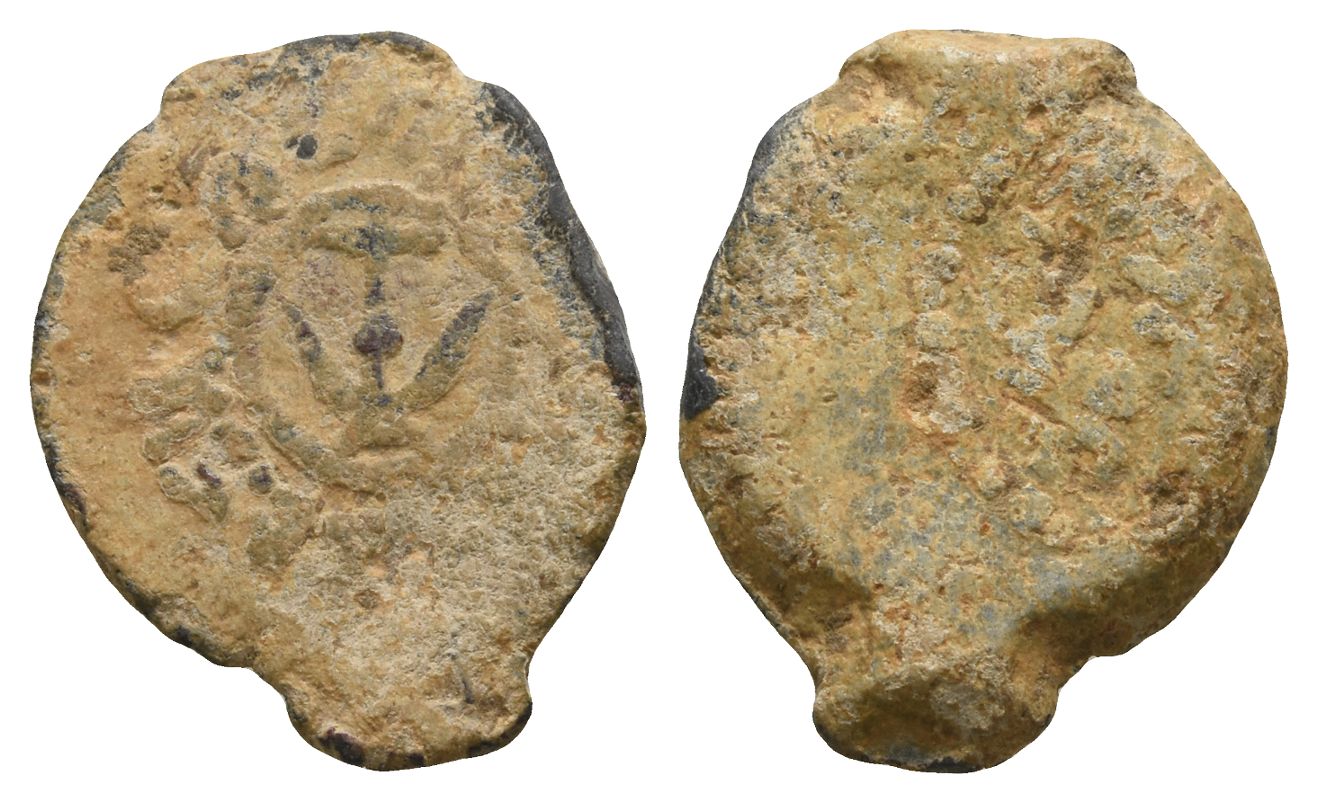
LOT 2687
Judaea. Hasmoneans, Alexander Jannaeus PB Prutah. 103-76 BCE.
Contemporary imitation in lead. BAΣIΛEΩΣ AΛEΞANΔPOY, Seleukid anchor within circular inner border / Blundered imitation of Paleo-Hebrew legend within dotted border. AJC I, group D; Hendin 476. Near Very Fine.(3.58gr, 18mm.).
ProvenanceProperty of a North London, UK, gentleman.
TimeLine Auctions follows a vetting process to ensure the authenticity and legality of all items, reinforcing our commitment to integrity and responsible trading. Each antiquity, antique, and coin lot undergoes thorough examination by a vetting committee of at least ten external specialists, professional trade association members, scientists, and archaeologists: Our Vetting Process
AUCTIONS:
TimeLine is a leading auction house specialising in antiquities, ancient art, collectables, natural history, coins, medals, and books. Our auctions offer museums, collectors, historians, and enthusiasts the opportunity to acquire unique and historically significant pieces.
-
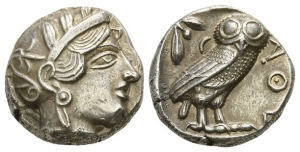
Attica, Athens AR Tetradrachm. Circa 454-404 BC.
Sold for (Inc. bp): £715
Head of Athena with profile eye to right, wearing disc earring, pearl necklace and a crested Attic helmet adorned with three olive leaves and a pi-style palmette / ΑΘΕ, owl standing to right, head facing the viewer, olive sprig with berry and crescent moon in upper left field, all within incuse square. Kroll 8; Dewing 1591-8; SNG Copenhagen 31; HGC 4, 1597. 17.14gr, 22mm, 8h.
Near Extremely Fine.
Property of a West London, UK, gentleman. -
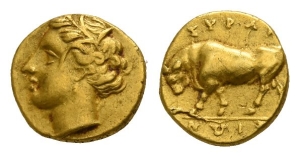
Sicily, Syracuse AV 25 Litrai or Sixth Stater. Time of Agathokles, 317-289 BC.
Sold for (Inc. bp): £1,950
Struck circa 295-289 BC. Head of Persephone to left, wearing wreath of grain ears / Bull walking to left, ΣΥΡΑΚΟΣΙΩΝ around. Bérend, l’or pl. 9, 14; SNG ANS 707; SNG Lloyd 1475; SNG Copenhagen 752; HGC 2, 1288. 1.41gr, 10mm, 9h.
Near Extremely Fine.
From the collection of a London antiquarian, formed since the 1980s. Ex Roma Numismatics Ltd, Auction 3, 31 March 2012, lot 87. -
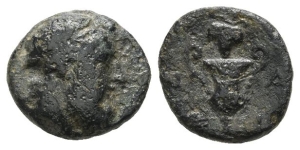
Cyclades, Naxos AE 16mm. Circa 400-300 BC.
Sold for (Inc. bp): £33
Bearded head of Dionysos to right, wearing ivy wreath / N-A Ξ-I, kantharos; above, grape bunch. Joy 545; Nicolet-Pierre, Naxos II pl. III, 1-9; HGC 6, 636. 3.74gr, 16mm, 11h.
Near Very Fine.
Ex 'V' gentleman's collection, Switzerland. From the property of a North London, UK, gentleman.
