
Loading, please wait...
LOT 0843
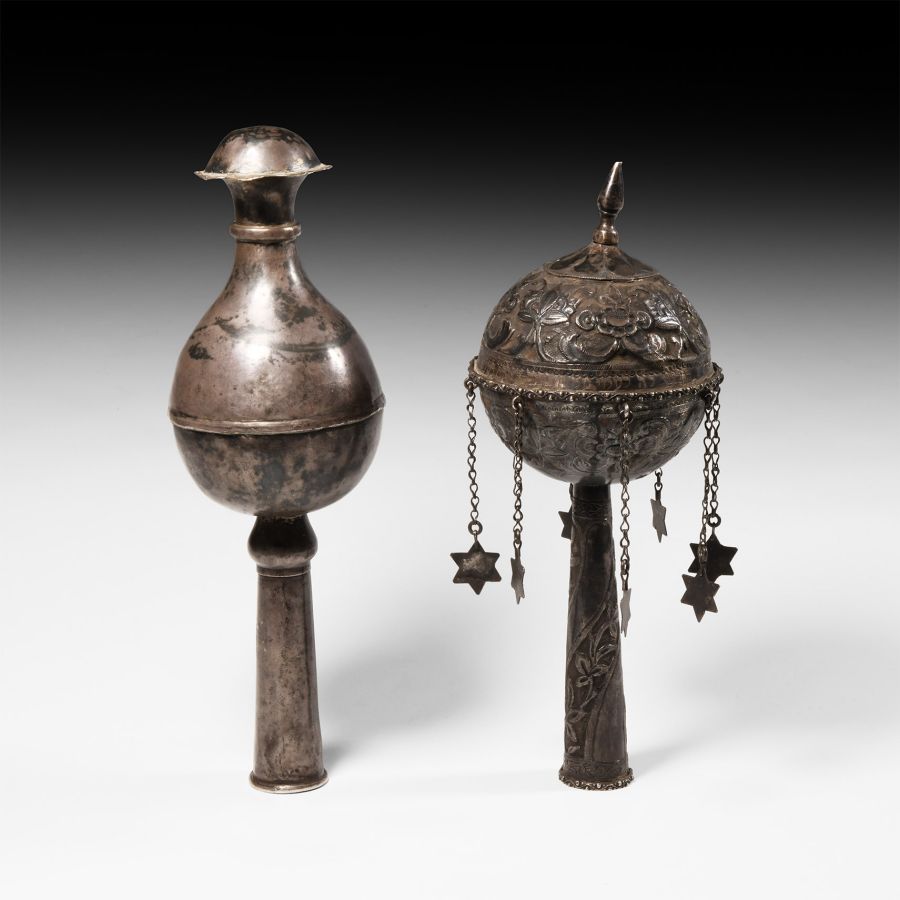
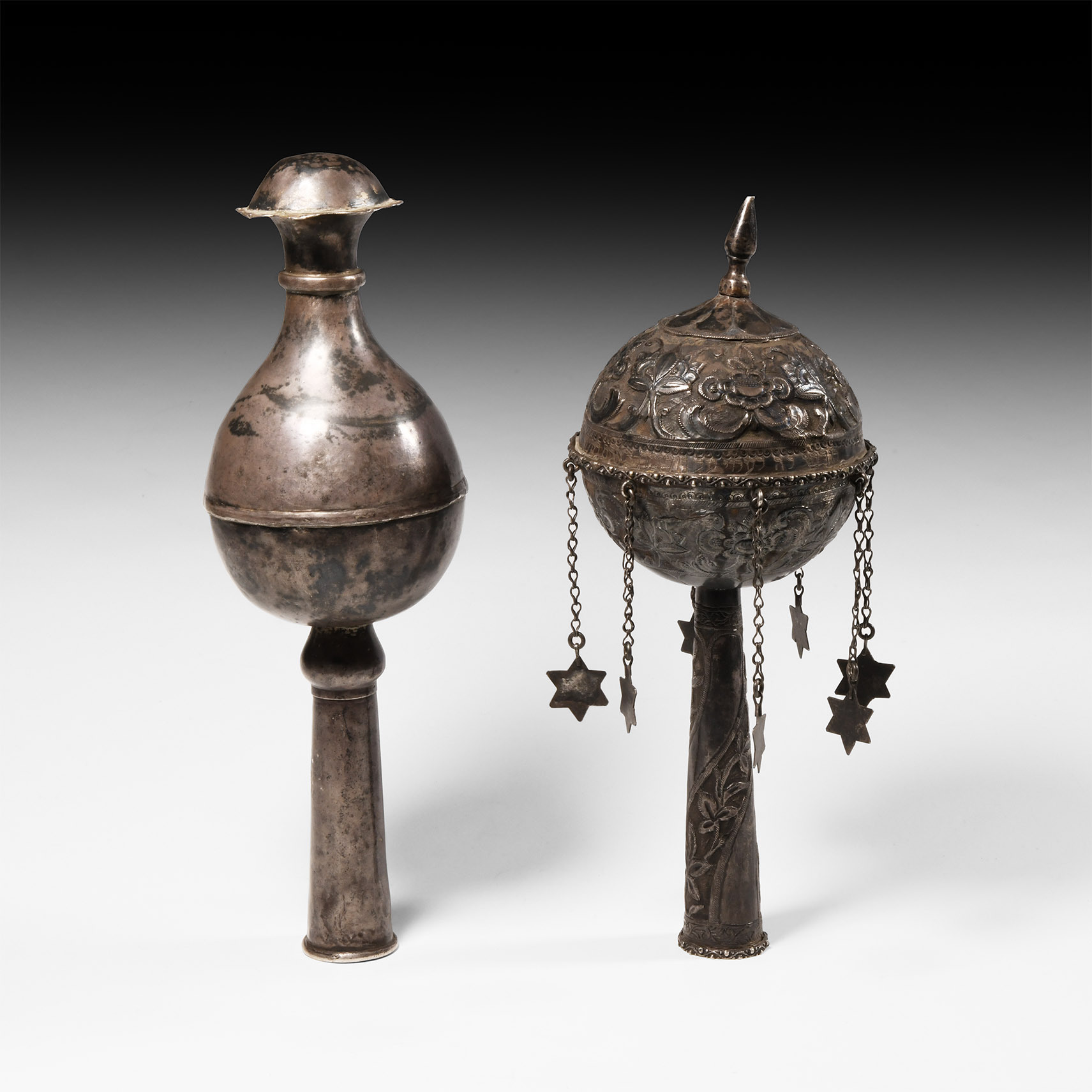
Jewish Silver Rimonim Group
19TH CENTURY A.D.
10 1/4 - 11 in. (670 grams total, 26-28 cm).
A group of two silver rimonim or Torah finials comprising: one piriform example with medial rib, scalloped rim, domed head and tapering cylindrical socket; a spherical type with conical finial and tapering cylindrical socket, medial band of dangles with inscription above, embossed and chased stylised floral and foliate motifs to body and socket. [2]
ProvenanceFrom a UK private collection.
CONDITIONTimeLine Auctions follows a vetting process to ensure the authenticity and legality of all items, reinforcing our commitment to integrity and responsible trading. Each antiquity, antique, and coin lot undergoes thorough examination by a vetting committee of at least ten external specialists, professional trade association members, scientists, and archaeologists: Our Vetting Process
AUCTIONS:
TimeLine is a leading auction house specialising in antiquities, ancient art, collectables, natural history, coins, medals, and books. Our auctions offer museums, collectors, historians, and enthusiasts the opportunity to acquire unique and historically significant pieces.
-
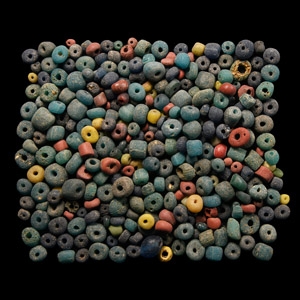
Western Asiatic Mixed Bead Group
Circa 1st millennium B.C.Sold for (Inc. bp): £117
A mixed group of mainly drawn opaque coloured glass beads. 122 grams total, 2-12 mm
Acquired 1970-2010. Collection of a late Japanese gentleman. -
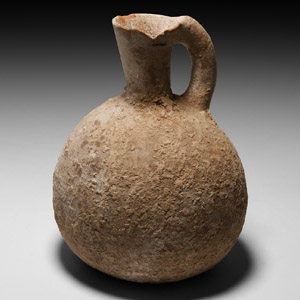
Holy Land Terracotta Jug
3rd-2nd millennium B.C.Sold for (Inc. bp): £78
A bulbous terracotta jug with flared neck and integral round-section handle. 518 grams, 16.5 cm high
Acquired before 2000. Property of a London, UK, gentleman. Property of an Essex, UK, gentleman. -
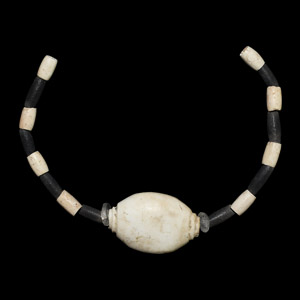
Western Asiatic Necklace String
1st millennium B.C.Estimate: £100 - 140 (+bp*)
Opening Bid: £50
A group of black and white jasper cylindrical beads with irregular quartz discs and a large oval-shaped white jasper bead with double collar at either end, restrung on a string. 36.86 grams, 24 cm
Fine condition.
Acquired before 1990. Central London gallery. Private collection of a North West London lady.
