
Loading, please wait...
LOT 1476
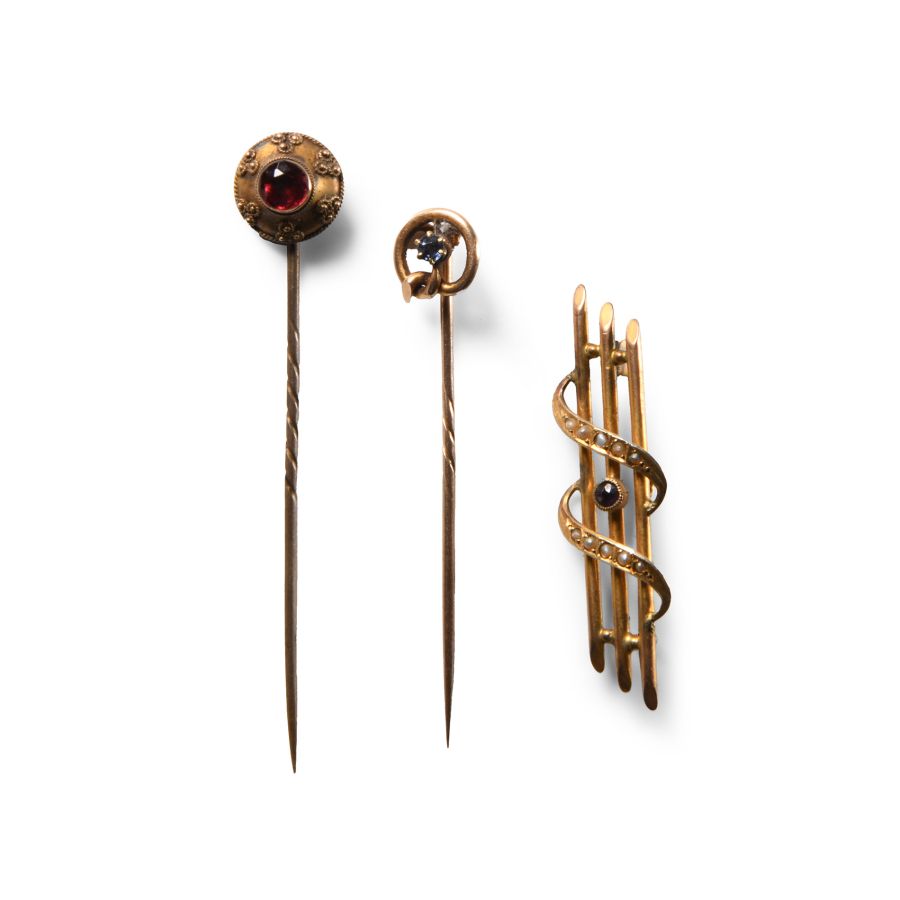
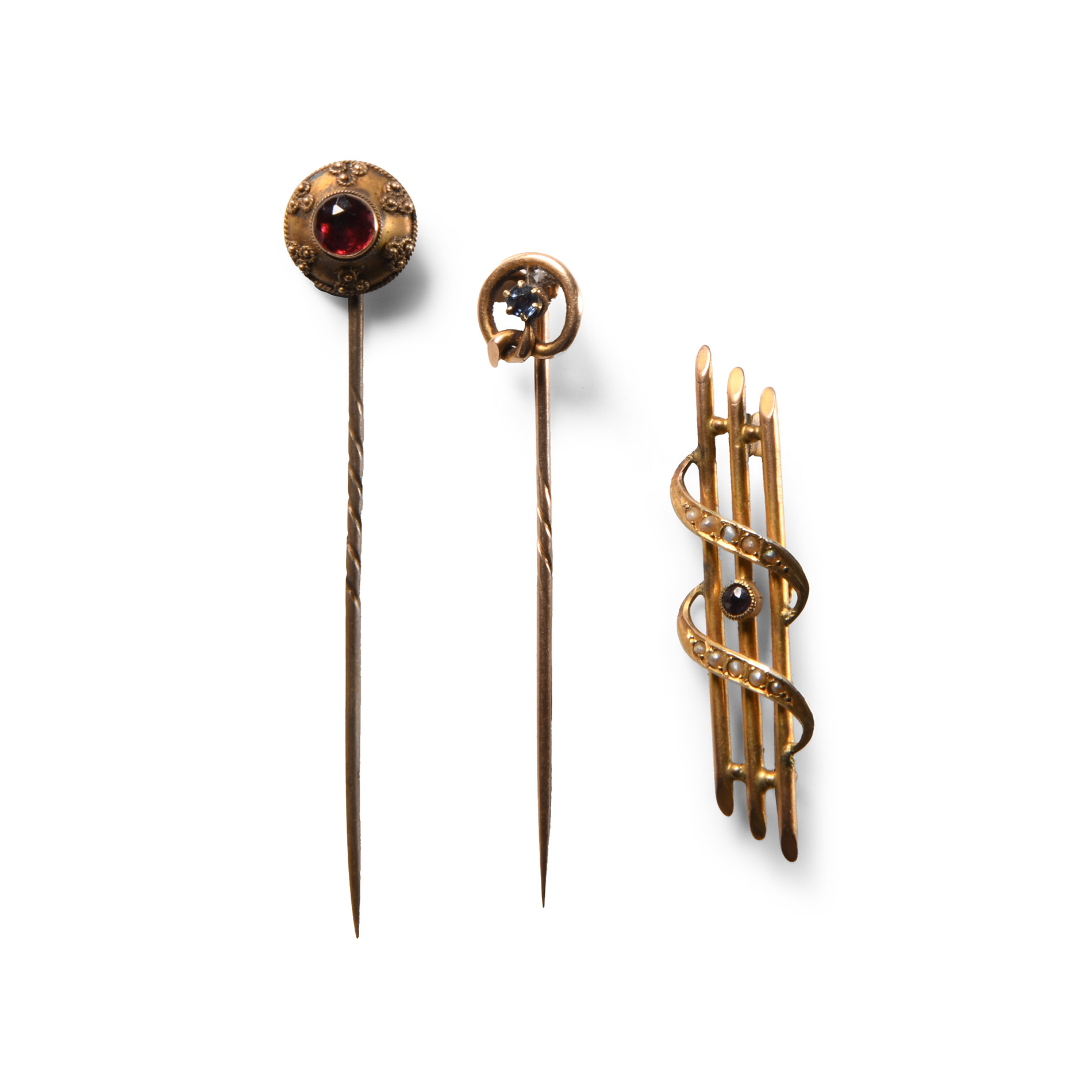
Jewelled Gold Tie Pin Group
19TH CENTURY A.D.
1 3/4 - 2 5/8 in. (6.05 grams total, 45-67 mm).
Comprising a gold pin with facetted blue gem in a loose loop and a conical cell with granules around a cell with facetted red glass stud; offered with another gilt example of three staggered bars and scrolls with facetted red glass gem. [3, No Reserve]
ProvenanceAcquired London, UK.
Property of a Harwich gentleman.
TimeLine Auctions follows a vetting process to ensure the authenticity and legality of all items, reinforcing our commitment to integrity and responsible trading. Each antiquity, antique, and coin lot undergoes thorough examination by a vetting committee of at least ten external specialists, professional trade association members, scientists, and archaeologists: Our Vetting Process
AUCTIONS:
TimeLine is a leading auction house specialising in antiquities, ancient art, collectables, natural history, coins, medals, and books. Our auctions offer museums, collectors, historians, and enthusiasts the opportunity to acquire unique and historically significant pieces.
-
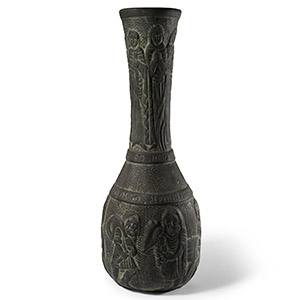
Large Ceramic Vase with Representation of the Months
20th century A.D.Sold for (Inc. bp): £39
With flared mouth and bulbous body, low-relief frieze of workers and labourers undertaking appropriate agricultural tasks, horizontal bands with the corresponding names of the months. 4.2 kg, 54 cm high
Acquired London, UK. Property of a Harwich gentleman. -
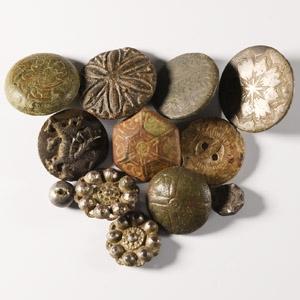
Bronze Button Collection
18th-19th century A.D.Sold for (Inc. bp): £33
Mixed group of broad-flan buttons, some with high-relief motifs. 109 grams total, 10-30 mm
Acquired early 2000s. Property of a Stowmarket, UK, gentleman. -
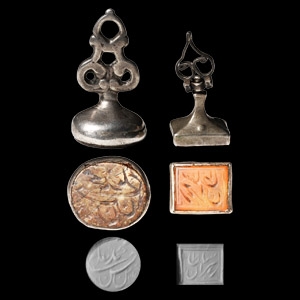
Silver Fob Seal Collection with Calligraphic Gemstones
Circa 19th century A.D.Estimate: £120 - 170 (+bp*)
Opening Bid: £67
One composed of an openwork trefoil stem and oval base set with a polished stone bearing a calligraphic inscription in Arabic; one featuring a leaf-shaped openwork handle with rectangular base set with polished carnelian bearing an Arabic(?) calligraphic inscription. 10.6 grams total, 24-29 mm
From a family collection formed 1900-1950; by descent circa 1980.
