
Loading, please wait...


LOT 1622
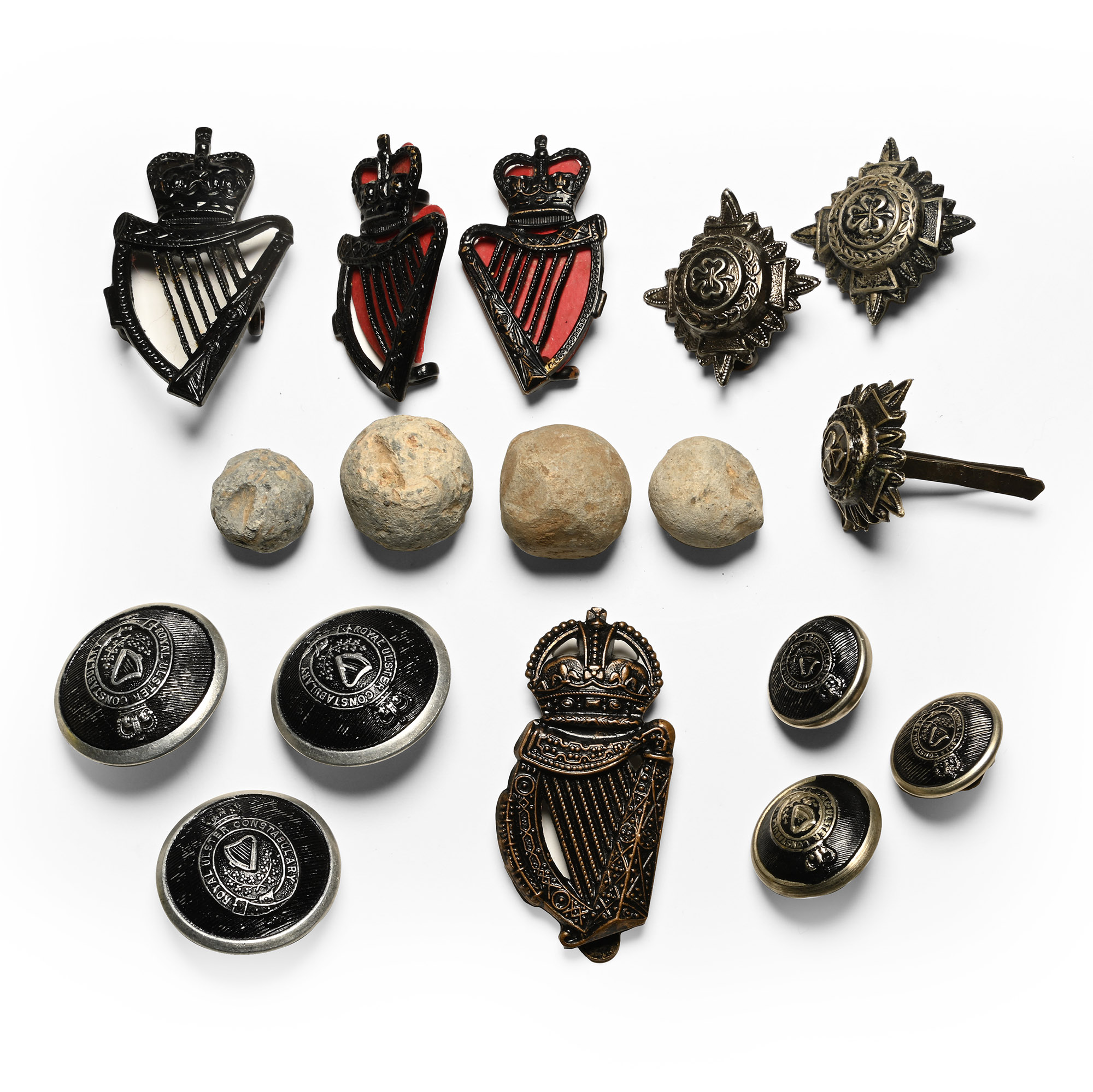
Items of Irish Military and Services Interest
17TH-20TH CENTURY A.D.
1/2 - 2 in. (162 grams total, 14-50 mm).
Comprising: four musket balls from the banks of the river Foyle in Derry; six Royal Ulster Constabulary (obsolete) buttons; Royal Irish Constabulary cap and collar badges from the 1950s-1960s; three Royal Irish Constabulary rank badges; WWI London Irish Rifles cap badge. [17, No Reserve]
ProvenanceEx Irish collection, Germany.
From a Leicestershire, UK, collection.
This lot is accompanied by an illustrated lot declaration signed by the Head of the Antiquities Department, Dr Raffaele D’Amato.
TimeLine Auctions follows a vetting process to ensure the authenticity and legality of all items, reinforcing our commitment to integrity and responsible trading. Each antiquity, antique, and coin lot undergoes thorough examination by a vetting committee of at least ten external specialists, professional trade association members, scientists, and archaeologists: Our Vetting Process
AUCTIONS:
TimeLine is a leading auction house specialising in antiquities, ancient art, collectables, natural history, coins, medals, and books. Our auctions offer museums, collectors, historians, and enthusiasts the opportunity to acquire unique and historically significant pieces.
-
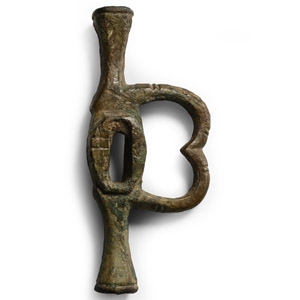
Medieval Bronze Dagger Quillon
Circa 15th century A.D.Sold for (Inc. bp): £65
Comprising flaring arms with engraved X-motif to each finial, large kidney-shaped loop to the side. 56.7 grams, 77 mm
From the collection of a Norfolk, UK, gentleman. Property of a private collector, West London, UK. This lot is accompanied by an illustrated lot declaration signed by the Head of the Antiquities Department, Dr Raffaele D’Amato. -
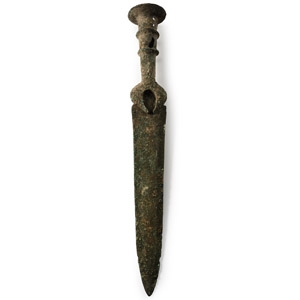
North-Western Persian Bronze Dagger
Late 2nd-early 1st millennium B.C.Sold for (Inc. bp): £1,170
The blade with shallow midrib, hilt cast with two horizontal grooves and crescentic guard. 354 grams, 31.5 cm
Acquired 1980-2015. Ex Abelita family collection. This lot is accompanied by an illustrated lot declaration signed by the Head of the Antiquities Department, Dr Raffaele D’Amato.
Moorey, Gordon and Khorasani created a classification of bladed weapons, according to which daggers are edged weapons not greater than 36cm in length, dirks (short swords) are between 36cm and 50cm in length, and swords are edged weapons greater than 50cm in length. -
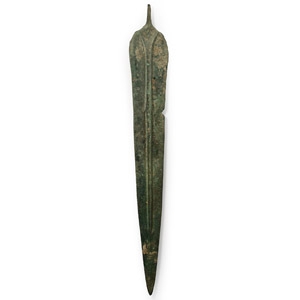
Luristan Bronze Short Sword with Blood Channels
2nd-1st millennium B.C.Sold for (Inc. bp): £390
A two-edged leaf-shaped blade with short rectangular tang, corrugated midrib extending almost to the tip and flared at the shoulder. 342 grams, 48 cm
Acquired 1980-2015. Ex Abelita family collection. This lot is accompanied by an illustrated lot declaration signed by the Head of the Antiquities Department, Dr Raffaele D’Amato.
Luristan was hardly an ethnic or political entity, but the people of Luri had relations through warfare and trade with Sumerians, Lullubi, Assyrians, Babylonians and Elamites in a large time period, spanning from the 3rd to the 2nd millennium B.C. The ruling elites of warrior horsemen were buried in the graves with their weapons and horses.
