
Loading, please wait...
LOT 0534
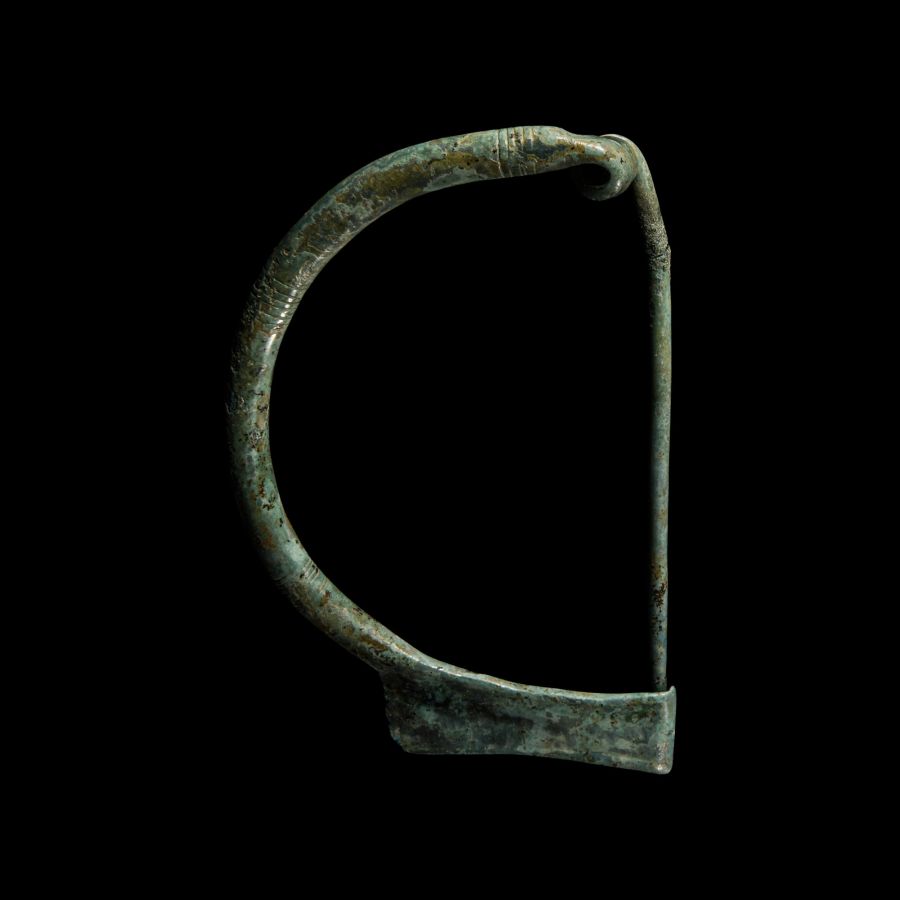
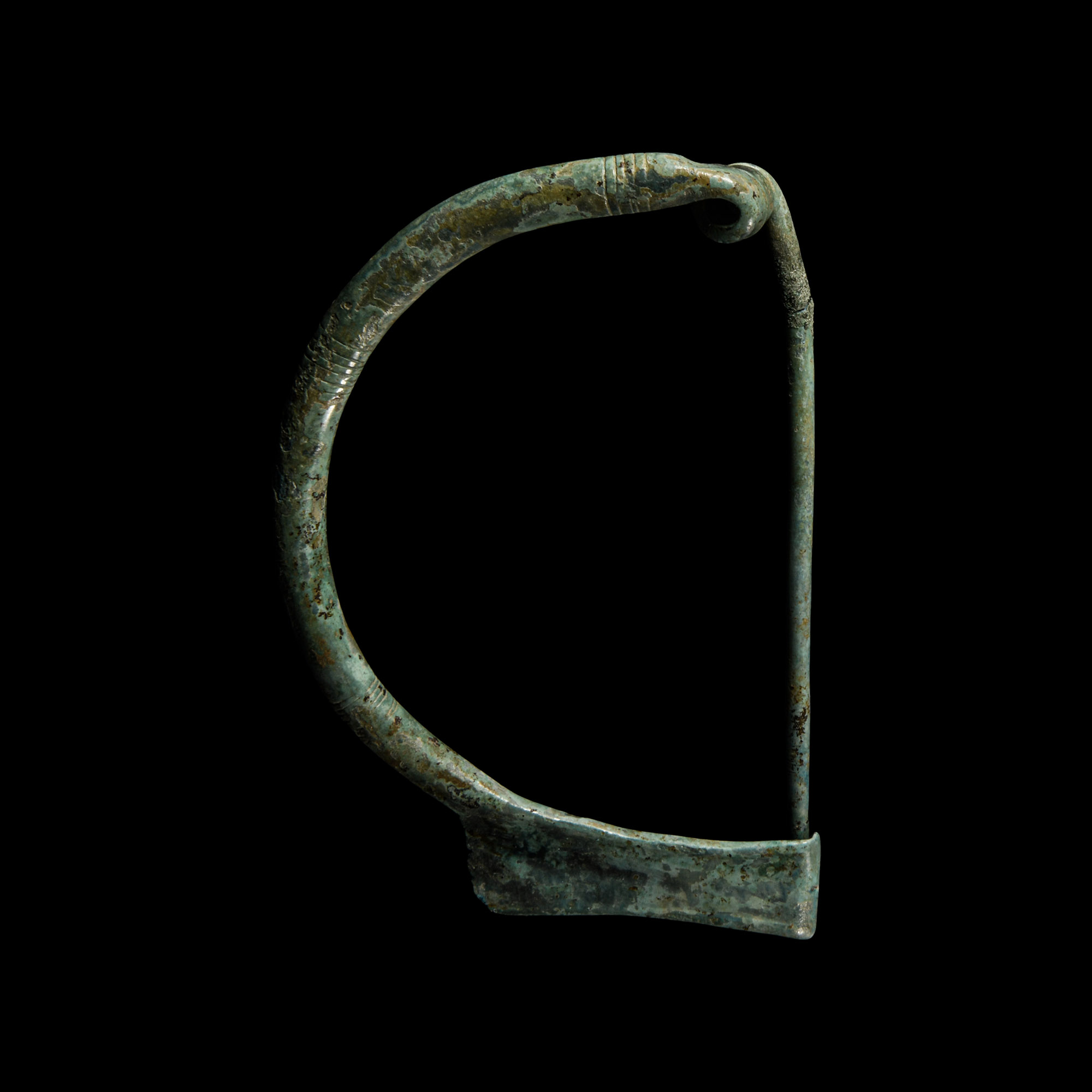
Italic Bronze Bow Brooch
8TH-7TH CENTURY B.C.
3 1/2 in. (32 grams, 88 mm).
With a simple curved arch decorated with engraved banding; integral pin and large catchplate. [No Reserve]
ProvenanceFrom the family collection of a Surrey gentleman since before 1960.
LiteratureCf. Richardson, A., In search of the Samnites: Adornment and Identity in Archaic Central Italy, 750-350 B.C., figs.5.13, p.54, for similar simple arch fibula.
FootnotesChronological and geographical variations of the Italic fibulae are dependent on the decoration of the arch. The use of bronze and iron (and even silver and electrum in the south) is less of a factor within the individual type series than it is for the overall trend of styles. The rare use of iron in the seventh century and increasingly frequent use throughout the sixth century never rivalled the popularity of bronze, which remained more practical and convenient for working with familiar techniques.
CONDITIONTimeLine Auctions follows a vetting process to ensure the authenticity and legality of all items, reinforcing our commitment to integrity and responsible trading. Each antiquity, antique, and coin lot undergoes thorough examination by a vetting committee of at least ten external specialists, professional trade association members, scientists, and archaeologists: Our Vetting Process
AUCTIONS:
TimeLine is a leading auction house specialising in antiquities, ancient art, collectables, natural history, coins, medals, and books. Our auctions offer museums, collectors, historians, and enthusiasts the opportunity to acquire unique and historically significant pieces.
-
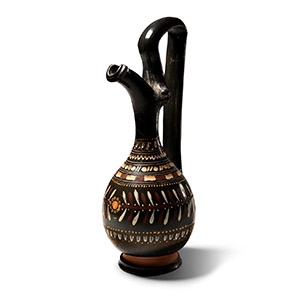
South Italian Gnathian Ware Pottery Oinochoe
Circa 4th century B.C.Estimate: £1,000 - 1,400 (‡+bp*)
Opening Bid: £500
Piriform bodied with u-shaped spout and high handle, polychrome painted egg, zig-zag, bar, dot and laurel pattern with flower arranged in rows to the front face. 193 grams, 20.2 cm high
Acquired in Europe before 2001. European collection. -
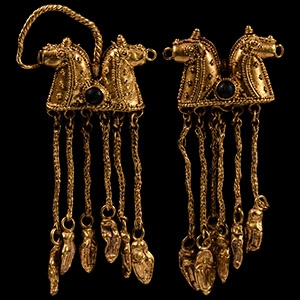
Eastern Greek Gold Horse Earrings with Pendants
Circa 4th century B.C. and laterEstimate: £1,500 - 2,000 (‡+bp*)
Opening Bid: £750
Each composed of a pair of bifacial addorsed horse-heads with filigree and granule detailing, filigree loop to each mouth, coil to each forehead, six loops to the underside each with a chain and sheet gold fruit pendant; to each face an inset glass cabochon; one with twisted wire ear hook above; both earrings with ancient chain dangles, one with a replicant horse. 18.08 grams total, 58-64 mm
Previously acquired on the UK art market between 1978-1980. Ex property of a North West London gentleman. -
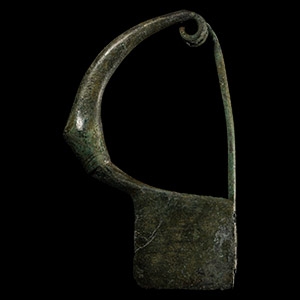
Greek Geometric Period Bow Fibula
8th-7th century B.C.Sold for (Inc. bp): £111
Central bulb to the keeled bow, integral pin and large catch-plate. 42 grams, 95 mm
From the family collection of a Surrey gentleman since before 1960.
The function of the catch-plate fibulae was utilitarian and decorative, they were used for woollen clothing (Herodotus V, 87) and they have been found in houses, tombs and as votive offerings in sanctuaries. This typology was introduced in South Italy by the Greeks, and was widespread in the Magna Graecia. Like all female fibulae, it functioned as a clothing fastener, usually worn as a pair on each shoulder.
