
Loading, please wait...
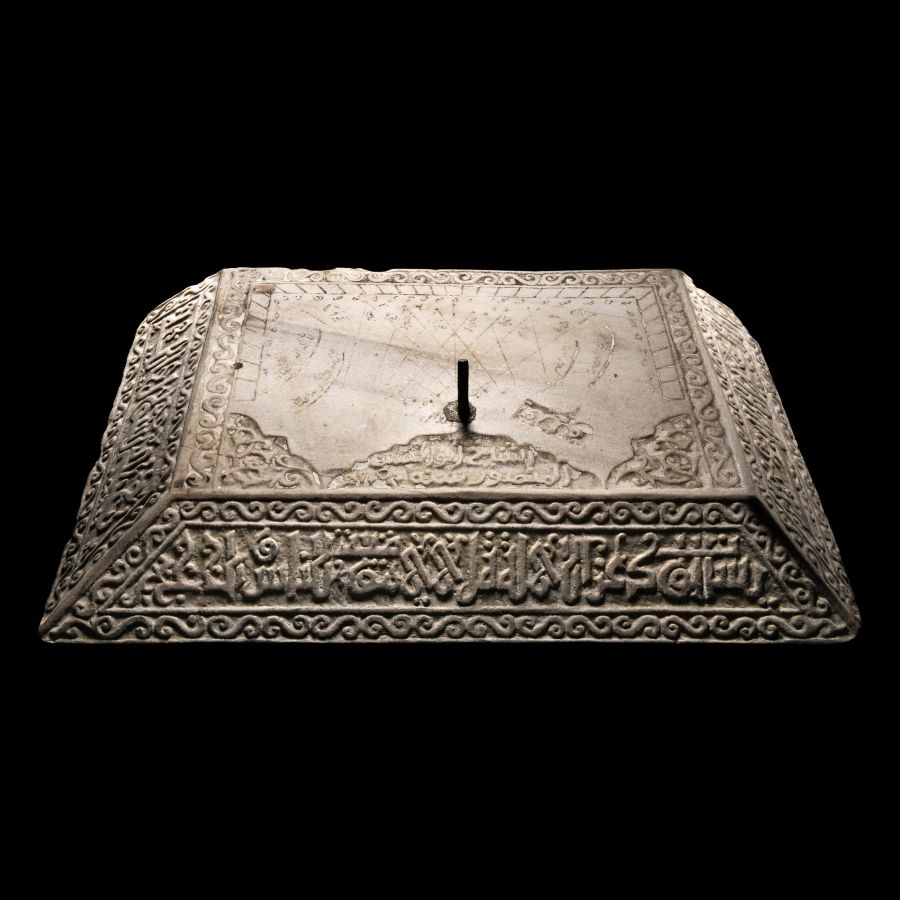
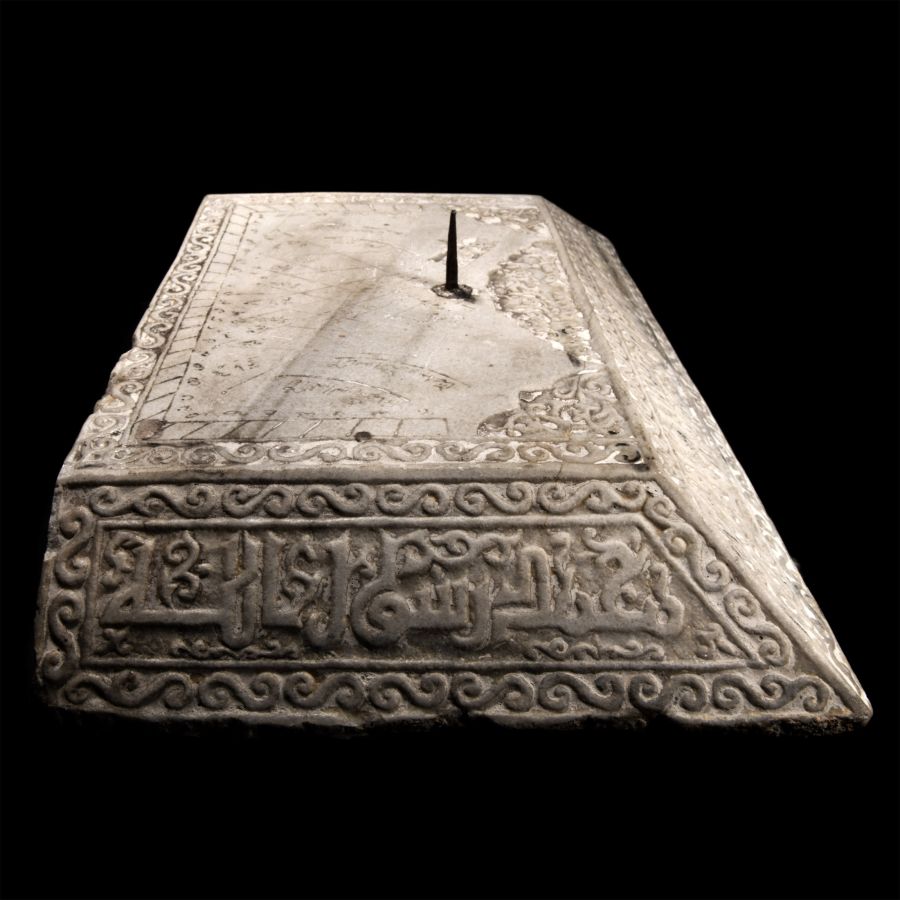
_900x900.jpg "Islamic Marble Sundial Made By Sheikh Abol Hassan Mansor Saif")
_200x200.jpg "Islamic Marble Sundial Made By Sheikh Abol Hassan Mansor Saif")
.jpg "Islamic Marble Sundial Made By Sheikh Abol Hassan Mansor Saif")
LOT 0221
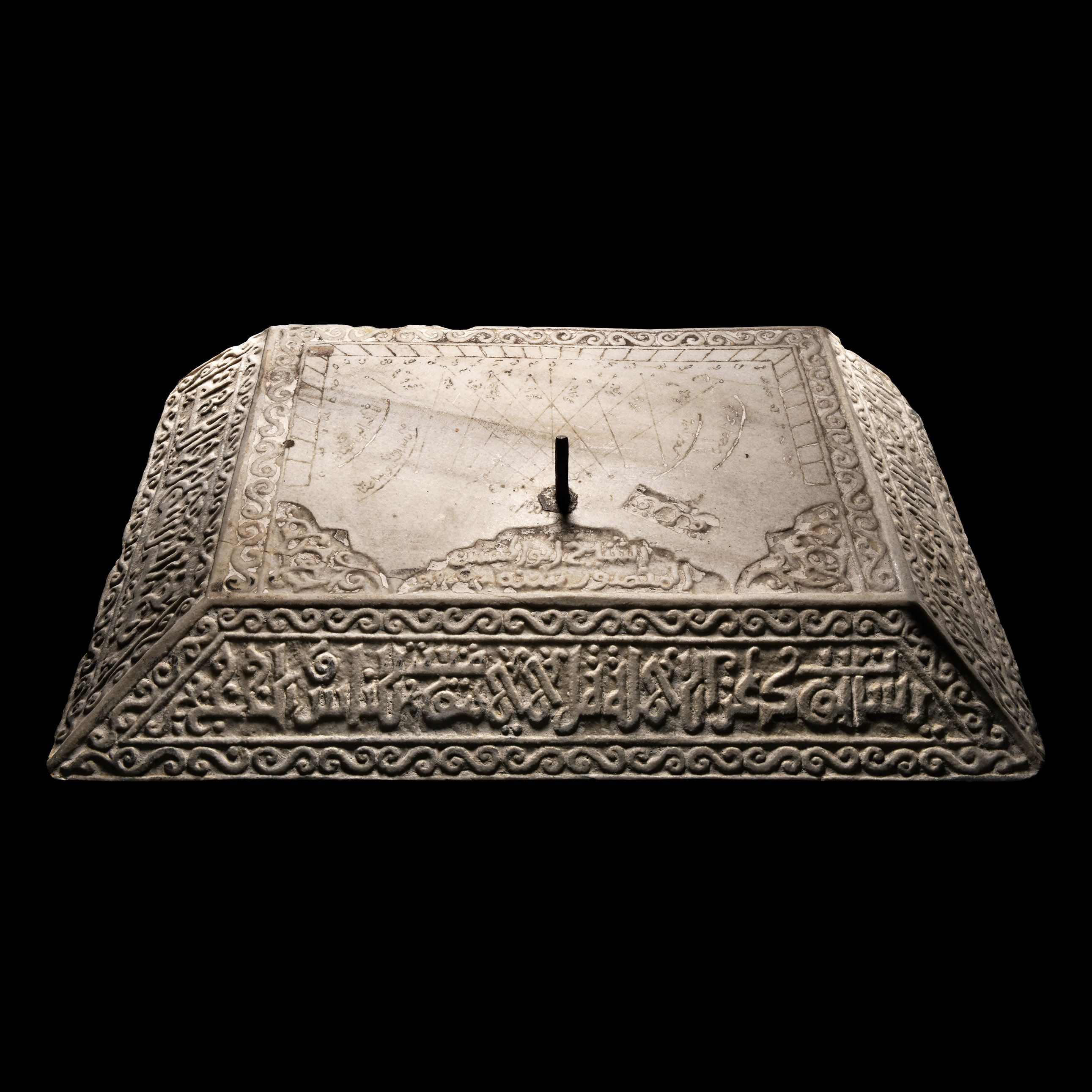
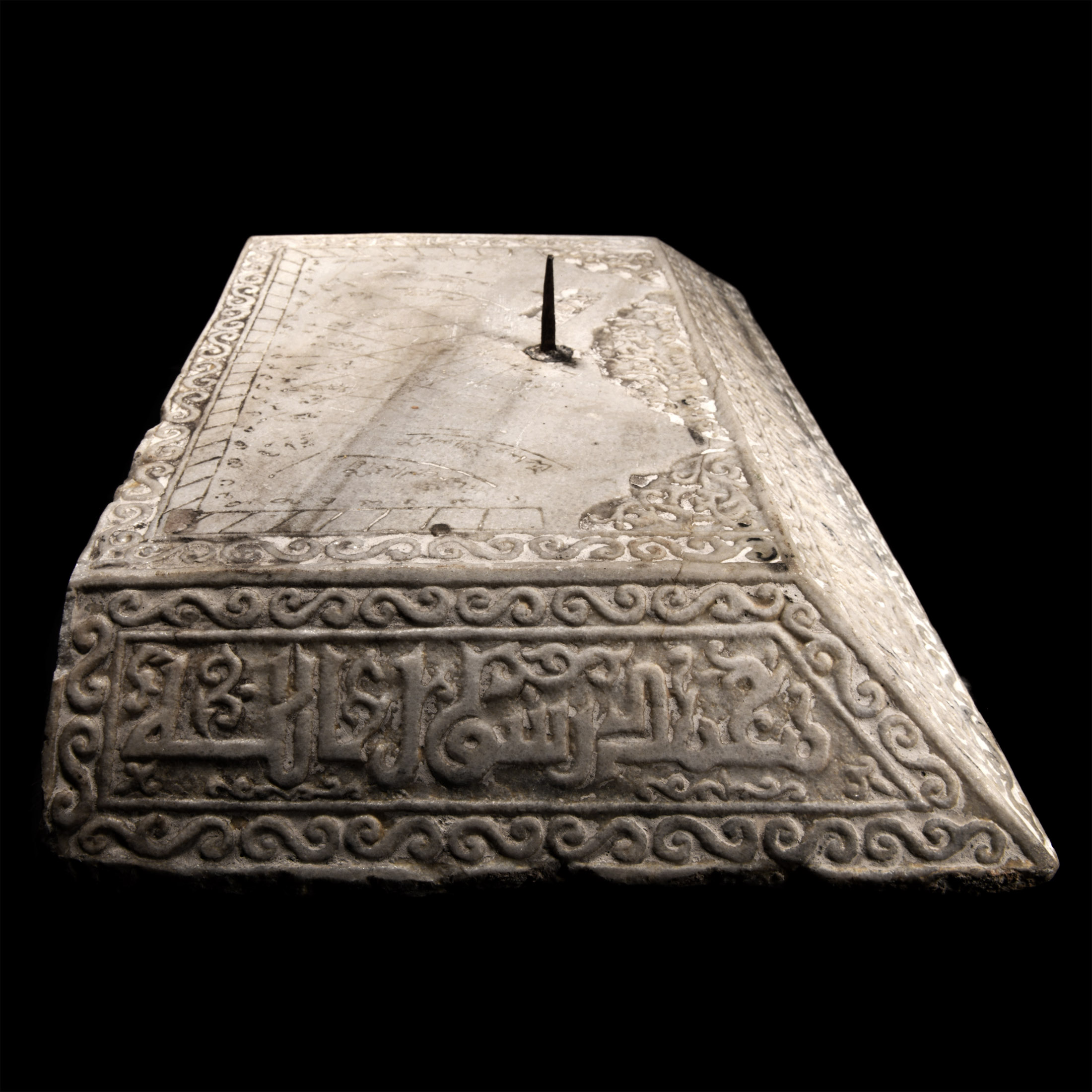
Islamic Marble Sundial Made By Sheikh Abol Hassan Mansor Saif
14TH-15TH CENTURY A.D.
28 in. (64.7 kg, 71 cm wide).
A rare rectangular marble shadow clock or sundial with three chamfered edges, scrolls and foliate tendrils framing panels of Kufic script to the sides reading, to the left 'Mohammed is his messenger of God' and to the right 'There is no God but Allah'; also inscribed with the maker's name to the front: Sheikh Abol Hassan Mansor Saif; with a sun dial to the upper face framed by a rope border; copper-alloy spike to the upper face to accept the gnomon.
ProvenanceFrom an important Paris gallery, France.
with Antiquite Brocante Chateau, Vente Encher, 6 March 2009.
This lot has been checked against the Interpol Database of stolen works of art and is accompanied by search certificate number no.13022-199340.
Cf. Museum of Islamic Art, Cairo, MIA no. 12630, for a later example.
CONDITIONTimeLine Auctions follows a vetting process to ensure the authenticity and legality of all items, reinforcing our commitment to integrity and responsible trading. Each antiquity, antique, and coin lot undergoes thorough examination by a vetting committee of at least ten external specialists, professional trade association members, scientists, and archaeologists: Our Vetting Process
AUCTIONS:
TimeLine is a leading auction house specialising in antiquities, ancient art, collectables, natural history, coins, medals, and books. Our auctions offer museums, collectors, historians, and enthusiasts the opportunity to acquire unique and historically significant pieces.
LOT 0221
Islamic Marble Sundial Made By Sheikh Abol Hassan Mansor Saif
Sold for (Inc. bp): £9,100
-
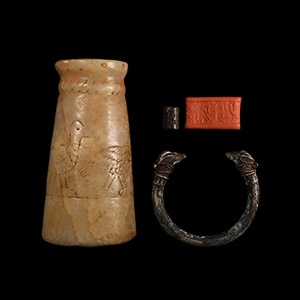
Western Asiatic Style Artefact Collection
20th century A.D.Sold for (Inc. bp): £111
A group of three stone artefacts in ancient style: a haematite cylinder seal accompanied by an impression; penannular metallic bracelet with ram's head terminals and filigree ornament; an alabaster pot of tapering cylindrical form, frieze of birds advancing right engraved around the circumference. 344 grams total, 1.4-10.2 cm
German collection formed before 2000. Ex private European collection. -
.jpg)
Akkadian Cylinder Seal with Combat Scene
24th-22nd century B.C.Estimate: £600 - 800 (+bp*)
Opening Bid: £300
A marble cylinder seal with frieze; accompanied by an old scholarly note, typed and signed by W.G. Lambert, late Professor of Assyriology, University of Birmingham, 1970-1993, which states: 'Cylinder seal of white marble, 28 x 20 mm. Design : a standing hero with spikey hair is defending two horned animals being attacked by two lions. A second such hero is grappling with a monster with long plait. Akkadian, c.2400-2200 B.C. Condition very good save for chipped edges.' 16.1 grams, 29 mm
From an important family collection. Examined by Professor Wilfrid George Lambert FBA (1926-2011), historian, archaeologist, and specialist in Assyriology and Near Eastern archaeology, in the late 1980s and early 1990s. -
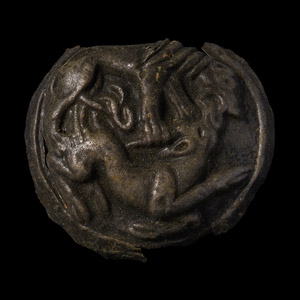
Western Asiatic Silver RepoussÉ Mount with Lion Attacking an Antelope
Circa 1st millennium B.C.Sold for (Inc. bp): £16
A domed silver mount displaying a repoussé scene composed of a lion and antelope in combat. 6.13 grams, 42 mm
Essex gallery, early 2000s.
