
Loading, please wait...


LOT 1457
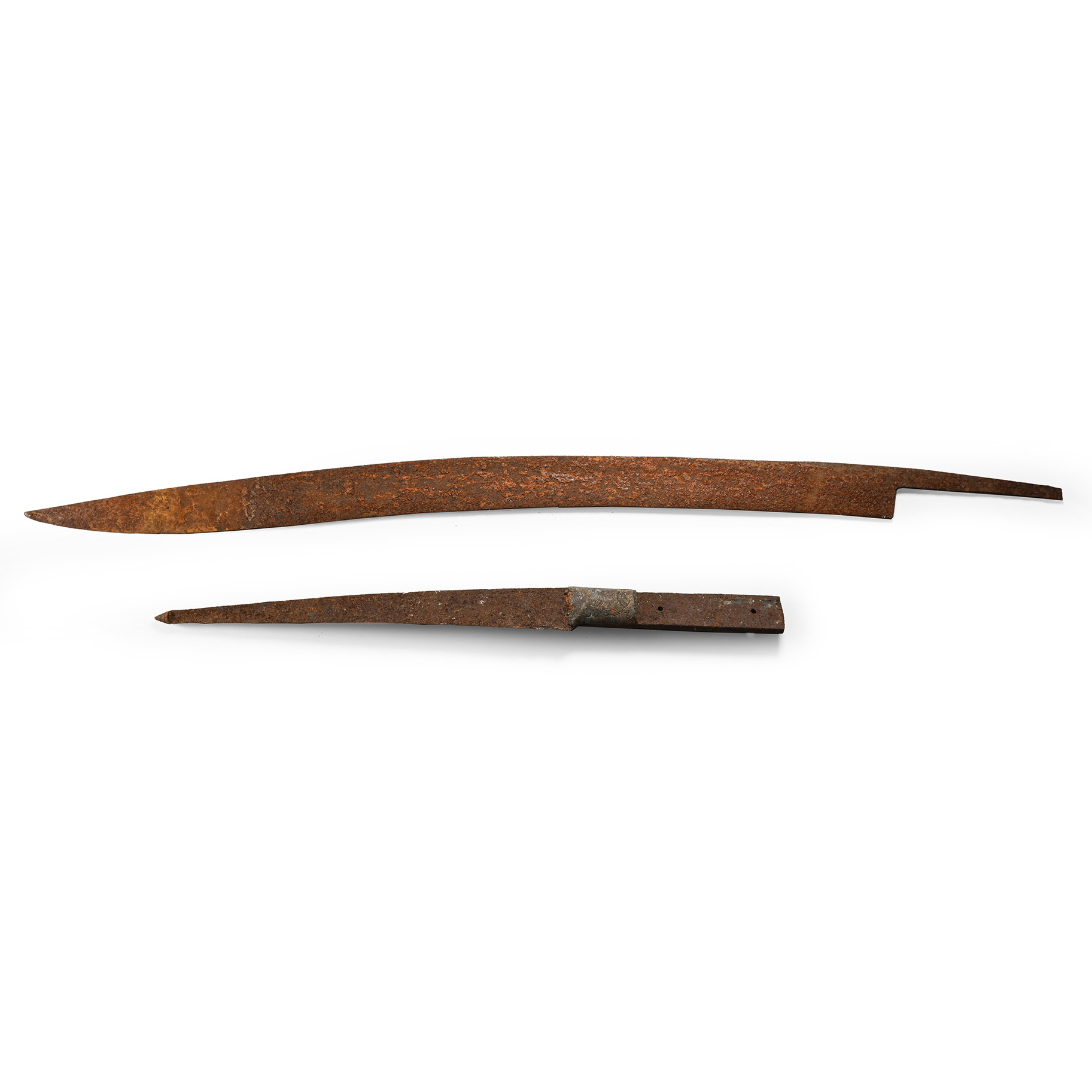
Iron Dagger and Sabre Group
CIRCA 19TH CENTURY A.D.
14 1/4 - 2 3/8 in. (563 grams total, 36-61 cm).
Comprising: long, narrow single-edged blade with swept profile and long tip; short, sturdy single-edged blade with applied bronze bolster. [2, No Reserve]
ProvenanceFrom a collection acquired on the UK art market from various auction houses and collections mostly before 2000.
From an important Cambridgeshire estate; thence by descent.
TimeLine Auctions follows a vetting process to ensure the authenticity and legality of all items, reinforcing our commitment to integrity and responsible trading. Each antiquity, antique, and coin lot undergoes thorough examination by a vetting committee of at least ten external specialists, professional trade association members, scientists, and archaeologists: Our Vetting Process
AUCTIONS:
TimeLine is a leading auction house specialising in antiquities, ancient art, collectables, natural history, coins, medals, and books. Our auctions offer museums, collectors, historians, and enthusiasts the opportunity to acquire unique and historically significant pieces.
-
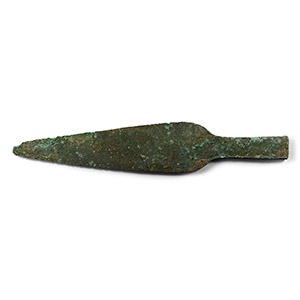
Western Asiatic Integral Hilted Bronze Short Sword
Late 3rd-2nd millennium B.C.Estimate: £250 - 350 (+bp*)
Opening Bid: £130
With a broad, lentoid-section flat blade, rounded tip, sloping sides, well marked shoulders with wide but short tang. 713 grams, 43.5 cm
Acquired 1980-2015. Ex Abelita family collection.
The sword finds similarity with the one from the Royal Cemetery of Ur. This is the most primitive form of dagger, consisting of a simple, pointed blade having slightly convex outline shoulders sloping to a short tang which has no rivets, and was probably hafted to wood with bitumen. -
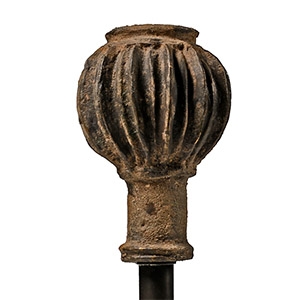
Luristan Bronze Ribbed Macehead
13th-7th century B.C.Sold for (Inc. bp): £260
Of Sara Gorz type with cylindrical shaft extended over the top, rounded knobs around the swollen head, flanked by horizontal grooved bands; mounted on a custom-made stand. 367 grams, 83 mm (633 grams total, 19 cm high including stand)
English private collection. with ArtAncient Ltd, 2013. Private collection, London. -
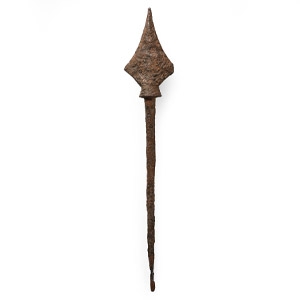
Norman Period Iron Arrowhead
11th-12th century A.D.Sold for (Inc. bp): £72
Tapering tang with collar and scooped edges to the blade. 8.5 grams, 10.4 cm
UK private collection before 2000. Acquired on the UK art market. Property of a London gentleman.
