
Loading, please wait...
LOT 2047
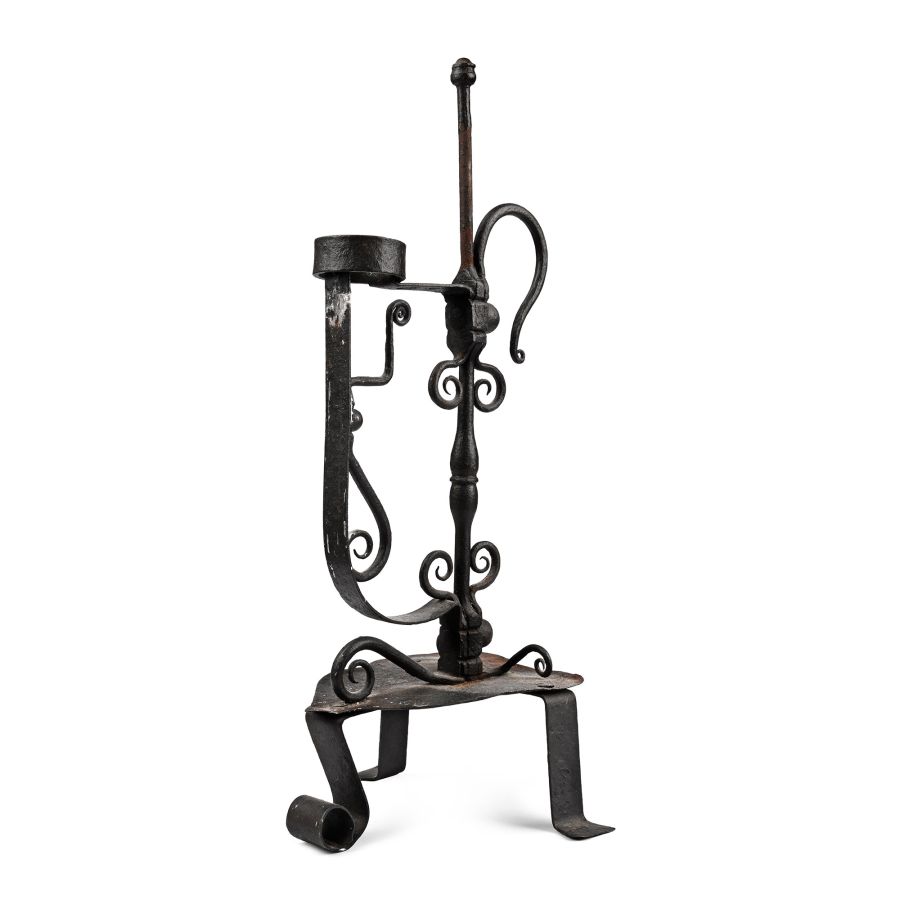
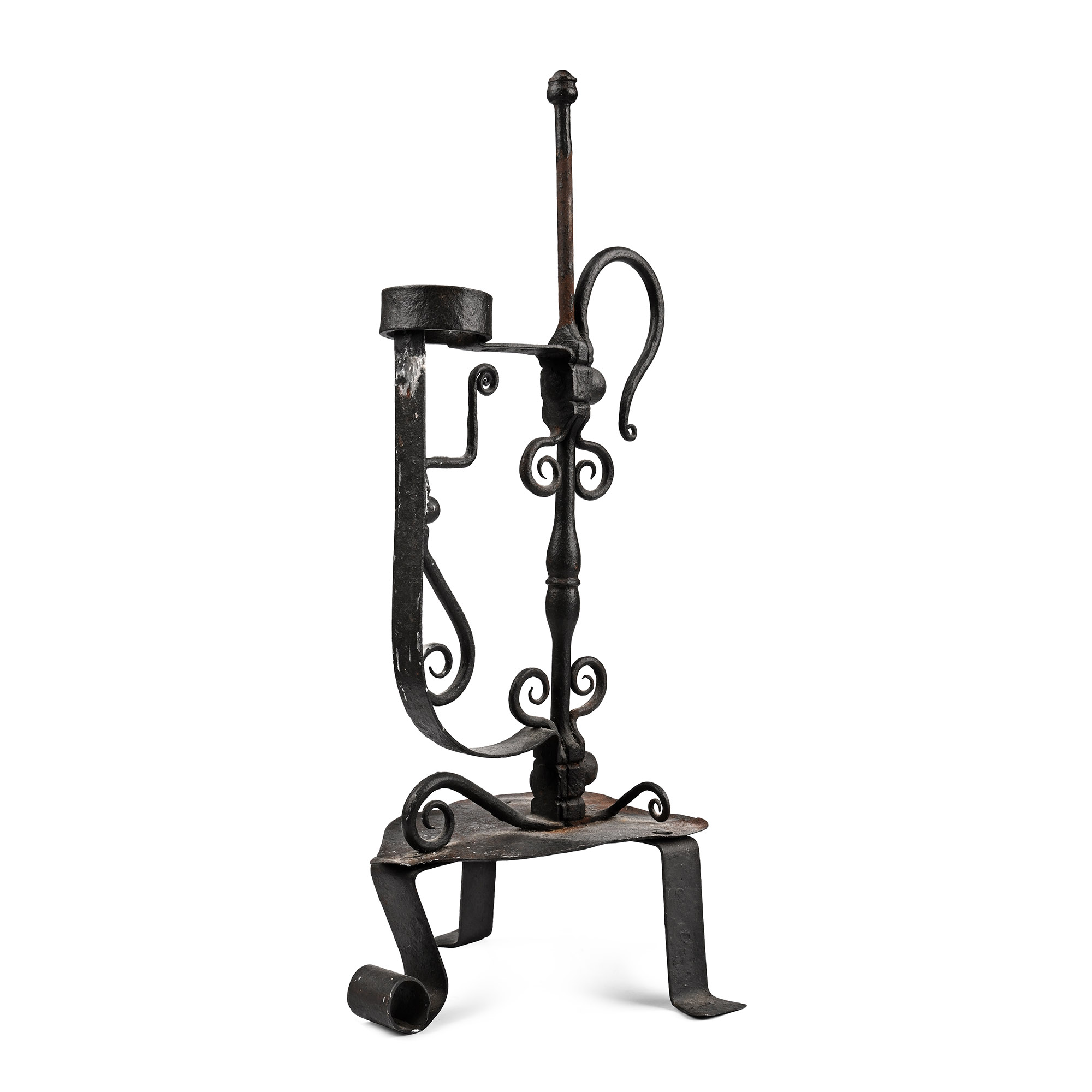
Iron Candle Holder
FRANCE, 18TH CENTURY A.D.
17 1/4 in. (1.21 kg, 44 cm).
The central baluster knopped column with scrolling ornament and looped carrying handle above a trefoil-shaped platform and rivetted tripod feet.
ProvenanceEx Nic McElhatton, former chairman of Christie's South Kensington.
Property of a Berkshire, UK, collector.
Accompanied by a copy of McElhatton's cataloguing page.
Cf. Ashley, Robert, The Rushlight and Related Holders - A Regional View, Ashley Publications, 2001, p.305, pl.278 and 278A.
CONDITIONTimeLine Auctions follows a vetting process to ensure the authenticity and legality of all items, reinforcing our commitment to integrity and responsible trading. Each antiquity, antique, and coin lot undergoes thorough examination by a vetting committee of at least ten external specialists, professional trade association members, scientists, and archaeologists: Our Vetting Process
AUCTIONS:
TimeLine is a leading auction house specialising in antiquities, ancient art, collectables, natural history, coins, medals, and books. Our auctions offer museums, collectors, historians, and enthusiasts the opportunity to acquire unique and historically significant pieces.
LOT 2047
Iron Candle Holder
Estimate £300 - 400€350 - 460 (for guidance only)$410 - 540 (for guidance only)
-
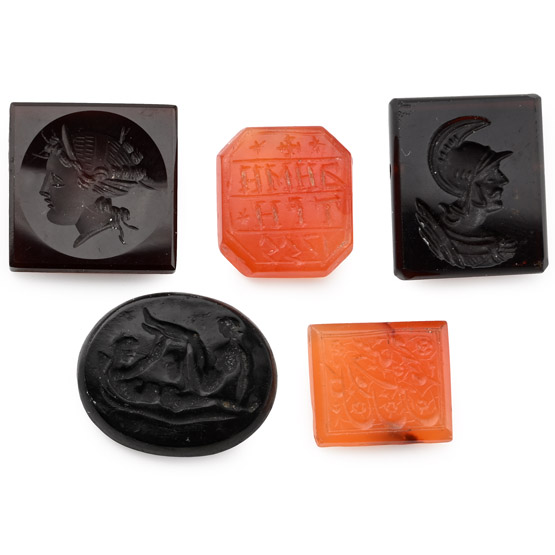
Post-Classical Stone Gemstone Collection
20th century A.D.Sold for (Inc. bp): £13
Including rectangular and ellipsoidtypes with incuse profile bust and other motifs. 13.2 grams total, 15-21 mm
Private collection, England. -
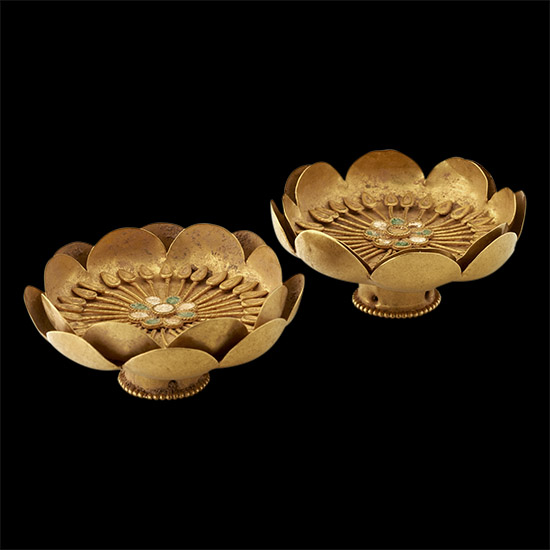
Two Hellenistic Style Gold and Enamelled Rosettes
20th century A.D.Estimate: £4,000 - 6,000 (+bp*)
Opening Bid: £2,000
Each formed as a tubular neck pierced four times underneath an applied pelleted border, supporting two flower-shaped thin plaques with raised rim, enclosing a central flower formed from coiled wires with green and white enamel, surrounded by applied wires with arrow-shaped finials. 19.16 grams total, 31-21 mm
Ingrid McAlpine, 1939-2018. with McAlpine, circa 1994. with Woolley & Wallis, Sailsbury, 19 September 2019, no.1978. This lot has been checked against the Interpol Database of stolen works of art and is accompanied by search certificate number no.13164-249666. -
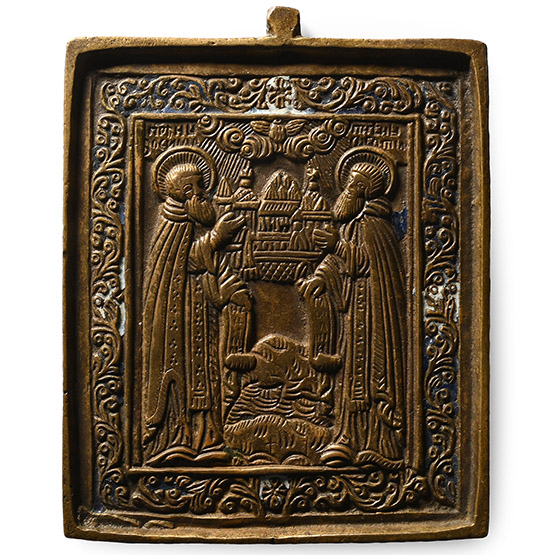
Russian Orthodox Enamelled Bronze Travel Icon with Saints Zosima and Sabbas
Circa 1820 A.D.Estimate: £100 - 140 (+bp*)
Opening Bid: £54
Depicting Saint Zosima and Saint Sabbas in front of the Solovetsky Monastery, both nimbate and dressed in the Abbot’s garments, holding the model of the monastery offered to God, represented in the sky as a dove upon a cloud; arabesque frame; inscriptions in Old Slavonic with the names of the saints. 108 grams, 88 mm
Acquired from Chris Martin-Zakheim, Iconastas, 5 Piccadilly Arcade, London SW1. From the private collection of a West London, UK, gentleman, formed since the early 2000s.
Saints Zosima and Sabbas or Sabbatius were highly venerated Orthodox saints, founders of the Solovetsky Monastery, a fortified monastery located in the White Sea in Northern Russia. This double portrait shows Zosima and Sabbas holding up a model of their religious institution, which resembles a small medieval city. Solovetsky Monastery obtained big investments from the city of Novgorod and established itself as one of the richest monasteries in Russia.
