
Loading, please wait...
LOT 1536
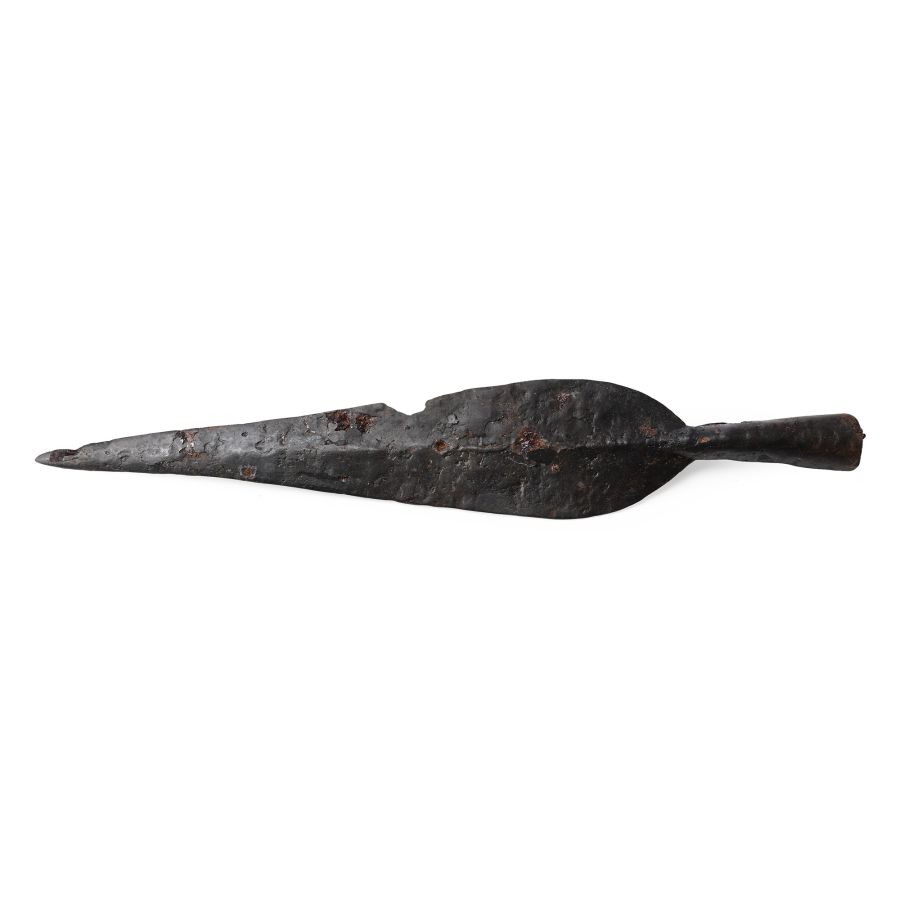
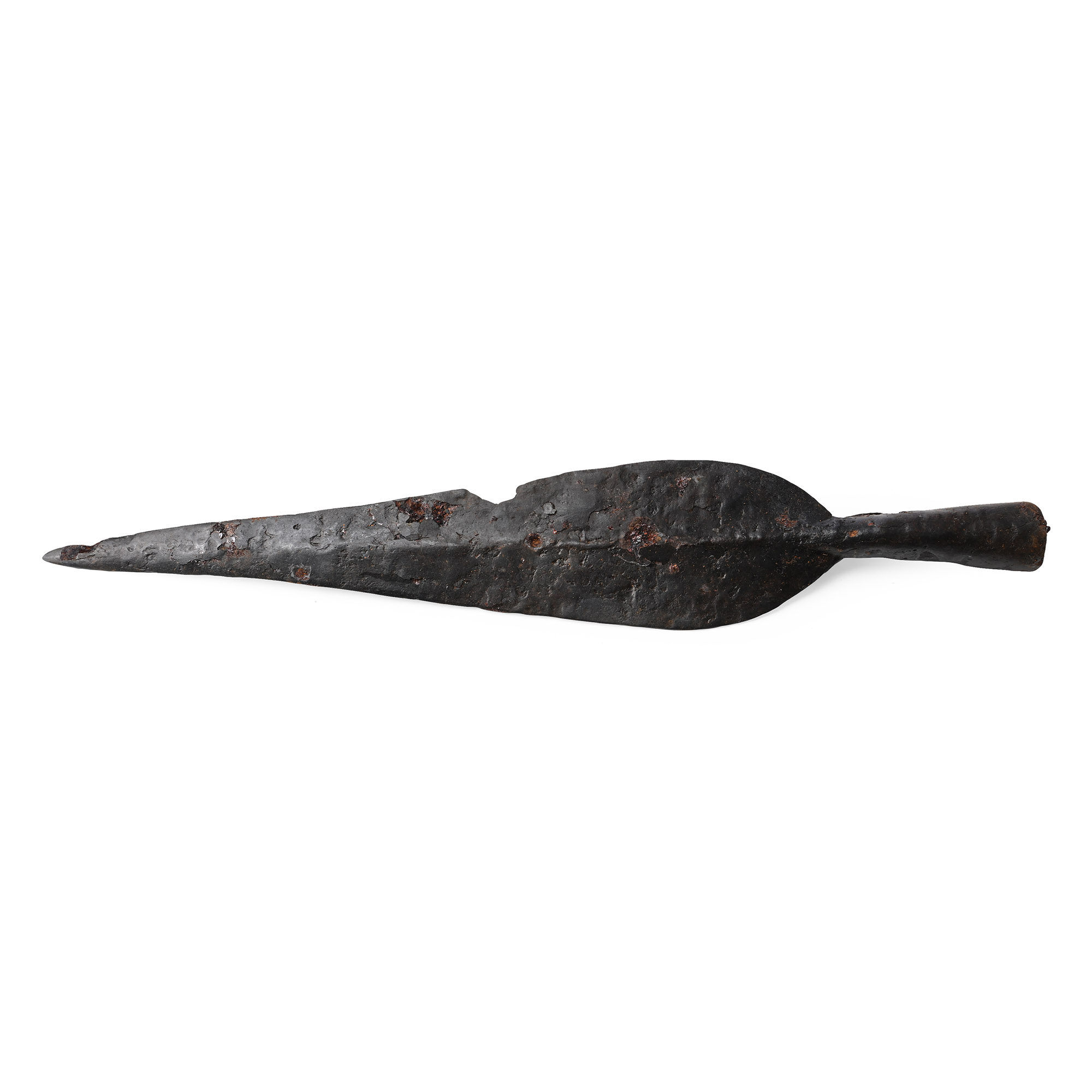
Iron Age Celtic Socketted Iron Spearhead
2ND-1ST CENTURY B.C.
11 in. (120 grams, 28 cm).
With a slender heart-shaped blade, thick midrib, flared closed socket.
ProvenanceFrom a 1980s collection.
Ex North West London gallery.
with TimeLine Auctions, 22-27 May 2018, no.1480.
Private collection, Suffolk.
Cf. Stead, I. & Rigby, V., The Morel Collection. Iron Age Antiquities from Champagne in the British Museum, London, 1999, item Q15(4).
CONDITIONTimeLine Auctions follows a vetting process to ensure the authenticity and legality of all items, reinforcing our commitment to integrity and responsible trading. Each antiquity, antique, and coin lot undergoes thorough examination by a vetting committee of at least ten external specialists, professional trade association members, scientists, and archaeologists: Our Vetting Process
AUCTIONS:
TimeLine is a leading auction house specialising in antiquities, ancient art, collectables, natural history, coins, medals, and books. Our auctions offer museums, collectors, historians, and enthusiasts the opportunity to acquire unique and historically significant pieces.
-
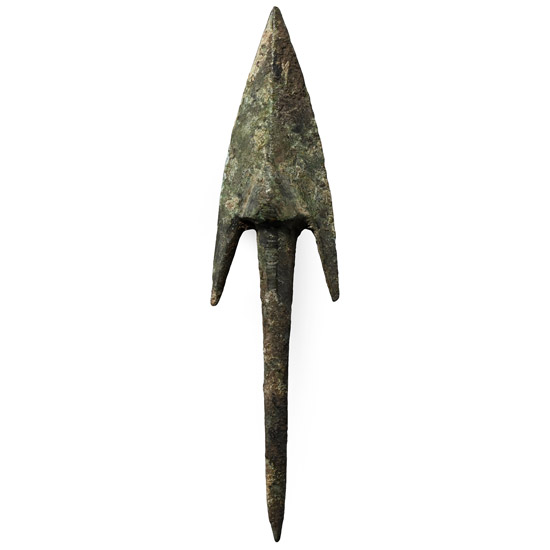
Large Phoenician Bronze Arrowhead
Levant, circa 1200-1100 B.C.Sold for (Inc. bp): £111
Broad and lentoid in section with spiked tang, elongated barbs, bulb to each face at junction with the head. 16.5 grams, 75 mm
From the private collection of Mr Brian Edwards, New Malden, Surrey, UK, formed from the late 1970s-early 1980s; thence by descent. Accompanied by the original collector's data sheet(s) with reference no.A10. -
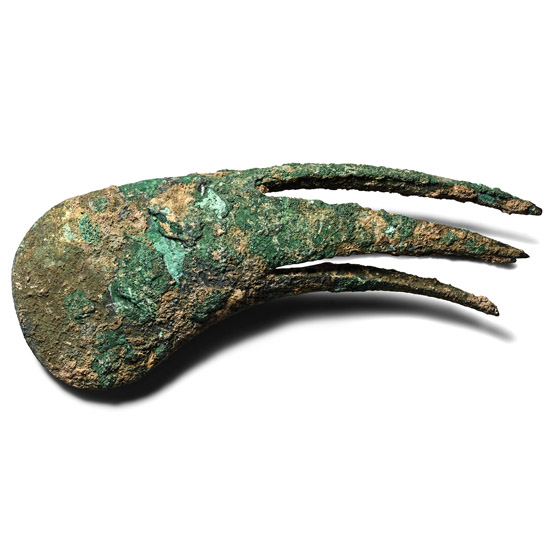
Bactrian Bronze Claw Axehead
3rd millennium B.C.Sold for (Inc. bp): £182
Egg-shaped with spiked prongs to the socket, narrow, rounded cutting edge. 165 grams, 11.9 cm
From a UK collection formed in the 1980s. Property of an Essex, UK, gentleman.
The 'claw mace' was an enigmatic ancient bronze weapon from the Bronze Age Near East. The hollow bulbous head was trailed by tines of varying lengths. It is believed that it was affixed over a wooden shaft and used like a club in combat, and not necessarily used as a ceremonial weapon. The knife-edge bulb end could have broken bones and proven to be a formidable striking weapon requiring no skill to wield. The tines would have not only been decorative, but would have served to add strength below the striking end to prevent breakage. In battle, maces were often used by commanders to display rank when giving orders in battle and leading soldiers, inspiring leadership and power. Egg-shaped with spiked sleeves or prongs, the top of the weapon has a narrow edge, and the sleeves have small internal tangs for mounting. -
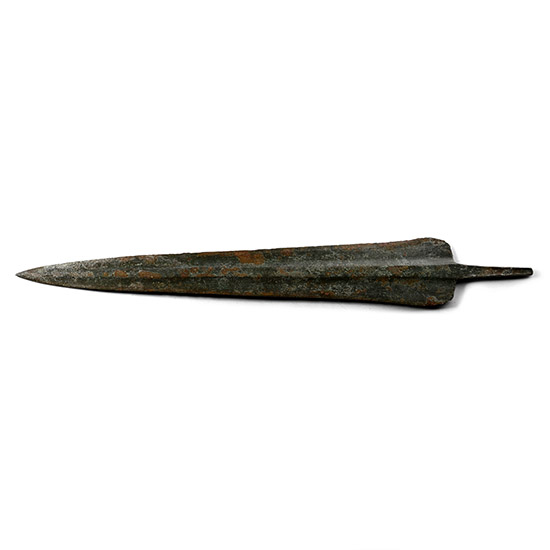
Western Asiatic Bronze Dagger
14th-10th century B.C.Sold for (Inc. bp): £234
Triangular blade with raised midrib and a rectangular-section tang. 130 grams, 31 cm
Ex Abelita family collection, 1990s.
