
Loading, please wait...
LOT 1463
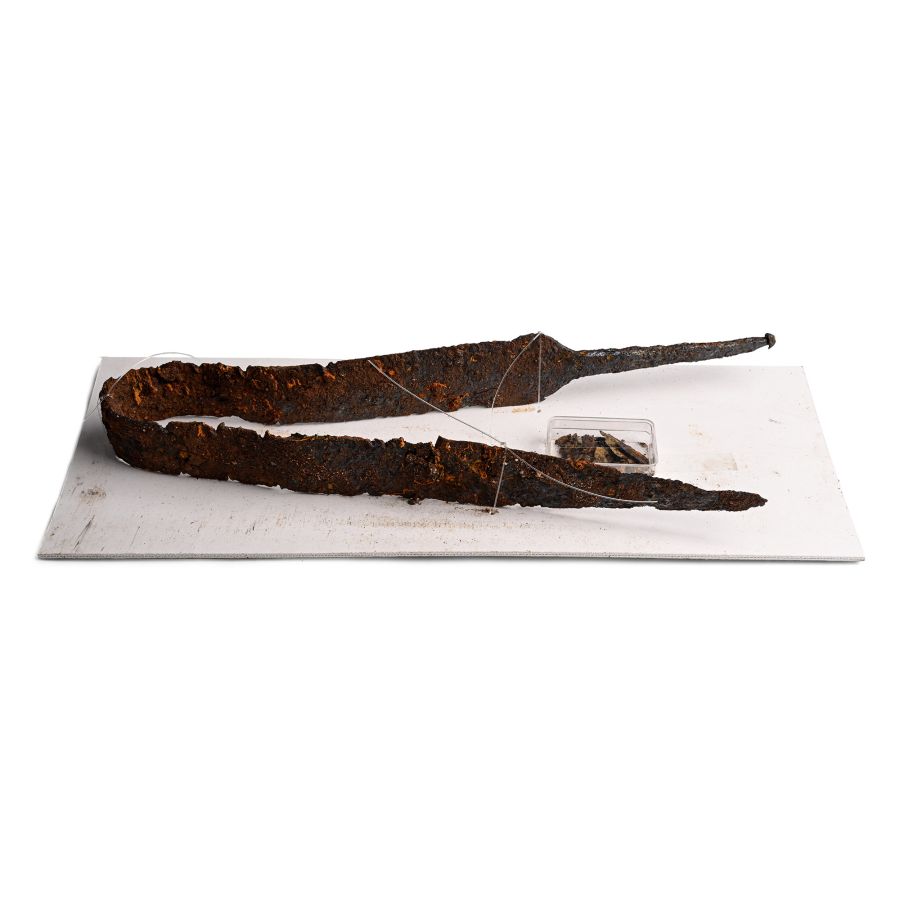
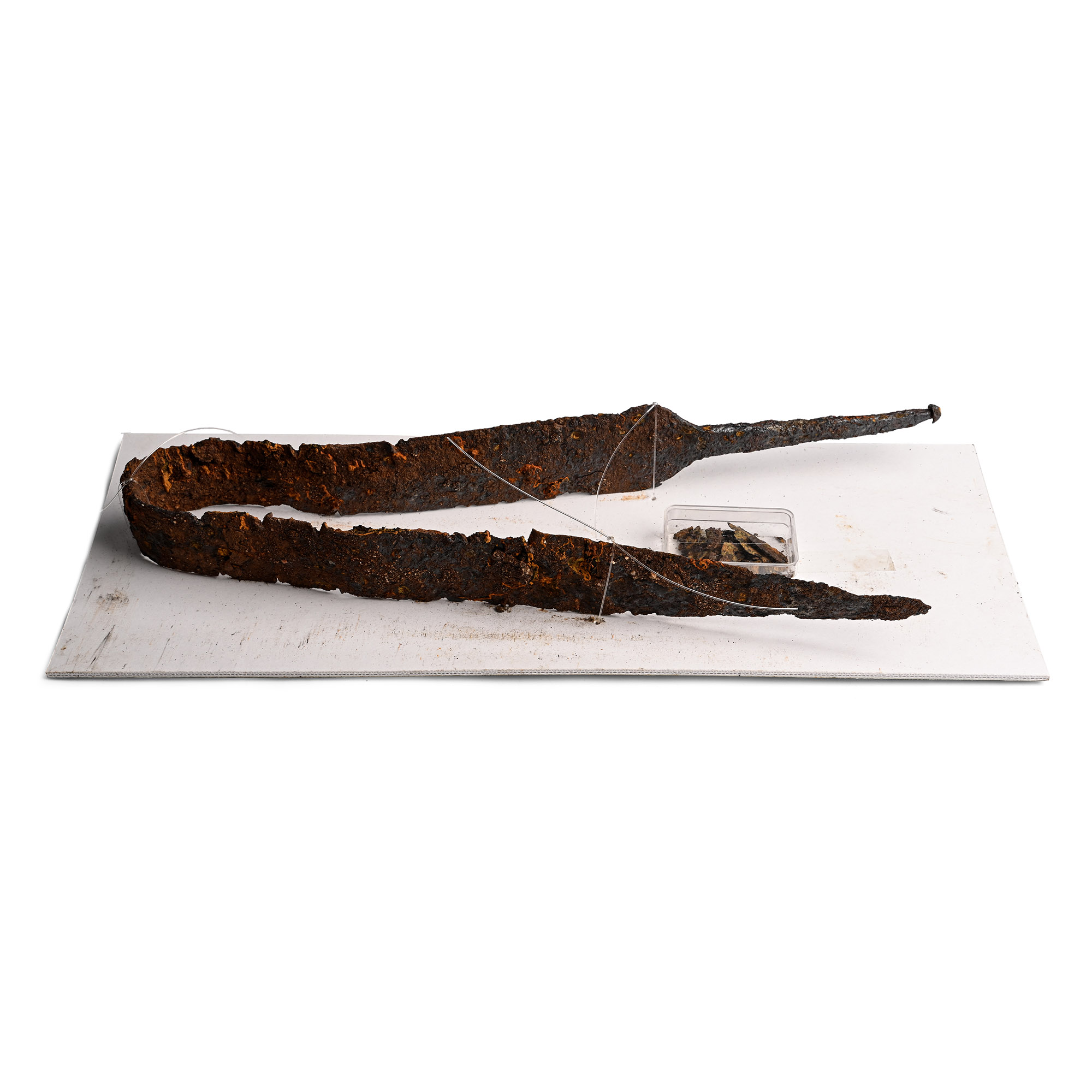
Iron Age Celtic La Tene Ritually Bent Sword
CIRCA 450 B.C.– 50 A.D.
15 3/4 in. (760 grams total, 40 cm).
An iron long sword of Stead's Type II with two-edged, parallel-sided flat-section blade, rounded shoulders, long lenticular-section tang with knop finial.
ProvenanceAcquired on the German art market.
Private collection, Germany.
Kept in the UK from 2016.
See Stead, I.M., British Iron Age Swords and Scabbards, London, 2006, for discussion.
CONDITIONTimeLine Auctions follows a vetting process to ensure the authenticity and legality of all items, reinforcing our commitment to integrity and responsible trading. Each antiquity, antique, and coin lot undergoes thorough examination by a vetting committee of at least ten external specialists, professional trade association members, scientists, and archaeologists: Our Vetting Process
AUCTIONS:
TimeLine is a leading auction house specialising in antiquities, ancient art, collectables, natural history, coins, medals, and books. Our auctions offer museums, collectors, historians, and enthusiasts the opportunity to acquire unique and historically significant pieces.
-
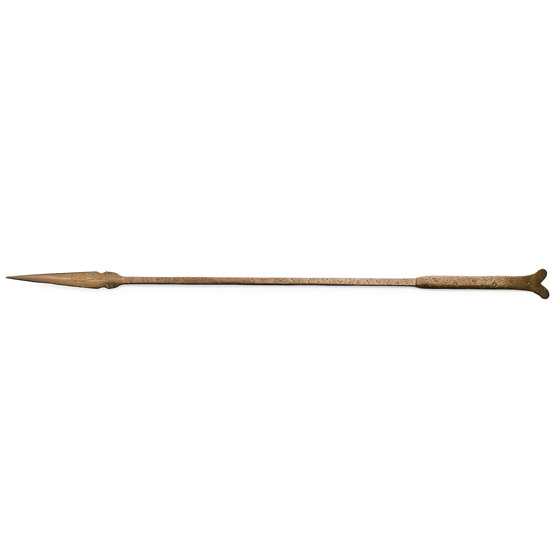
Indian Inscribed Ceremonial Brass Dart
Late 20th century A.D.Sold for (Inc. bp): £33
Comprising a rectangular-section shank with incised diagonal lines and punched pellets; narrow leaf-shaped blade with lateral flanches and notching; tail developing to lateral lobes with incised and punched ornament. 216 grsms, 60.5 cm
Property of a Berkshire, UK, gentleman collector. -
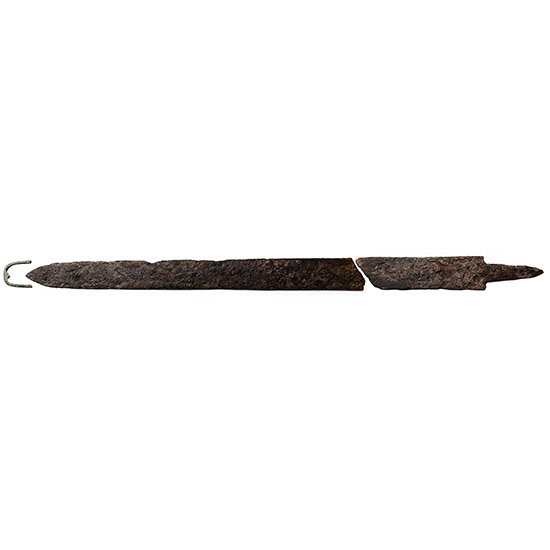
Saxon Sacrificed Iron Spatha with Bronze Chape
5th-6th century A.D.Sold for (Inc. bp): £1,300
Double-edged long sword (spatha) of type Osterburken-Kemathen; the blade with squared shoulders, broken into two parts for sacrificial reasons, tapering towards the point; sturdy tang partially preserved; wooden traces of the scabbard and hilt still visible; accompanied by a bronze outer rim of a scabbard; restored. 630 grams total, 78 cm long
From the private collection of a London gentleman, from his grandfather's collection formed before the early 1970s.
The deliberate fragmentation of a sword, often into three pieces, was a symbolic act of ‘killing’ the weapon, which was then placed as a grave good or offered in a ceremonial context. This was a Germanic custom already visible in the Vandal Przeworsk culture around the 3rd or 4th century A.D., which continued in Northern European areas until the 5th and the 6th centuries A.D. -
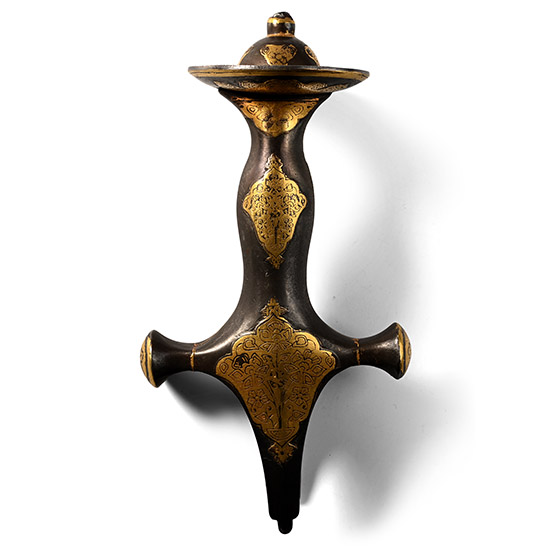
Indian Gilt Bronze Talwar Sword Hilt
Late 19th century A.D.Sold for (Inc. bp): £260
Comprising a lentoid-section bulbous grip with lateral stub quillons and carinated spur to both faces, dished disc pommel with dome and knop; reserved panels of gilt arabesque ornament, rosettes and linear detailing. 285 grams, 17.5 cm
Private collection, UK.
