
Loading, please wait...


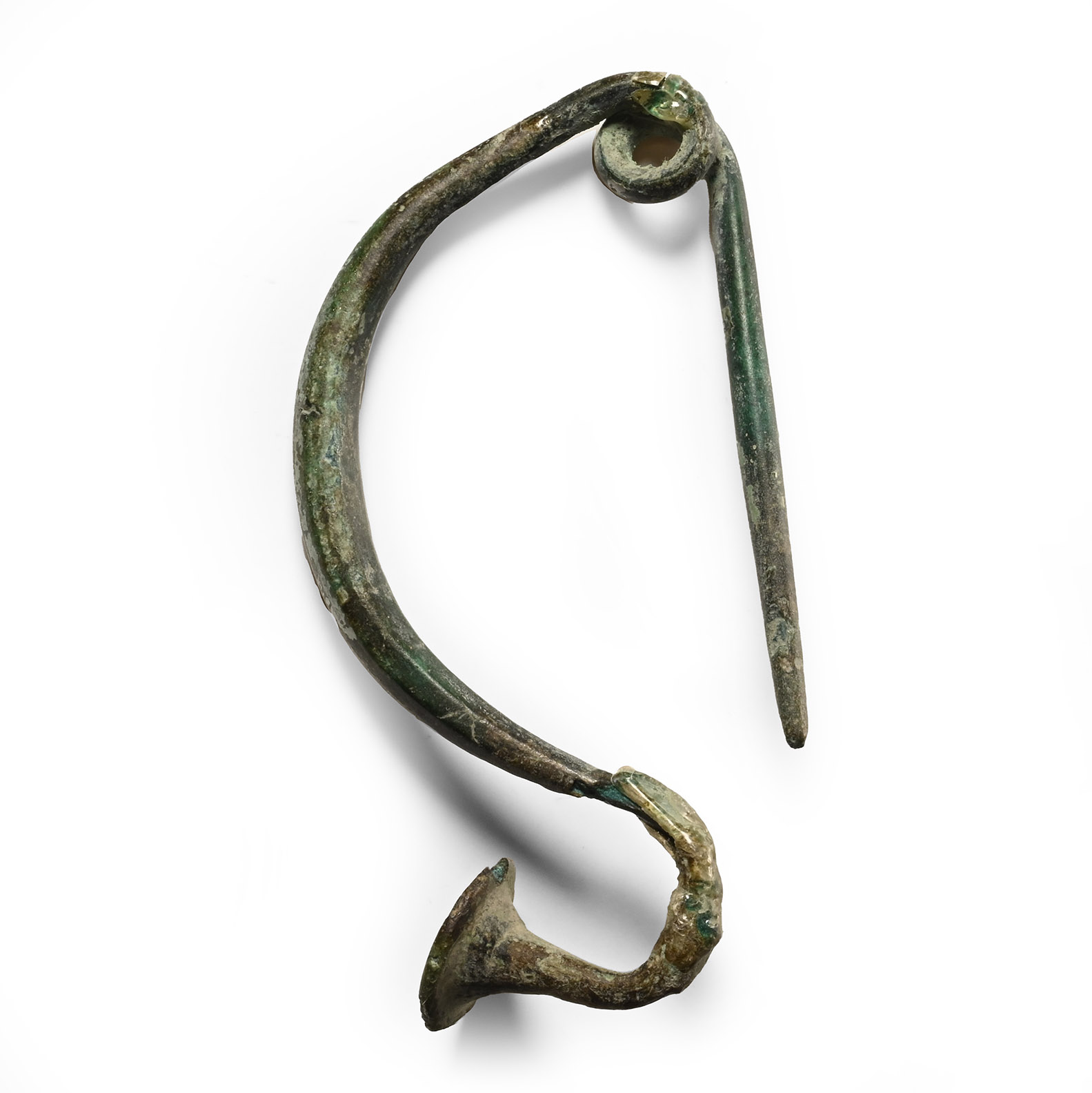
LOT 1701
Iron Age Celtic La Tene Bronze Brooch
1ST CENTURY B.C.
2 1/8 in. (6.7 grams, 54 mm).
With a round-section bow and integral coiled pin, returned foot with disc finial; repaired. [No Reserve]
ProvenanceEx German art market, 2000s.
Acquired from an EU collector living in London.
From the collection of Surrey, UK, gentleman.
TimeLine Auctions follows a vetting process to ensure the authenticity and legality of all items, reinforcing our commitment to integrity and responsible trading. Each antiquity, antique, and coin lot undergoes thorough examination by a vetting committee of at least ten external specialists, professional trade association members, scientists, and archaeologists: Our Vetting Process
AUCTIONS:
TimeLine is a leading auction house specialising in antiquities, ancient art, collectables, natural history, coins, medals, and books. Our auctions offer museums, collectors, historians, and enthusiasts the opportunity to acquire unique and historically significant pieces.
-
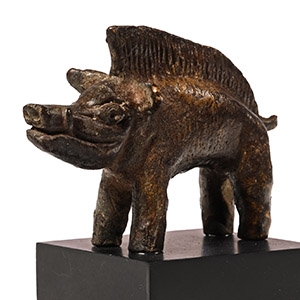
Romano-Celtic Bronze Boar Statuette
1st century B.C.-1st century A.D.Sold for (Inc. bp): £3,120
Modelled in the round in a sturdy pose with fierce facial features and prominent ridge of bristles to the spine, stub tail; mounted on a custom-made stand. 231 grams, 68 mm
From a collection acquired on the UK art market from various auction houses and collections mostly before 2000. From an important Cambridgeshire estate; thence by descent.
The small statuettes of boars found in the Roman Britain and in the Roman Gaul, were likely used as dedicatory ex-votos, votive figurines for the cult places. They were widespread in the Roman provinces of Celtic origin. However, one cannot exclude the fact that many boars found in Britain belong to the pre-conquest British figurines. One of the few types of bronze figurines that are known to precede the arrival of the Romans is in fact that of the boars. -
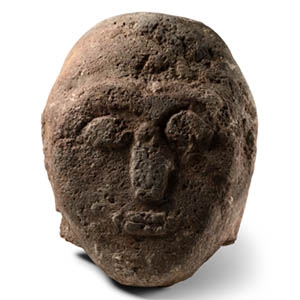
Iron Age Celtic Limestone Head
2nd century B.C.-1st century A.D. or laterSold for (Inc. bp): £715
Carved in the round with low-relief almond-shaped eyes and scaphoid nose, mounting ledge to rear. 4.6 kg, 20 cm
From a collection acquired on the UK art market from various auction houses and collections mostly before 2000. From an important Cambridgeshire estate; thence by descent. -
.jpg)
Late Iron Age Enamelled Bronze Brooch Set
Circa 3rd-5th century A.D.Sold for (Inc. bp): £2,275
An Eastern European necklace and pendant set comprising: two trapezoidal openwork plaques with loops to the rear with red and white enamelled panels and bar with rings; two rectangular openwork plaques with red enamel geometric detailing, lateral square-section bells; C-shaped openwork collar with red enamel panel supporting a crescentic plaque with white enamelled discoid centre and transverse bar, two pendant discoid plaques with lateral lugs and openwork red-enamelled pendant discs with T-shaped radiating lugs; set in a custom-made velvet-backed display frame. 4.3 kg, 74 x 38 cm
Acquired on the German art market before 2000. From an old German, Munich, collection. From the private collection of John Lawton, Surrey, UK. This lot has been checked against the Interpol Database of stolen works of art and is accompanied by search certificate no.12057-214201.
