
Loading, please wait...

LOT 1711
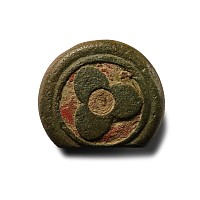
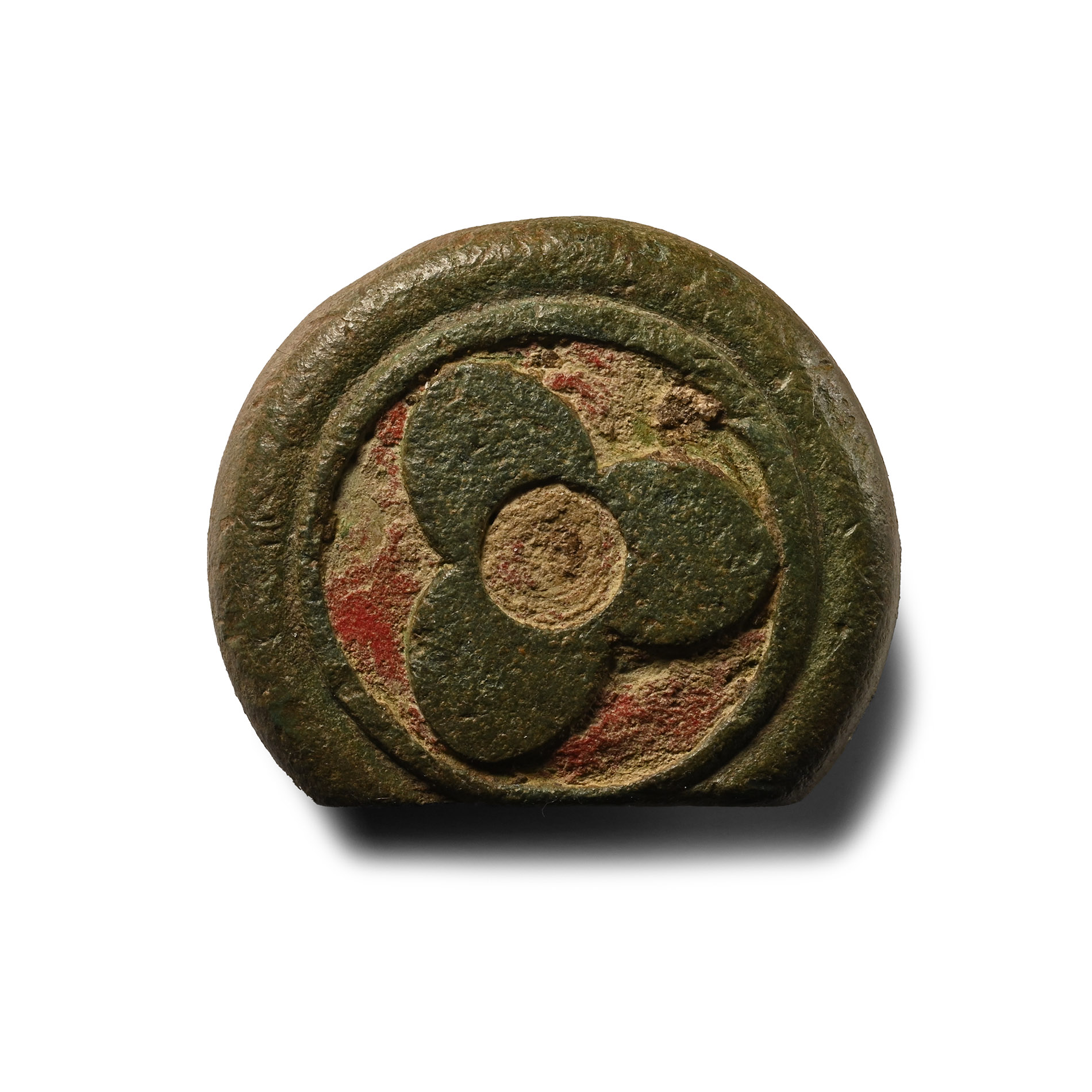
Iron Age Celtic Enamelled Bronze Chariot Lynchpin Terminal
1ST CENTURY B.C.-1ST CENTURY A.D.
1 1/2 in. (37.7 grams, 37 mm).
Discoid in plan with flat base, folded rim and mounting socket to underside, central enamel-filled tondo with reserved trefoil and enamel-filled roundel to the centre.
ProvenanceAcquired on the UK art market before 2000.
Property of an Essex, UK, gentleman.
Cf. the openwork mounts and fittings with La Tène designs from Stanwick published in Smith, R.A., British Museum Guide to Early Iron Age Antiquities 1925, reprinted Ipswich, 1994, p.138-42.
CONDITIONTimeLine Auctions follows a vetting process to ensure the authenticity and legality of all items, reinforcing our commitment to integrity and responsible trading. Each antiquity, antique, and coin lot undergoes thorough examination by a vetting committee of at least ten external specialists, professional trade association members, scientists, and archaeologists: Our Vetting Process
AUCTIONS:
TimeLine is a leading auction house specialising in antiquities, ancient art, collectables, natural history, coins, medals, and books. Our auctions offer museums, collectors, historians, and enthusiasts the opportunity to acquire unique and historically significant pieces.
LOT 1711
Iron Age Celtic Enamelled Bronze Chariot Lynchpin Terminal
Sold for (Inc. bp): £364
-
.jpg)
Iron Age British Celtic Bronze Decorated Ring-Headed Pin
Late 1st millennium B.C.Sold for (Inc. bp): £195
With tapering shank and integral ring with bulb finial; shank pierced below the junction with the bulb. 16 grams, 87 mm
Found Norfolk, Southern England. Acquired on the UK art market in the 1980s. From an East Anglian private collection. Accompanied by an old Norfolk Castle Museum record slip.
Recorded and assessed by the Secretary of State’s Expert Adviser as an object of cultural interest. The RCEWA reviewed an export application and determined that it meets the third Waverley criterion, making it currently non-exportable. -
.jpg)
Romano-Celtic Bronze Pincer Brooch
1st century B.C.-1st century A.D.Sold for (Inc. bp): £52
Comprising a deep ribbed bow with a returned foot, short catchplate below; round-section pin with a flat-section extension forming the other side of the 'pincer' head. 7.09 grams, 64 mm
Ex German art market, 2000s. Acquired from an EU collector living in London. From the collection of Surrey, UK, gentleman. -
Iron Age Celtic Bronze 'Horn Cap'
2nd century B.C.-early 1st century A.D.Sold for (Inc. bp): £94
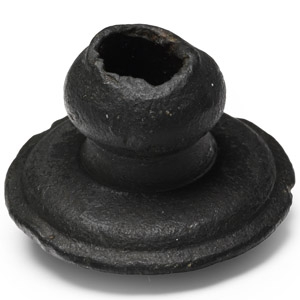
Sceptre head or other fitting with biconvex flange, domed finial. 46.7 grams, 34 mm
Found UK. From the collection of a Yorkshire gentleman. Property of a private collector, West London, UK.
Twenty or so 'horn caps' are known in museums and private collections, all have been found in Britain and mostly in Southern England. Their exact function is unclear; early suggestions that they are axle fittings for chariots no longer holds weight. The shaft hole is too small and they do not appear in grave contexts containing chariots. A more likely hypothesis is that they were ceremonial, possibly a staff head or chair or saddle finial.
