
Loading, please wait...


LOT 1837
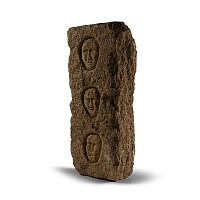
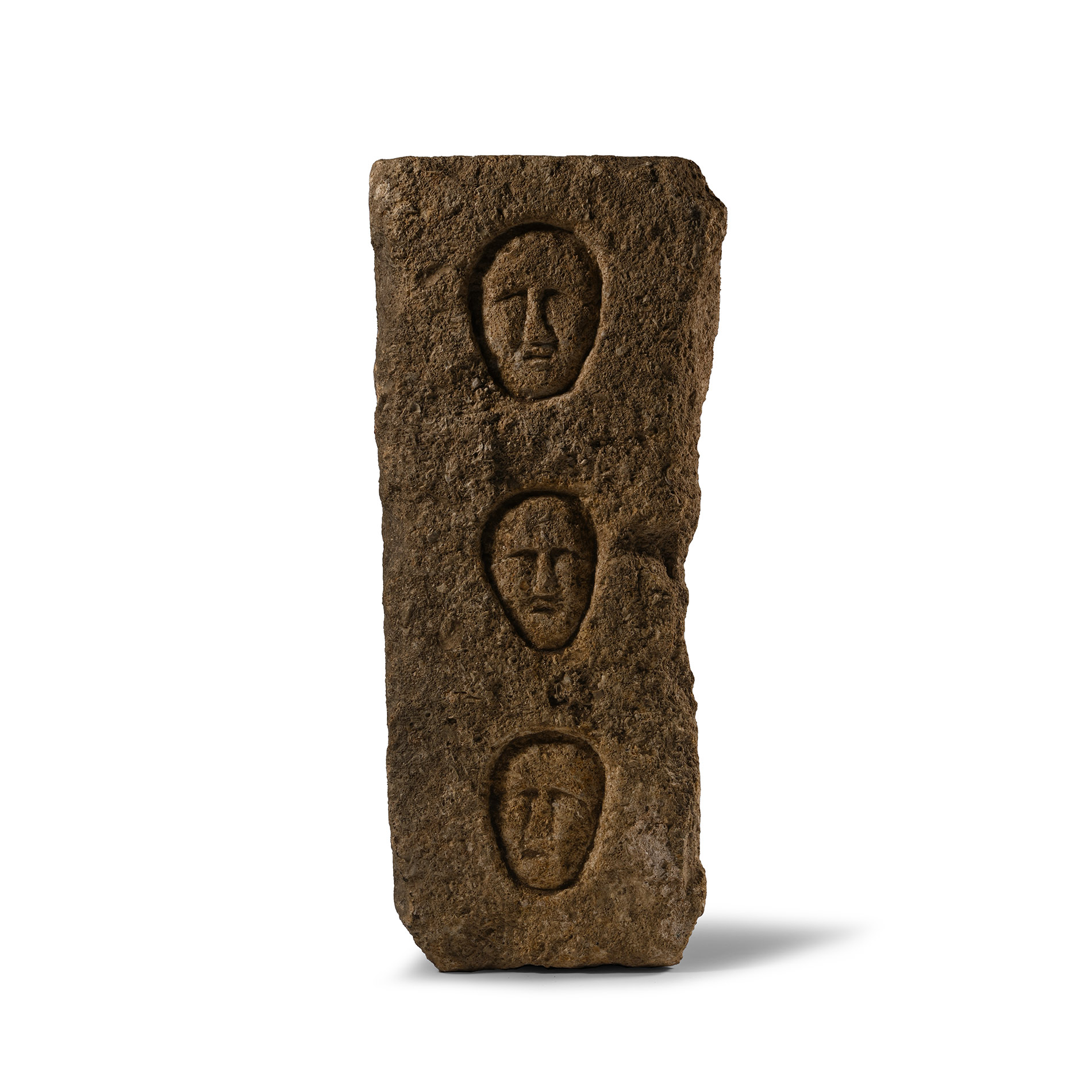
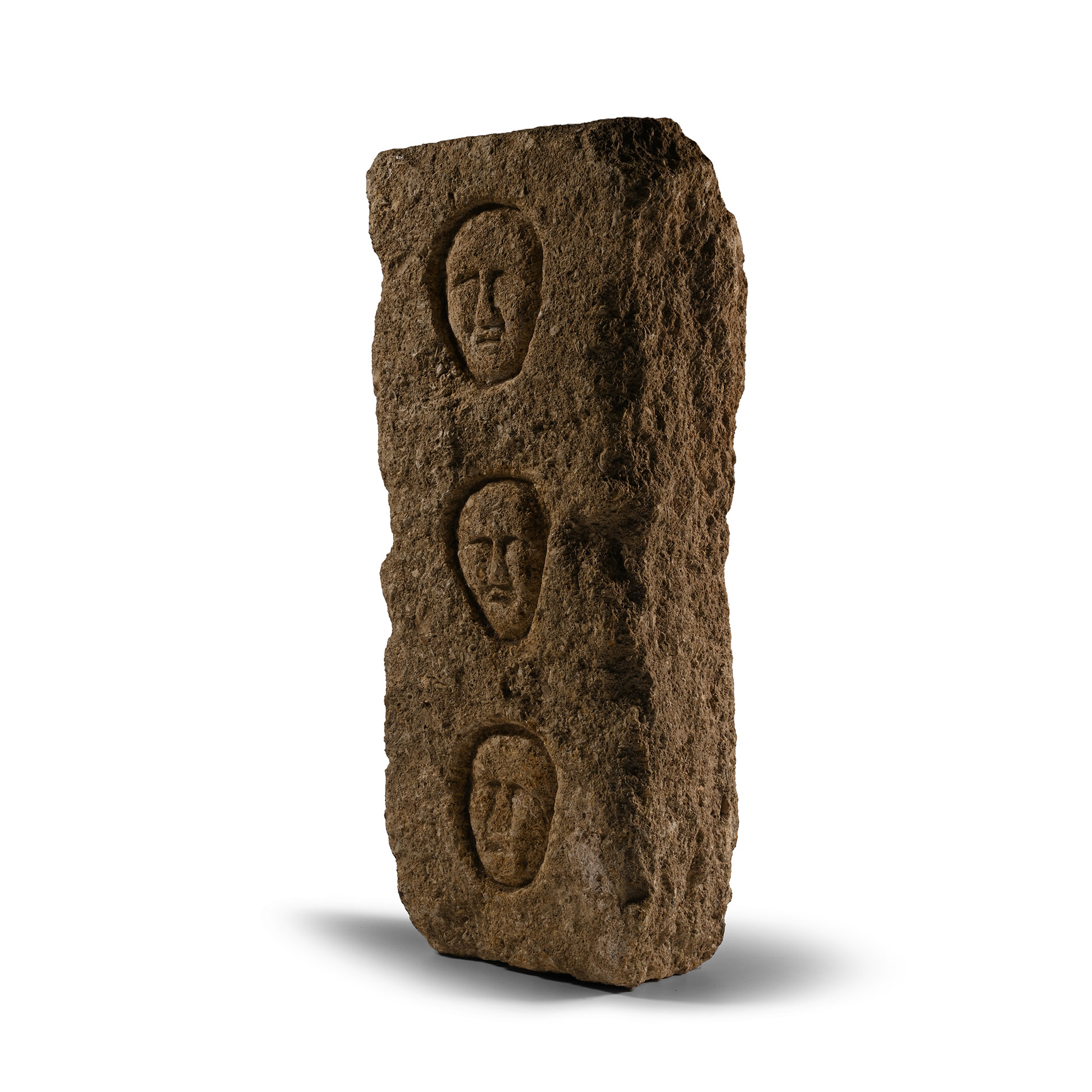
Iron Age Celtic Cornish Limestone Pillar with Three Heads
CIRCA 1ST CENTURY B.C.-1ST CENTURY A.D. OR LATER
12 1/4 in. (6.14 kg, 31 cm).
Rectangular in section, obverse with three carved facing piriform masks, in low relief and inset; upper face dressed and chamfered, lateral faces crudely worked.
ProvenancePrivate Sussex, UK collection, acquired 1980s.
Private collection, Hove, UK.
This lot is accompanied by an illustrated lot declaration signed by the Head of the Antiquities Department, Dr Raffaele D’Amato.
See Henri de Gérin-Ricard Marseille, Le sanctuaire préromain de Roquepertuse à Velaux (Bouches-du-Rhône), Société de statistique d'histoire et d'archéologie de Marseille et de Provence, 1927; Green, M., The Gods of the Celts, London, 1993; Celtic Stone Sculptures, Rupert Wace Ancient Art, London, 1989.
FootnotesThe intended effect may have been to replicate the huge trilithon with niches for heads as seen at Roquepertuse, France.
CONDITIONTimeLine Auctions follows a vetting process to ensure the authenticity and legality of all items, reinforcing our commitment to integrity and responsible trading. Each antiquity, antique, and coin lot undergoes thorough examination by a vetting committee of at least ten external specialists, professional trade association members, scientists, and archaeologists: Our Vetting Process
AUCTIONS:
TimeLine is a leading auction house specialising in antiquities, ancient art, collectables, natural history, coins, medals, and books. Our auctions offer museums, collectors, historians, and enthusiasts the opportunity to acquire unique and historically significant pieces.
LOT 1837
Iron Age Celtic Cornish Limestone Pillar with Three Heads
Sold for (Inc. bp): £1,690
-
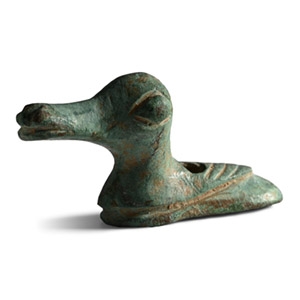
Celtic Bronze Duck Mount
5th-4th century B.C.Estimate: £800 - 1,000 (‡+bp*)
Opening Bid: £400
Ellipsoid in plan with raised wings folded to the back, sturdy neck, small head with large bill and domed lentoid eyes; pierced vertically for attachment. 37 grams, 53 mm
Acquired in the mid 1980s-1990s. Private collection, Switzerland, thence by descent. Private collection, since the late 1990s. This lot is accompanied by an illustrated lot declaration signed by the Head of the Antiquities Department, Dr Raffaele D’Amato. -
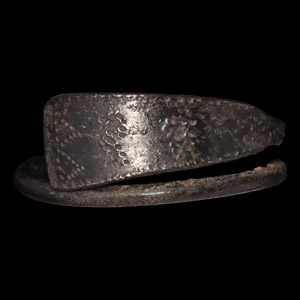
Iron Age Celtic Silver Decorated Ring
1st century B.C.-1st century A.D.Sold for (Inc. bp): £65
Comprising a round-section shank with spatulate finial, pointillé ornament. 2.21 grams, 22.38 mm overall, 18.30 mm internal diameter (approximate size British Q, USA 8, Europe 17.49, Japan 16)
Ex German art market, 2000s. Acquired from an EU collector living in London. From the collection of Surrey, UK, gentleman. This lot is accompanied by an illustrated lot declaration signed by the Head of the Antiquities Department, Dr Raffaele D’Amato. -
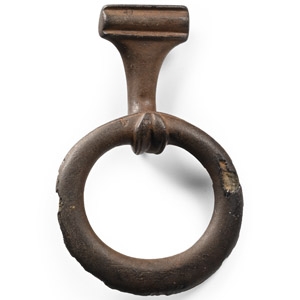
Iron Age Celtic Bronze Belt Toggle
1st century B.C.-1st century A.D.Sold for (Inc. bp): £20
With annular attachment mount and supporting arm with loop to reverse. 16.3 grams, 54 mm
Previously in a Lincolnshire, UK, collection. Property of a private collector, West London, UK. This lot is accompanied by an illustrated lot declaration signed by the Head of the Antiquities Department, Dr Raffaele D’Amato.
