
Loading, please wait...
LOT 1166
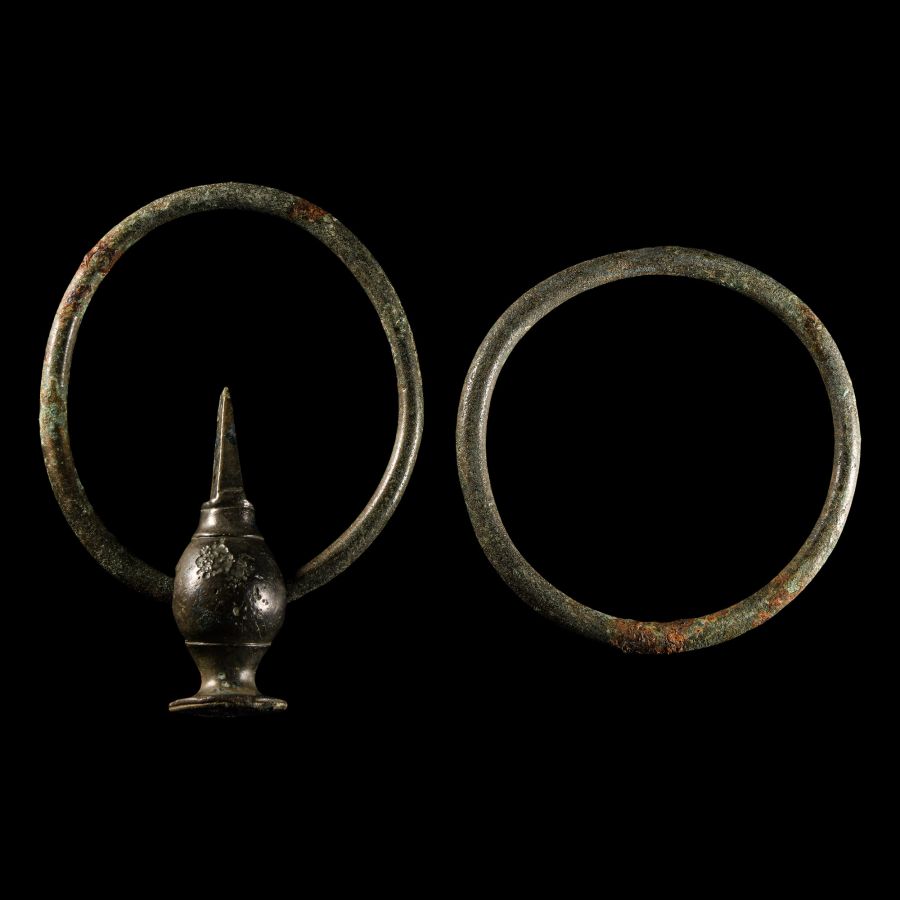
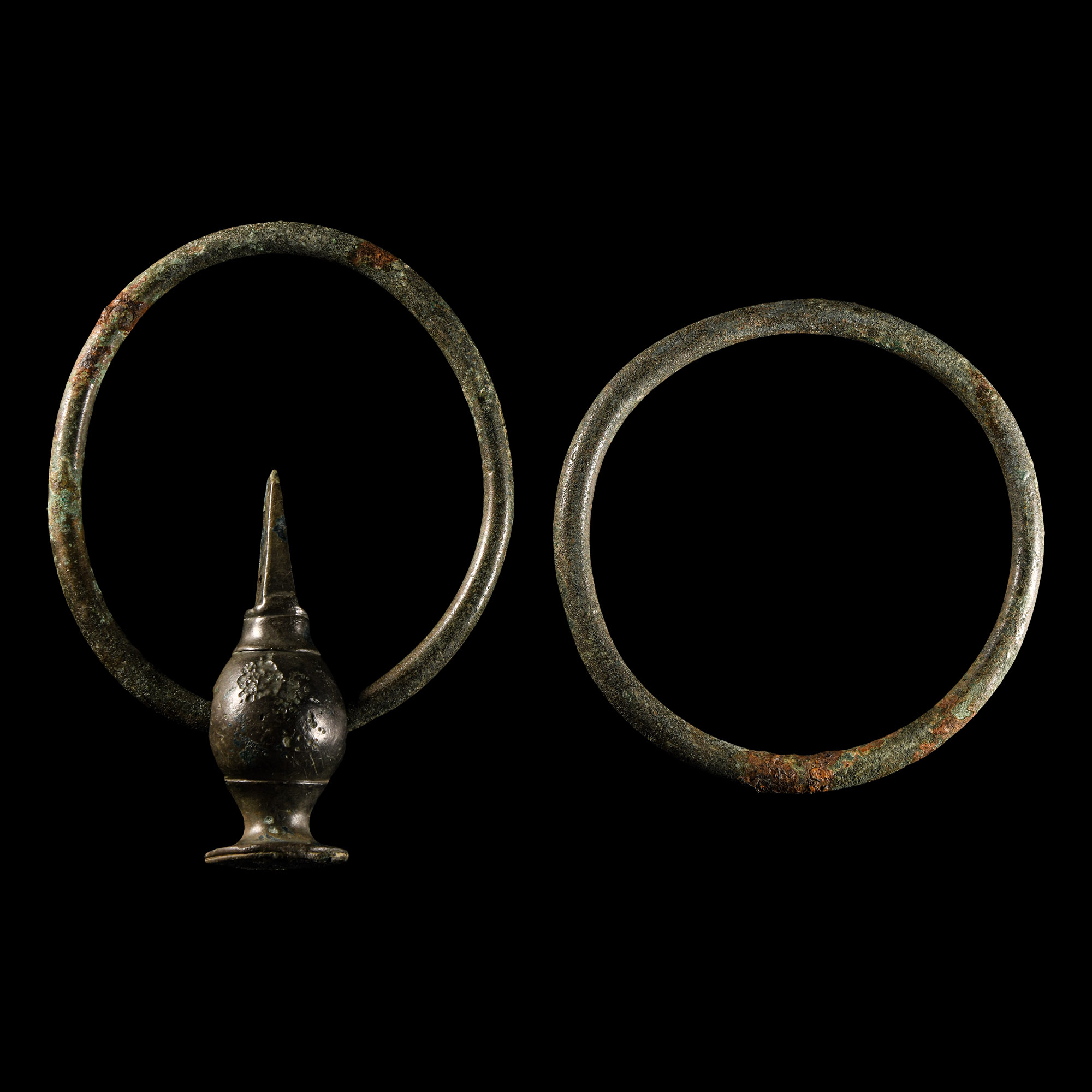
Iron Age Celtic Chariot Reign Guide Ring Pair
3RD-1ST CENTURY B.C.
3 3/4 - 4 in. (275 grams total, 9.4-10 cm wide).
Comprising two rings, one with an attachment bar with bulbous body, rectangular bar with attachment holes below. [2, No Reserve]
ProvenanceFound near Wetwang, East Yorkshire, UK.
Acquired from Spink, York, UK, 2009.
Property of a Nottinghamshire gentleman.
Accompanied by an old handwritten identification slip including provenance.
Cf. Allen, S., Celtic Warrior 300 BC-AD 100, Oxford, 2001, pp.44-45, 57.
FootnotesCeltic horse harness and chariot fittings were finely worked and decorated to emphasise the status of the warrior and the reverence of the horse as a living symbol of the sun god. Bits, lynch pins and terrets were made of iron and bronze.
CONDITIONTimeLine Auctions follows a vetting process to ensure the authenticity and legality of all items, reinforcing our commitment to integrity and responsible trading. Each antiquity, antique, and coin lot undergoes thorough examination by a vetting committee of at least ten external specialists, professional trade association members, scientists, and archaeologists: Our Vetting Process
AUCTIONS:
TimeLine is a leading auction house specialising in antiquities, ancient art, collectables, natural history, coins, medals, and books. Our auctions offer museums, collectors, historians, and enthusiasts the opportunity to acquire unique and historically significant pieces.
-
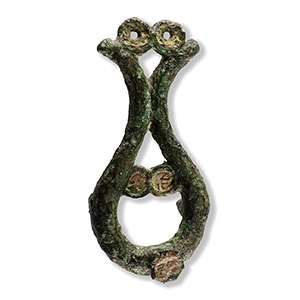
Iron Age Celtic Enamelled Bronze Lyre-Shaped Mount
1st century B.C.-1st century A.D.Sold for (Inc. bp): £234
Openwork loop with stud to the upper face and small loop below, three attachment pegs to the underside, two pairs of discoid cells with enamel fill. 34.9 grams, 64 mm
Found Lincolnshire, UK, early 2000s. Acquired from the Cumberland Coin Fair, UK, early 2000s. Property of a Stowmarket, UK, gentleman. -
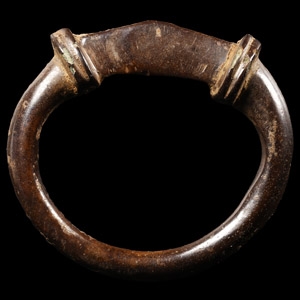
Iron Age Celtic 'Published' Bronze Strap Mounted Terret Ring
Circa 1st century B.C.-1st century A.D.Sold for (Inc. bp): £85
The harness fitting comprised of an ovate loop and integral rectangular basal strap loop to the lower edge. 29.1 grams, 50 mm
Found whilst searching with a metal detector near Coniston Cold, North Yorkshire, UK, circa 2018. Accompanied by a copy of the British Museum's Portable Antiquities Scheme (PAS) report no.YORYM-E60DC4.
Terret rings were used as rein guides on chariots. They were set in a line along the yoke and five terrets were usually used per chariot. -
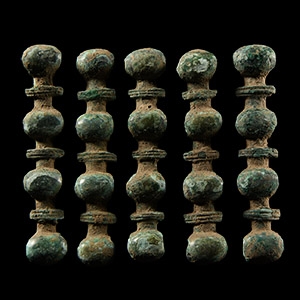
Iron Age Celtic Bronze Segmented Belt Link Group
Late 1st millennium B.C.Sold for (Inc. bp): £39
Comprising five bars, each with four raised bosses interspersed with horizonal bars; the bosses hollow for threading. 39.7 grams total, 58-60 mm
From Eastern Europe. UK private collection. Acquired from York Antiques Centre, in 2007. Property of a Nottinghamshire gentleman.
