
Loading, please wait...

LOT 1686
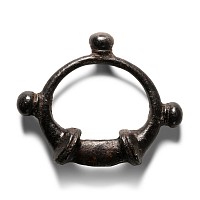
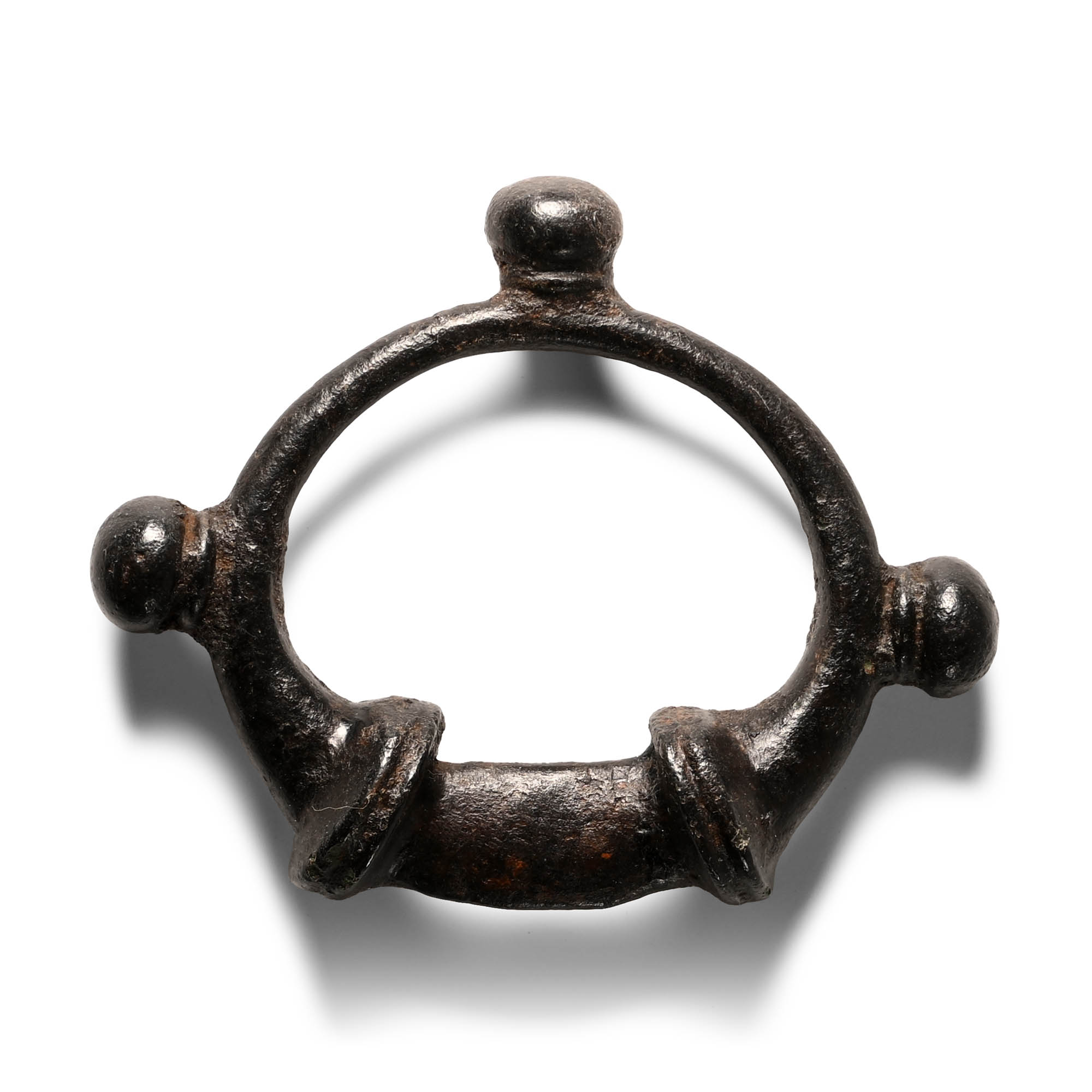
Iron Age Celtic Bronze Tri-Lobed Chariot Teret Ring
1ST CENTURY B.C.-1ST CENTURY A.D.
3 in. (82 grams, 77 mm).
Comprising an ovate round-section loop and three integral radiating lugs, gusseted flanking guides to the flat-section mount.
ProvenanceAcquired on the UK art market before 2000.
Property of an Essex, UK, gentleman.
Cf. the British Museum's Portable Antiquities Scheme (PAS), record id.SF-3BA219, for similar item.
CONDITIONTimeLine Auctions follows a vetting process to ensure the authenticity and legality of all items, reinforcing our commitment to integrity and responsible trading. Each antiquity, antique, and coin lot undergoes thorough examination by a vetting committee of at least ten external specialists, professional trade association members, scientists, and archaeologists: Our Vetting Process
AUCTIONS:
TimeLine is a leading auction house specialising in antiquities, ancient art, collectables, natural history, coins, medals, and books. Our auctions offer museums, collectors, historians, and enthusiasts the opportunity to acquire unique and historically significant pieces.
LOT 1686
Iron Age Celtic Bronze Tri-Lobed Chariot Teret Ring
Estimate £200 - 300€230 - 350 (for guidance only)$270 - 410 (for guidance only)
-
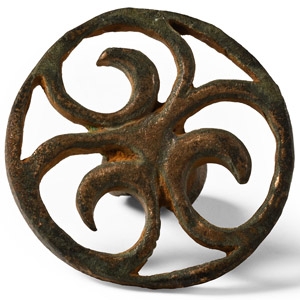
Iron Age Brigantes Celtic Bronze Bridle Mount
2nd century B.C.-1st century A.D.Estimate: £200 - 300 (+bp*)
Opening Bid: £100
Comprising a circular frame with three inner loops around the hub, waisted lug to the reverse with ring finial. 15.88 grams, 33 mm
Found whilst searching with a metal detector in Bridlington, East Riding of Yorkshire, UK, in January 2023, by Christopher Watson. -
.jpg)
Late Iron Age Enamelled Bronze Brooch Set
Circa 3rd-5th century A.D.Sold for (Inc. bp): £2,275
An Eastern European necklace and pendant set comprising: two trapezoidal openwork plaques with loops to the rear with red and white enamelled panels and bar with rings; two rectangular openwork plaques with red enamel geometric detailing, lateral square-section bells; C-shaped openwork collar with red enamel panel supporting a crescentic plaque with white enamelled discoid centre and transverse bar, two pendant discoid plaques with lateral lugs and openwork red-enamelled pendant discs with T-shaped radiating lugs; set in a custom-made velvet-backed display frame. 4.3 kg, 74 x 38 cm
Acquired on the German art market before 2000. From an old German, Munich, collection. From the private collection of John Lawton, Surrey, UK. This lot has been checked against the Interpol Database of stolen works of art and is accompanied by search certificate no.12057-214201. -
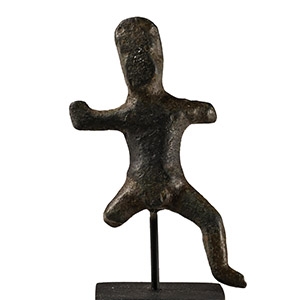
Romano-Celtic Bronze Warrior Rider
1st century B.C.-1st century A.D.Sold for (Inc. bp): £85
Modelled in the round as a horseman with legs spread, shoulder-length hair, texture to the hair; right hand extended upwards; mounted on a custom-made display stand. 30.6 grams total, 65 mm including stand
From a collection acquired on the UK art market from various auction houses and collections mostly before 2000. From an important Cambridgeshire estate; thence by descent.
