
Loading, please wait...
LOT 1294
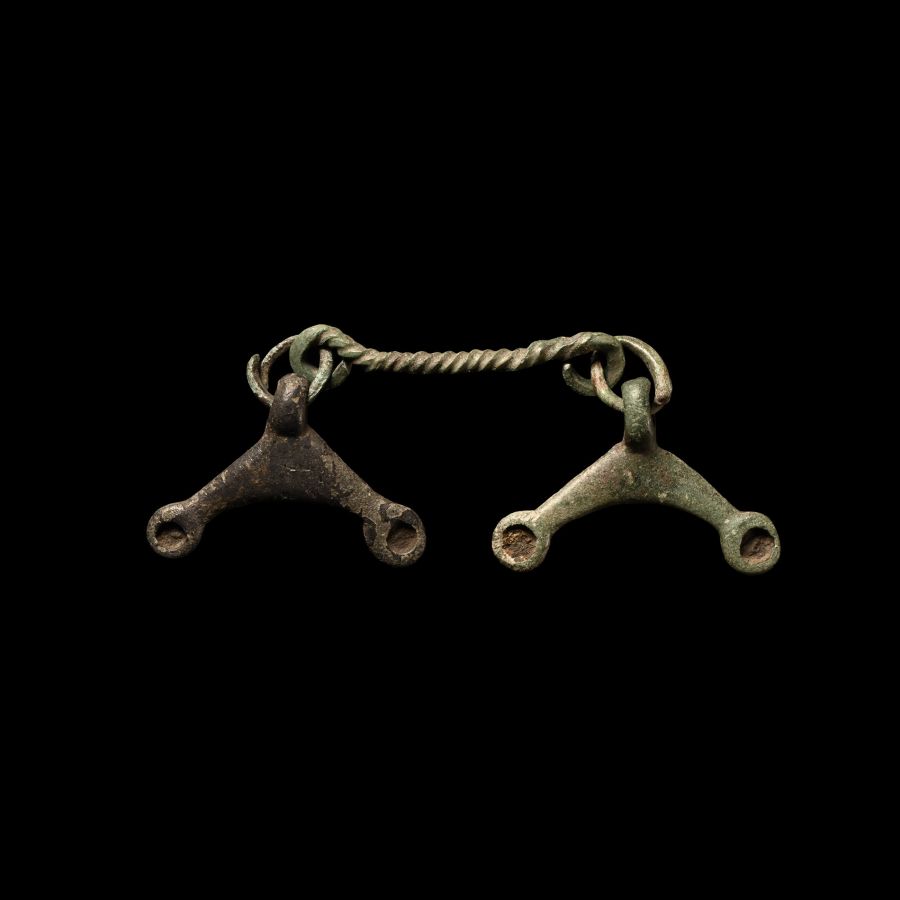
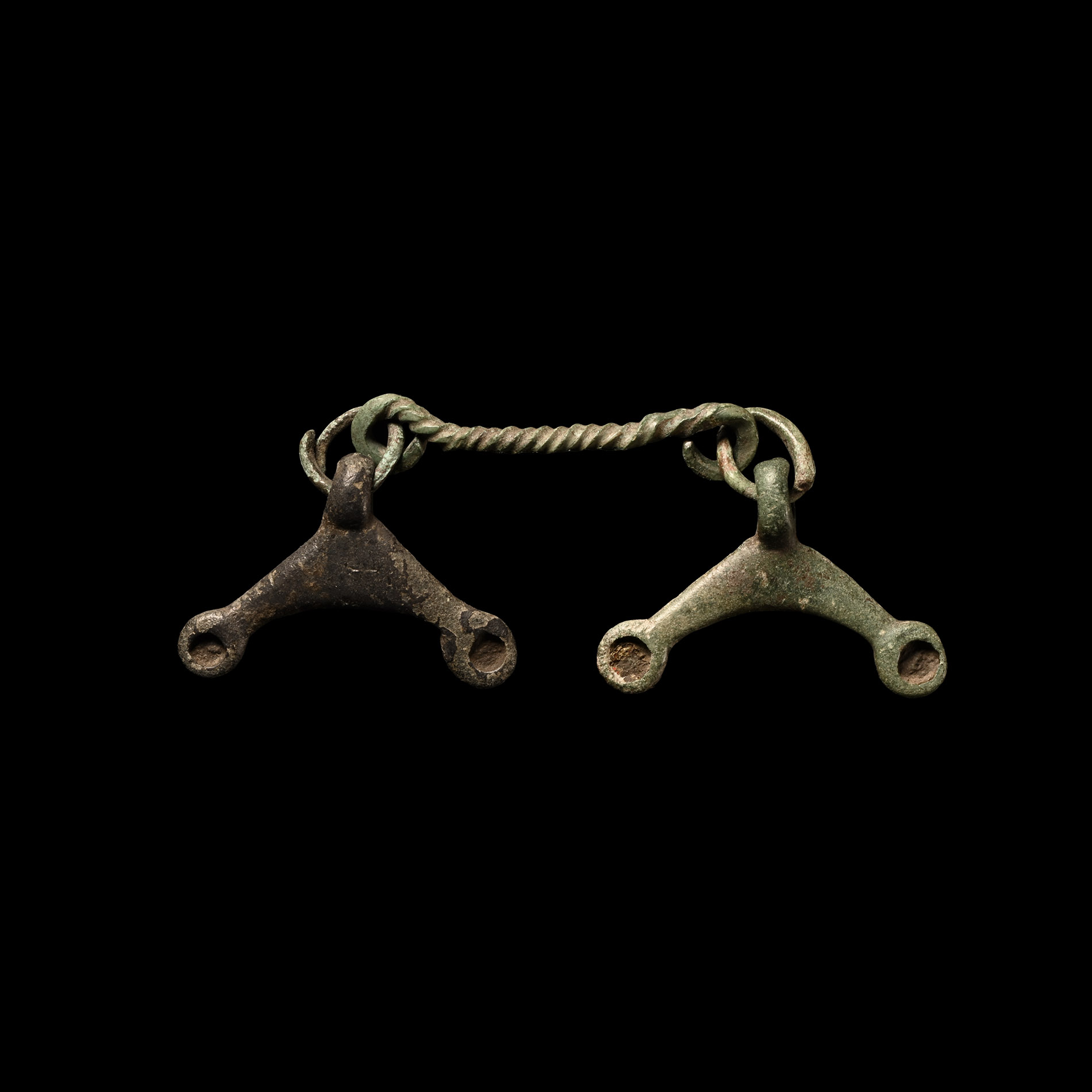
Iron Age Celtic Bronze Pendant Pair
CIRCA 1ST CENTURY B.C.-1ST CENTURY A.D. OR LATER
3 3/8 in. (8.23 grams, 85 mm).
Composed of a twisted bar with pendant dangle to each terminal formed as shallow crescents with recessed discoid terminals. [No Reserve]
ProvenanceAcquired on the UK art market.
Property of a Ruislip, UK, gentleman, by inheritance.
TimeLine Auctions follows a vetting process to ensure the authenticity and legality of all items, reinforcing our commitment to integrity and responsible trading. Each antiquity, antique, and coin lot undergoes thorough examination by a vetting committee of at least ten external specialists, professional trade association members, scientists, and archaeologists: Our Vetting Process
AUCTIONS:
TimeLine is a leading auction house specialising in antiquities, ancient art, collectables, natural history, coins, medals, and books. Our auctions offer museums, collectors, historians, and enthusiasts the opportunity to acquire unique and historically significant pieces.
-
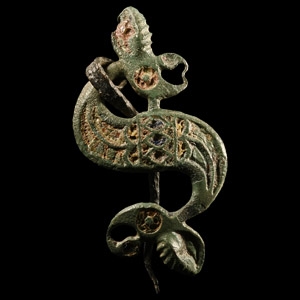
Large Romano-Celtic Bronze 'Brigantian' Dragonesque Brooch
1st-2nd century A.D.Sold for (Inc. bp): £1,170
S-shaped with scrolled flourishes to the dragon-head terminals, remains of inlaid blue and possibly red enamelling to the stylised beast heads, geometric ornament to the body; free-running tongue with head coiled around the neck of one of the creatures. 12.6 grams, 56 mm
From the collection of a Cambridge lady, 1990s. -
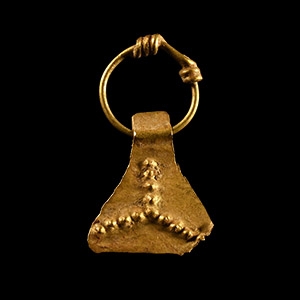
Iron Age Gold Axe-Shaped Amuletic Pendant
Late 1st millennium B.C.Sold for (Inc. bp): £91
The axe-head displaying a three-armed repoussé motif; suspended on a slender hoop with coiled wire sleeves. 0.55 grams, 20 mm
UK gallery, early 2000s. -
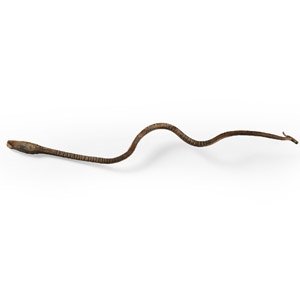
Romano-Celtic Silver Snake
1st century B.C.-1st century A.D.Sold for (Inc. bp): £293
With open mouth and impressed eyes, tail forming a hook. 22 grams, 20.5 cm
Acquired 1980-2015. Ex Abelita family collection.
