
Loading, please wait...

LOT 1703
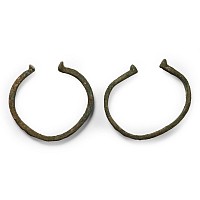
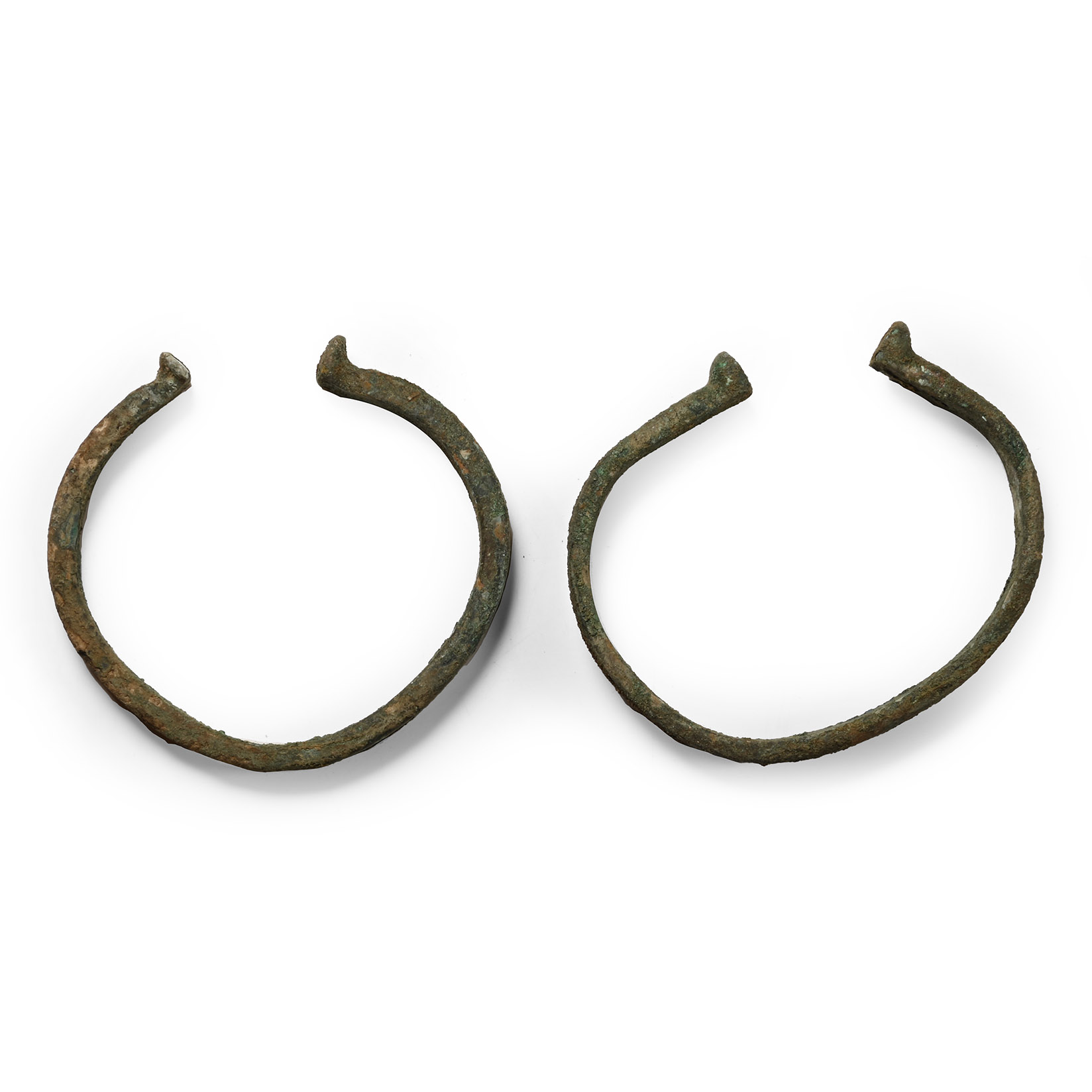
Iron Age Celtic Bronze Bracelet Pair
2ND CENTURY B.C.-1ST CENTURY A.D.
2 3/8 - 2 1/2 in. (54.8 grams total, 61-63 mm).
Each with D-section shank and clubbed finial. [2, No Reserve]
ProvenanceAcquired on the European art market since the early 2000s.
From the private Northern Ireland collection of R.M.
TimeLine Auctions follows a vetting process to ensure the authenticity and legality of all items, reinforcing our commitment to integrity and responsible trading. Each antiquity, antique, and coin lot undergoes thorough examination by a vetting committee of at least ten external specialists, professional trade association members, scientists, and archaeologists: Our Vetting Process
AUCTIONS:
TimeLine is a leading auction house specialising in antiquities, ancient art, collectables, natural history, coins, medals, and books. Our auctions offer museums, collectors, historians, and enthusiasts the opportunity to acquire unique and historically significant pieces.
-
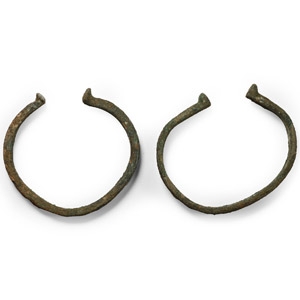
Iron Age Celtic Bronze Bracelet Pair
2nd century B.C.-1st century A.D.Sold for (Inc. bp): £26
Each with D-section shank and clubbed finial. 54.8 grams total, 61-63 mm
Acquired on the European art market since the early 2000s. From the private Northern Ireland collection of R.M. -
.jpg)
Late Iron Age Enamelled Bronze Brooch Set
Circa 3rd-5th century A.D.Sold for (Inc. bp): £2,275
An Eastern European necklace and pendant set comprising: two trapezoidal openwork plaques with loops to the rear with red and white enamelled panels and bar with rings; two rectangular openwork plaques with red enamel geometric detailing, lateral square-section bells; C-shaped openwork collar with red enamel panel supporting a crescentic plaque with white enamelled discoid centre and transverse bar, two pendant discoid plaques with lateral lugs and openwork red-enamelled pendant discs with T-shaped radiating lugs; set in a custom-made velvet-backed display frame. 4.3 kg, 74 x 38 cm
Acquired on the German art market before 2000. From an old German, Munich, collection. From the private collection of John Lawton, Surrey, UK. This lot has been checked against the Interpol Database of stolen works of art and is accompanied by search certificate no.12057-214201. -
.jpg)
Iron Age British Celtic Bronze Decorated Ring-Headed Pin
Late 1st millennium B.C.Sold for (Inc. bp): £195
With tapering shank and integral ring with bulb finial; shank pierced below the junction with the bulb. 16 grams, 87 mm
Found Norfolk, Southern England. Acquired on the UK art market in the 1980s. From an East Anglian private collection. Accompanied by an old Norfolk Castle Museum record slip.
Recorded and assessed by the Secretary of State’s Expert Adviser as an object of cultural interest. The RCEWA reviewed an export application and determined that it meets the third Waverley criterion, making it currently non-exportable.
