
Loading, please wait...
LOT 0322
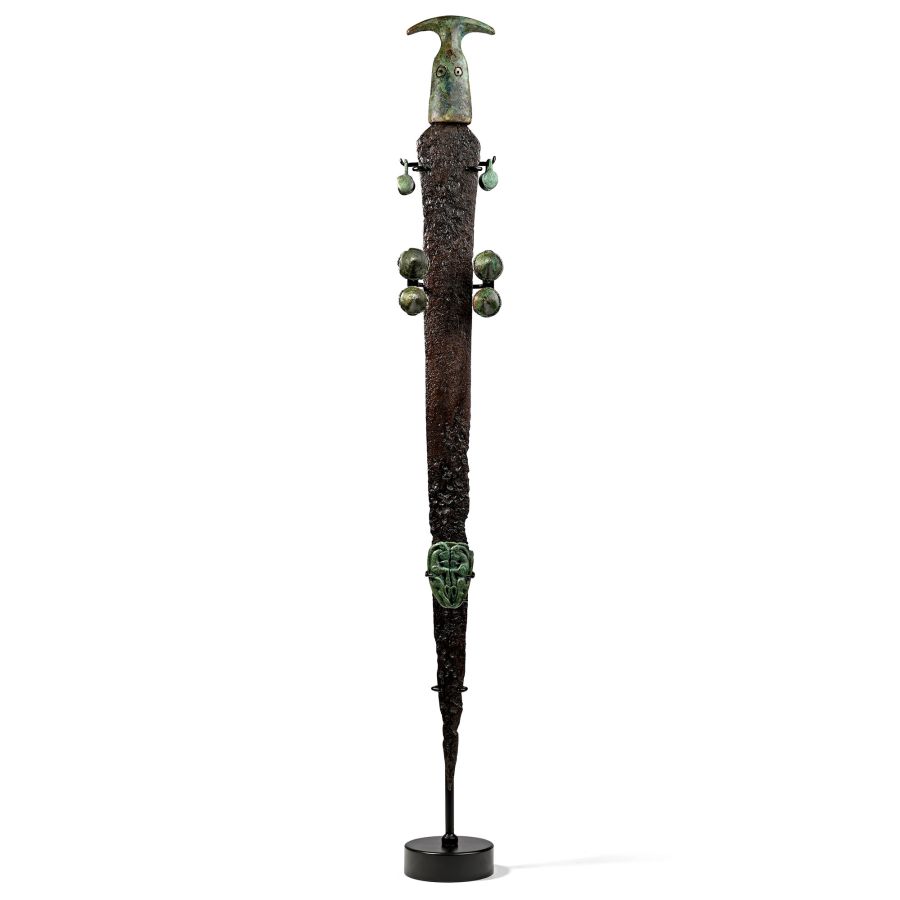
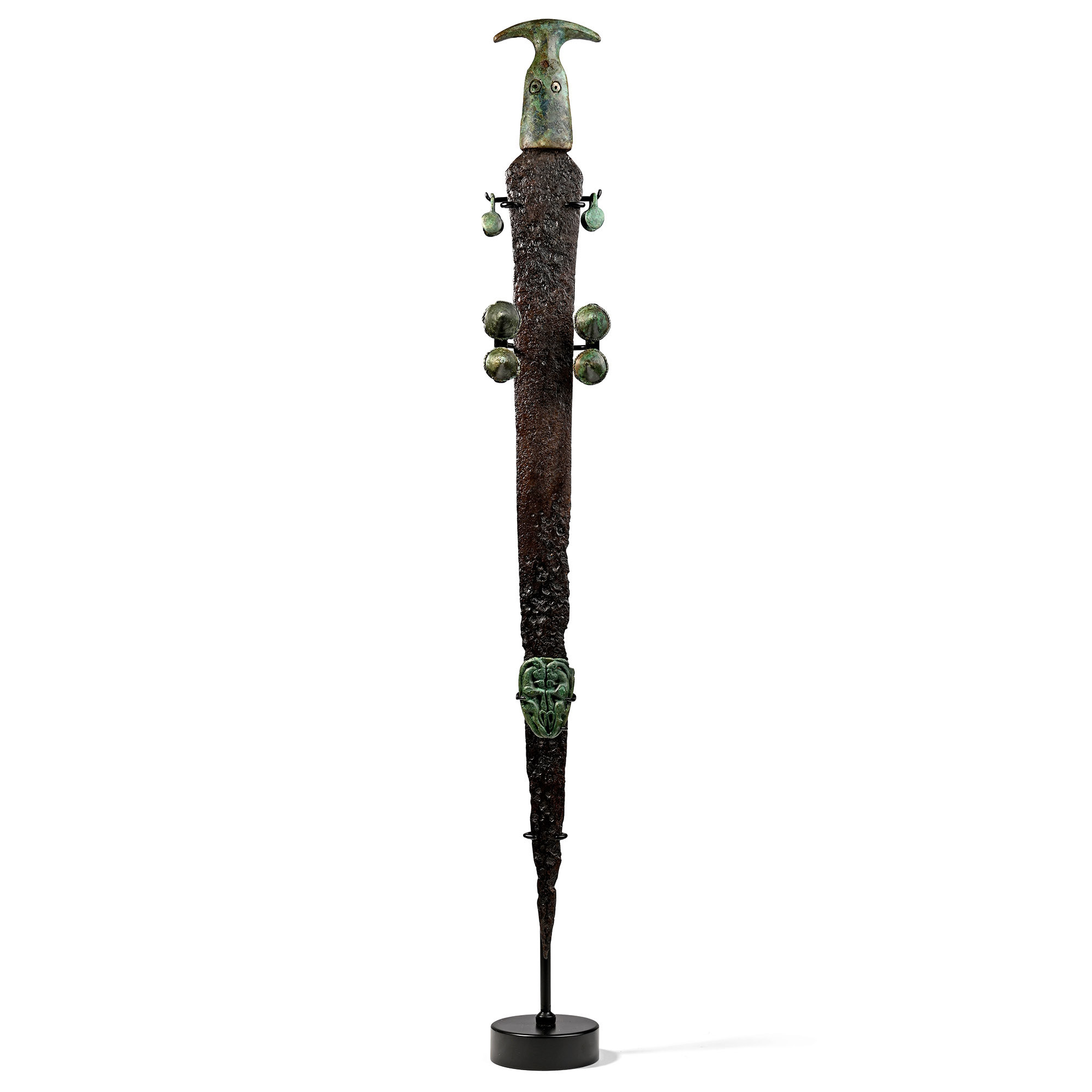
Iron Age Bronze-Hilted Sword
8TH-6TH CENTURY B.C.
30 3/4 in. (2.2 kg total, 78 cm including stand).
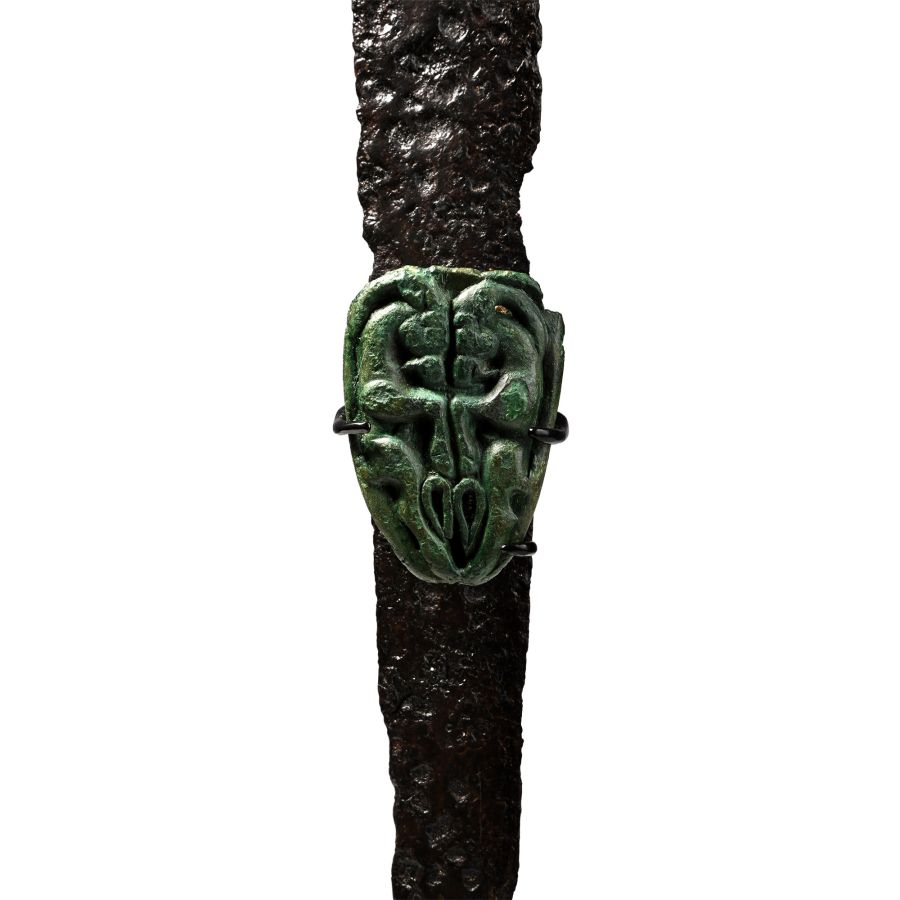
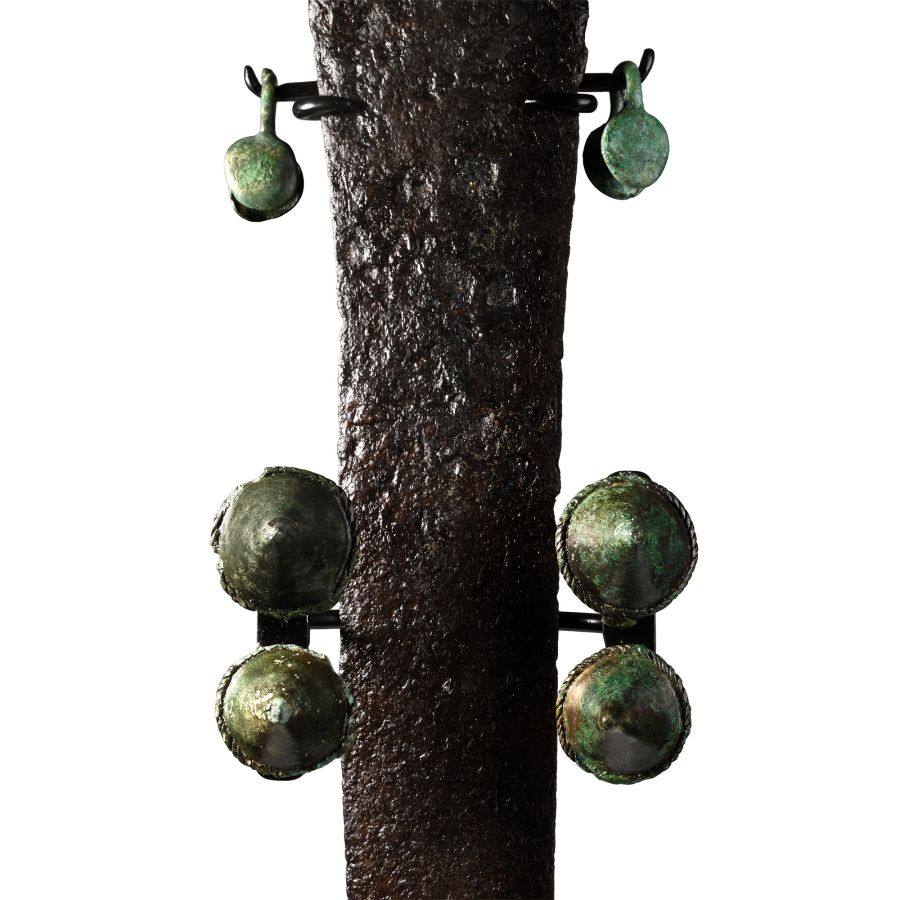
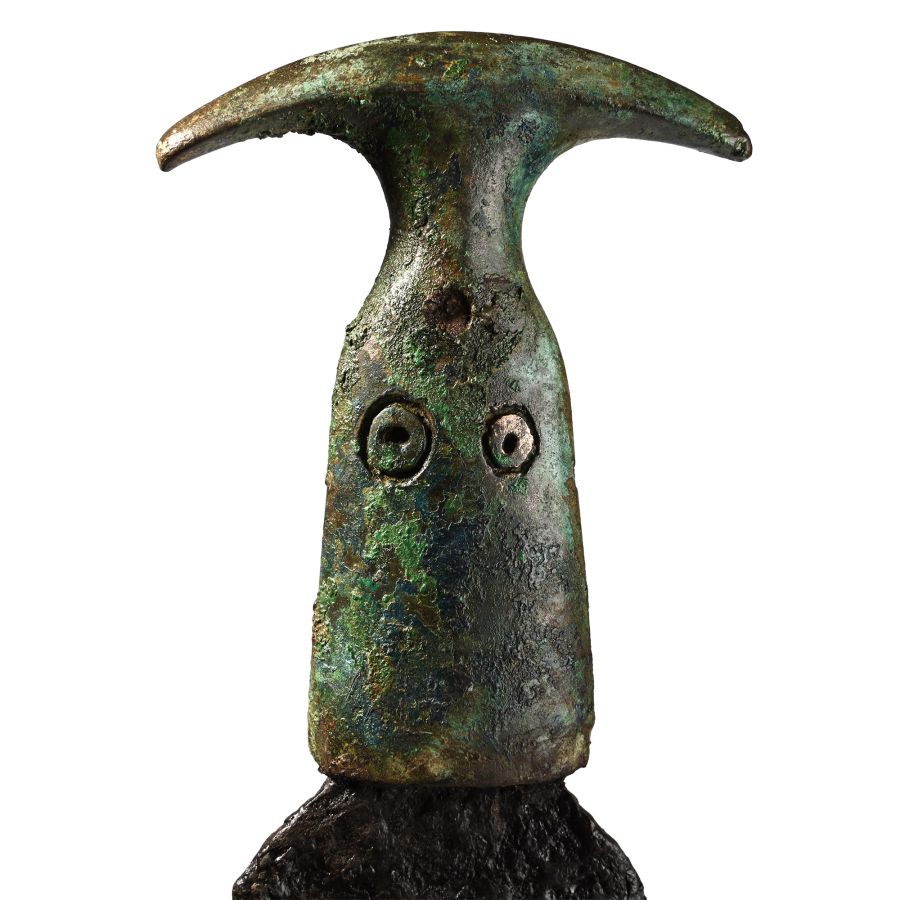
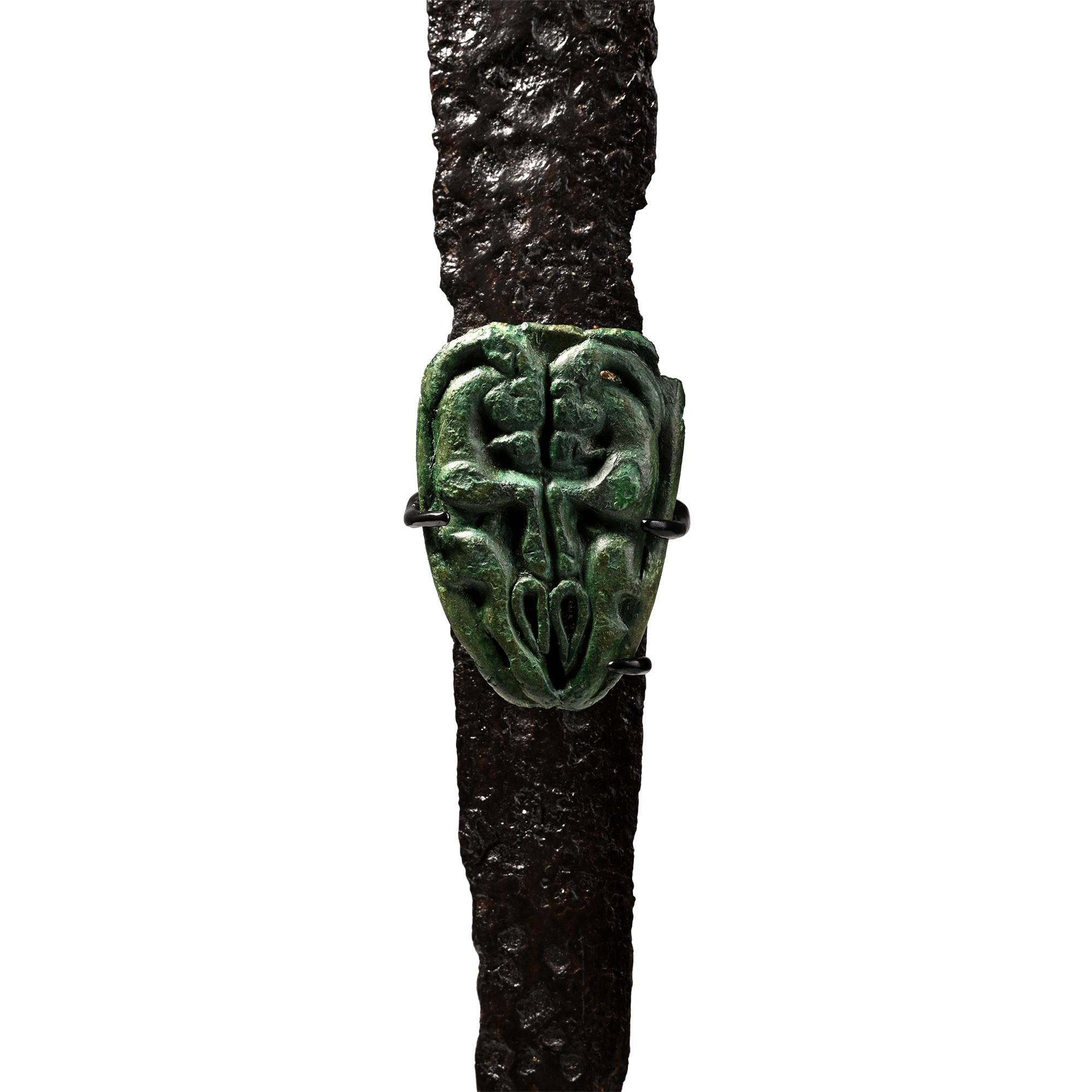
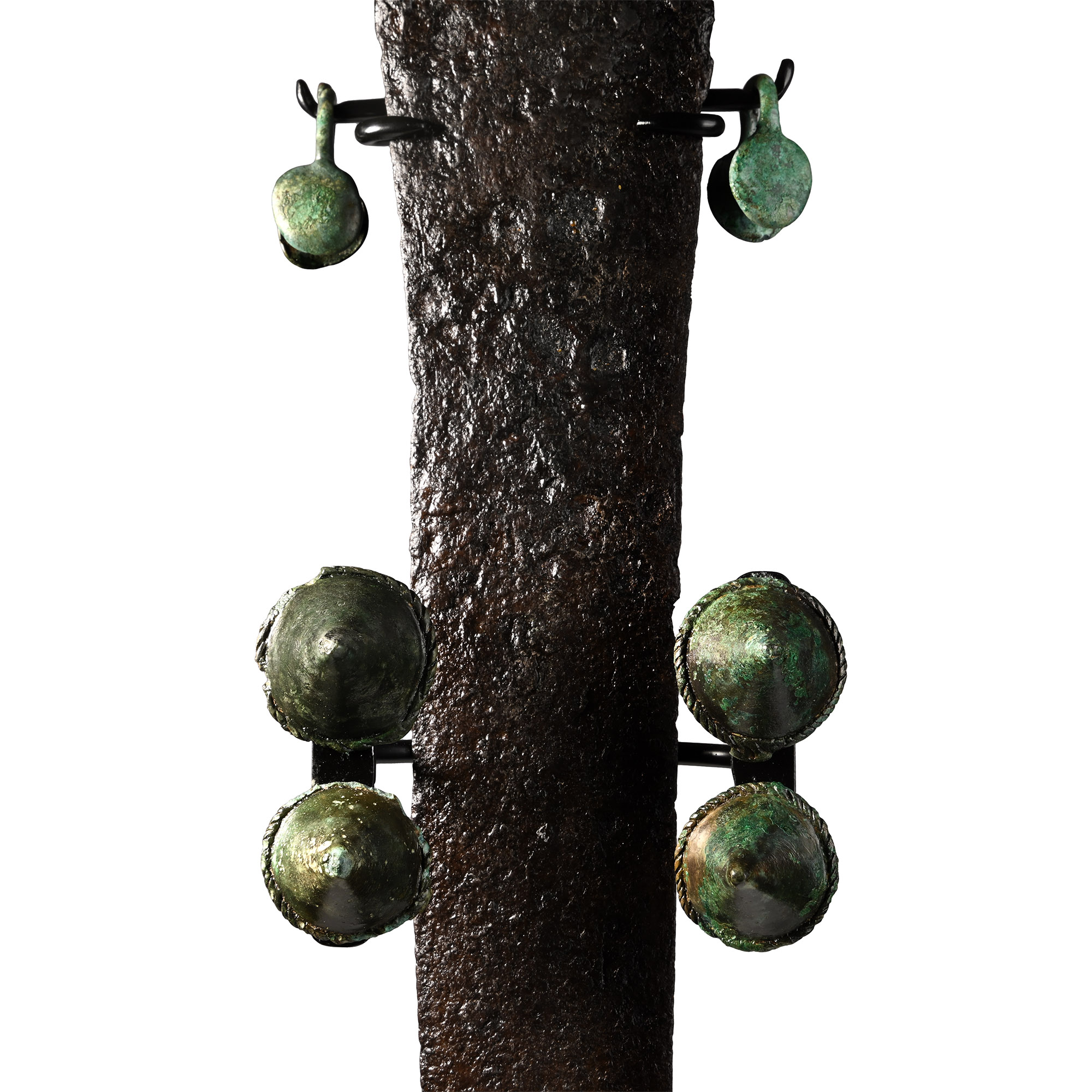
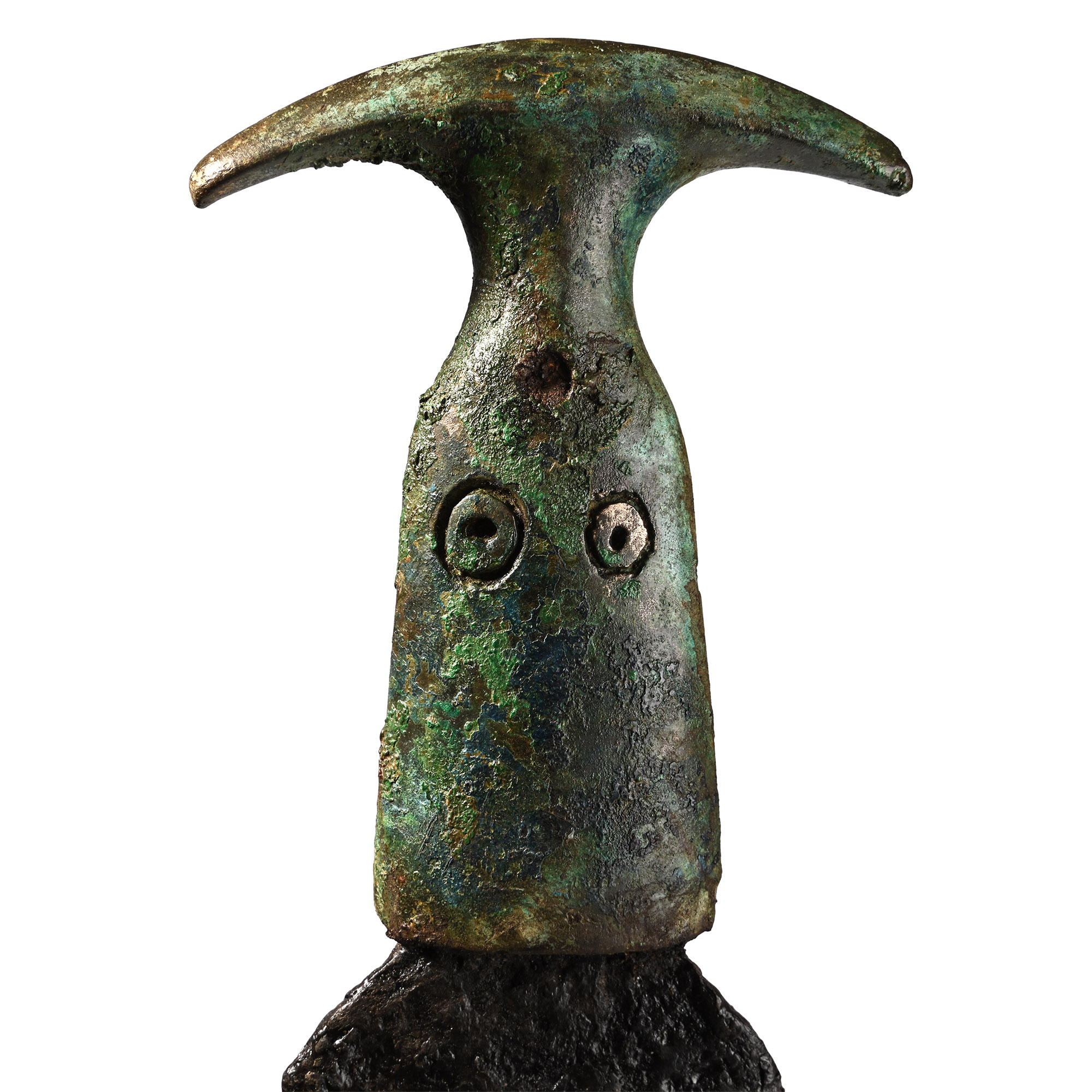
A broad iron sword with tapering blade and rounded shoulders, bronze hilt with crescentic pommel and apotropaic eye motifs to both sides; accompanied by bronze scabbard or baldric elements including a pair of eyelets with suspension loops, four circular appliqués with conical tips and ropework borders, and a scabbard chape with two opposing ibexes; mounted on a custom-made display stand.
ProvenanceFrom the private collection of a London gentleman, from his grandfather's collection formed before the early 1970s.
Accompanied by an academic report by Dr Raffaele D'Amato.
This lot has been checked against the Interpol Database of stolen works of art and is accompanied by search certificate number no.12914-245170.
Cf. Voronov, Yu. N., ‘Weapons of the Ancient Abkhaz Tribes in the 6th-1st Centuries BC’ in Скифский мир., Киев, 1975, pp.218-234, fig.4, no.1, for a similar blade; Gorelik, M.,Weapons of Ancient East, IV millennium BC-IV century BC, Saint Petersburg (2003) in Russian, pl. VI, no.65.
FootnotesThe sword belongs to the Caucasian culture of the Colchis and represents a very rare typology. A similar blade was found together with early Scythian arrows during excavations at Karmir-Blur. A similar combination found at Kulanurkhva’s excavations suggests that the appearance of such blades in Abkhazia is linked to the Scythian campaigns in Near Eastern Asia.
CONDITIONTimeLine Auctions follows a vetting process to ensure the authenticity and legality of all items, reinforcing our commitment to integrity and responsible trading. Each antiquity, antique, and coin lot undergoes thorough examination by a vetting committee of at least ten external specialists, professional trade association members, scientists, and archaeologists: Our Vetting Process
AUCTIONS:
TimeLine is a leading auction house specialising in antiquities, ancient art, collectables, natural history, coins, medals, and books. Our auctions offer museums, collectors, historians, and enthusiasts the opportunity to acquire unique and historically significant pieces.
LOT 0322
Iron Age Bronze-Hilted Sword
Estimate £3,000 - 4,000€3,480 - 4,640 (for guidance only)$4,050 - 5,400 (for guidance only)
-
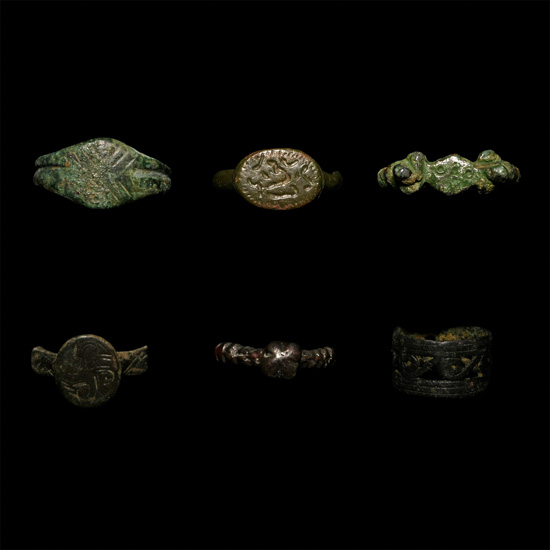
Celtic to Medieval Bronze Ring Group
1st century B.C.-16th century A.D.Sold for (Inc. bp): £85
Comprising: an openwork ring with spirals; three rings with decorated bezels; a ring with a round-section hoop and a lozenge-shaped bezel flanked by raised bosses; a ring with a notched hoop and a raised bezel. 25.04 grams total, 16-27mm
Acquired on the UK and EU art market before 2000. From the private collection of a Surrey, UK, gentleman.
Similar rings with with loop and braided wire were found in the Necropolis of Banatsko Arandelovo, Vojvodina, and dated 10th-15th century A.D. -
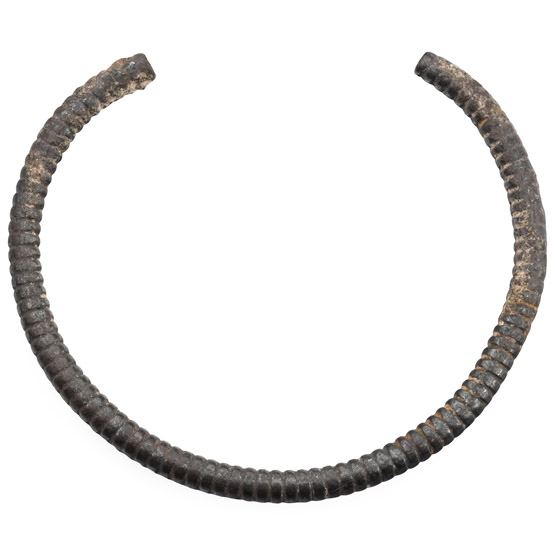
Romano-Celtic Silver Ribbed Bracelet
1st century B.C.-1st century A.D.Sold for (Inc. bp): £65
Penannular with ribbed round-section shank. 11.57 grams, 57 mm
Ex German art market, 2000s. Acquired from an EU collector living in London. From the collection of a Surrey, UK, gentleman. -
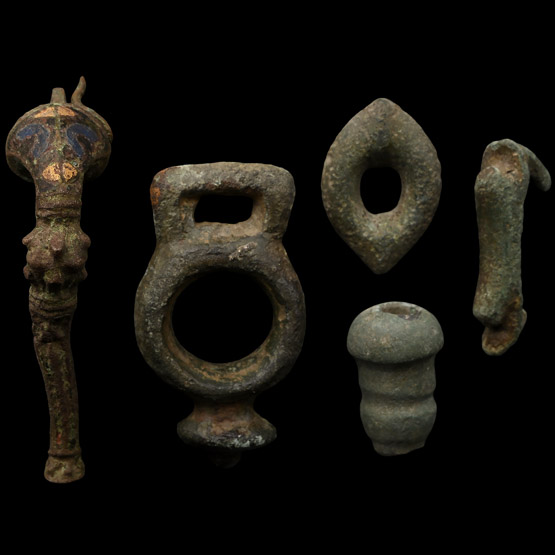
Celtic and Romano British Bronze Artefact Collection
Iron Age, 1st century B.C.-1st century A.D.Sold for (Inc. bp): £26
Including large enamelled trumpet brooch, terret mounts, and other items. 118 grams total, 27-64 mm
Found Norfolk, UK.
