
Loading, please wait...
LOT 1849
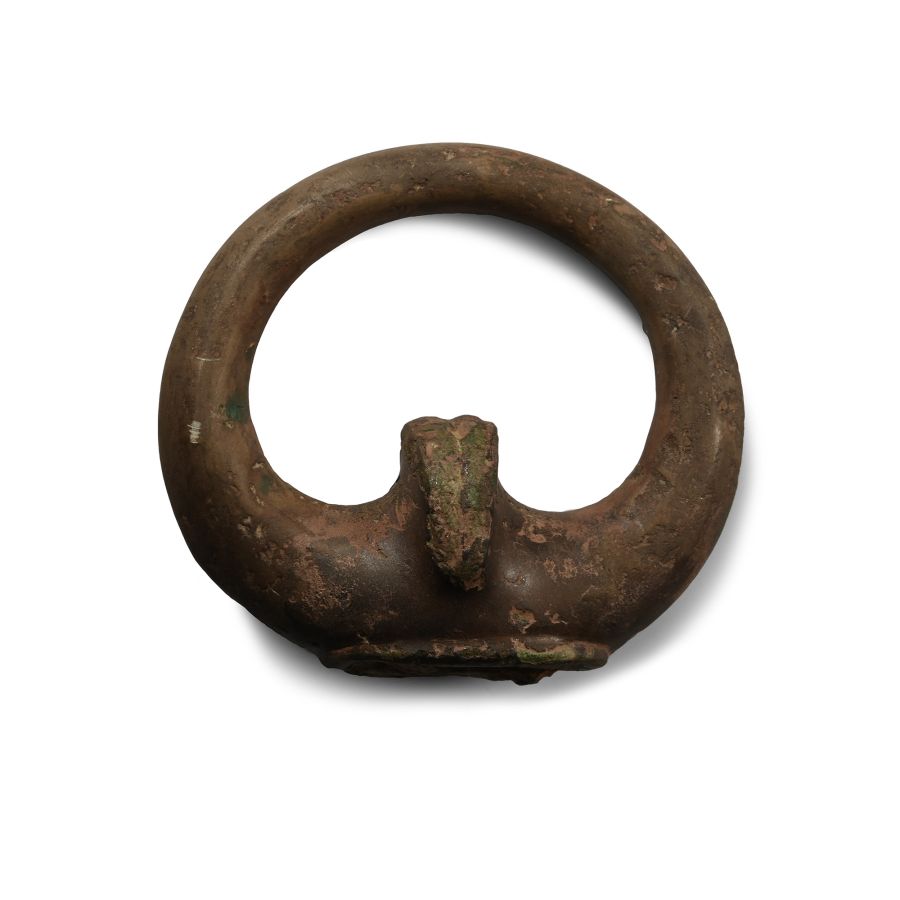
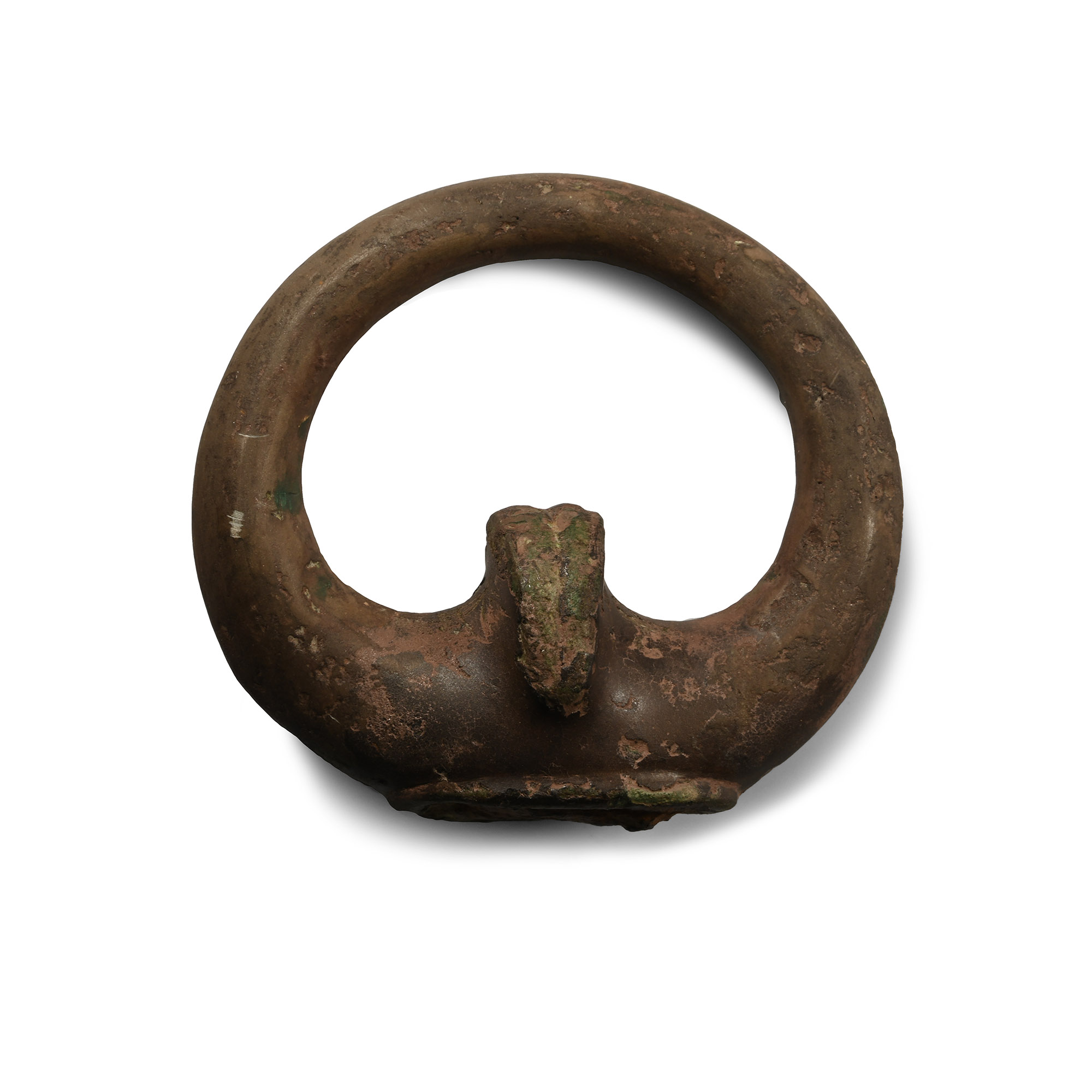
Iron Age British Celtic Bronze Chariot Terret Ring
1ST CENTURY B.C.-1ST CENTURY A.D.
3 1/4 in. (196 grams, 82 mm).
Substantial fitting with round-section elliptical loop, ribbed transverse collar at the base.
ProvenanceFound North Yorkshire, UK.
Ex Yorkshire, UK, collection.
This lot is accompanied by an illustrated lot declaration signed by the Head of the Antiquities Department, Dr Raffaele D’Amato.
For similar c.f. Bonhams, 12 December 1995, no.339 (£2,500-3,500); Sotheby's 10 December 1992, no.47 (£4,000-£6,000); and Leahy, Kevin and Lewis, Michael, Finds Identified, Essex, 2018, p.307; for this type of ornament see MacGregor, Britain, figs.114 and 125; for a discussion of the typology of terrets see Leeds, Celtic, pp.118-126.
CONDITIONTimeLine Auctions follows a vetting process to ensure the authenticity and legality of all items, reinforcing our commitment to integrity and responsible trading. Each antiquity, antique, and coin lot undergoes thorough examination by a vetting committee of at least ten external specialists, professional trade association members, scientists, and archaeologists: Our Vetting Process
AUCTIONS:
TimeLine is a leading auction house specialising in antiquities, ancient art, collectables, natural history, coins, medals, and books. Our auctions offer museums, collectors, historians, and enthusiasts the opportunity to acquire unique and historically significant pieces.
LOT 1849
Iron Age British Celtic Bronze Chariot Terret Ring
Estimate £200 - 300€230 - 350 (for guidance only)$270 - 410 (for guidance only)
-
Iron Age Celtic Bronze Mount Group
1st century B.C.-1st century A.D.Sold for (Inc. bp): £85
Comprising: appliqué of three domes, pierced at the centre; la Tène style mount with trumpet-comma motifs above domes. 14 grams total, 22-35 mm
Previously in Yorkshire and Derbyshire, UK, collections. Property of a private collector, West London, UK. This lot is accompanied by an illustrated lot declaration signed by the Head of the Antiquities Department, Dr Raffaele D’Amato. -
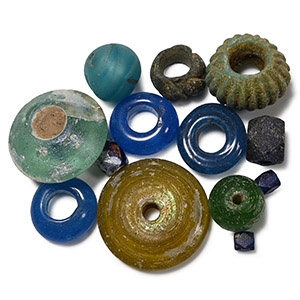
Romano-Celtic Glass Bead, Hair Ring, and Spindle-Whorl Collection
Circa 1st-2nd century A.D.Sold for (Inc. bp): £65
Including annular, melon, polyhedral and other bead types. 39 grams total, 4-26 mm
Acquired from Alan Cherry, Bournemouth, UK, circa 2004. Ian Wilkinson collection, Nottinghamshire, UK, formed since 1985. This lot is accompanied by an illustrated lot declaration signed by the Head of the Antiquities Department, Dr Raffaele D’Amato. -
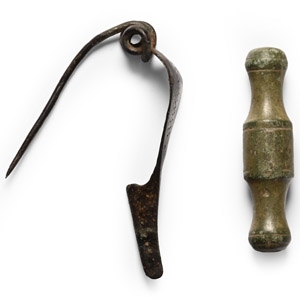
Iron Age Celtic Bronze Artefact Group
1st century B.C.-1st century A.D.Sold for (Inc. bp): £26
Comprising: a bow brooch with integral spring and pin, flat-section bow with stamped decoration; a toggle with rounded finials. 21.2 grams total, 40-51 mm
From the collections of Norfolk and Gloucestershire, UK, gentlemen. Property of a private collector, West London, UK. This lot is accompanied by an illustrated lot declaration signed by the Head of the Antiquities Department, Dr Raffaele D’Amato.
