
Loading, please wait...
LOT 2105
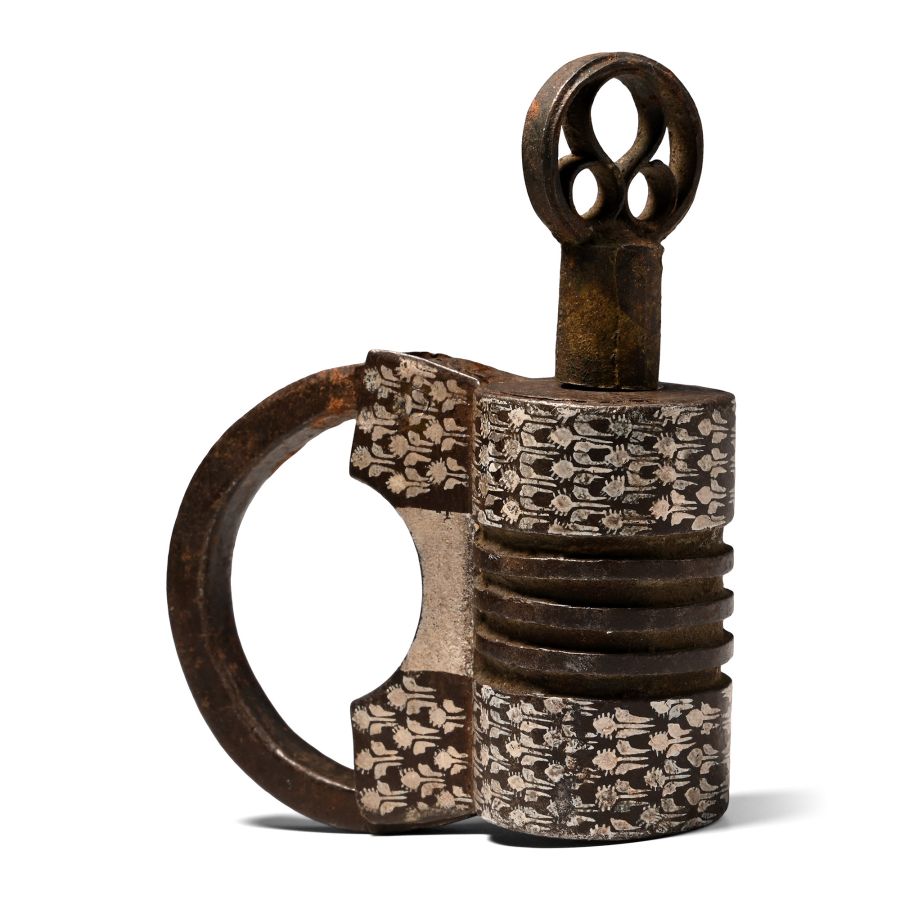
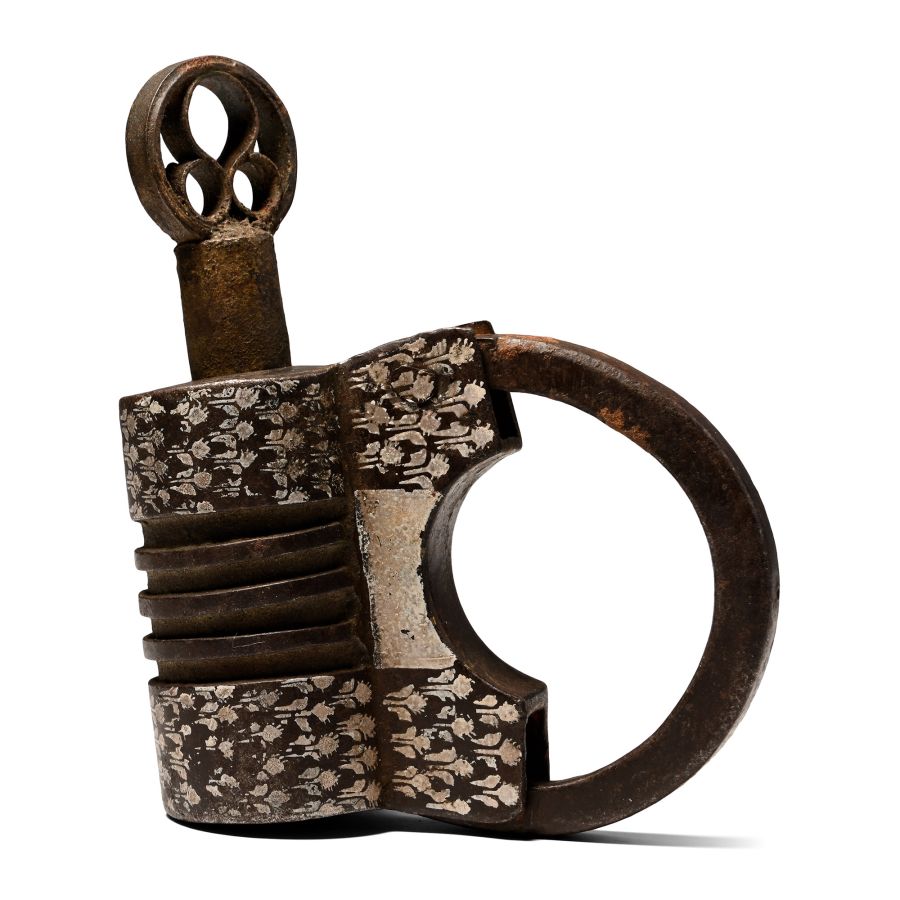
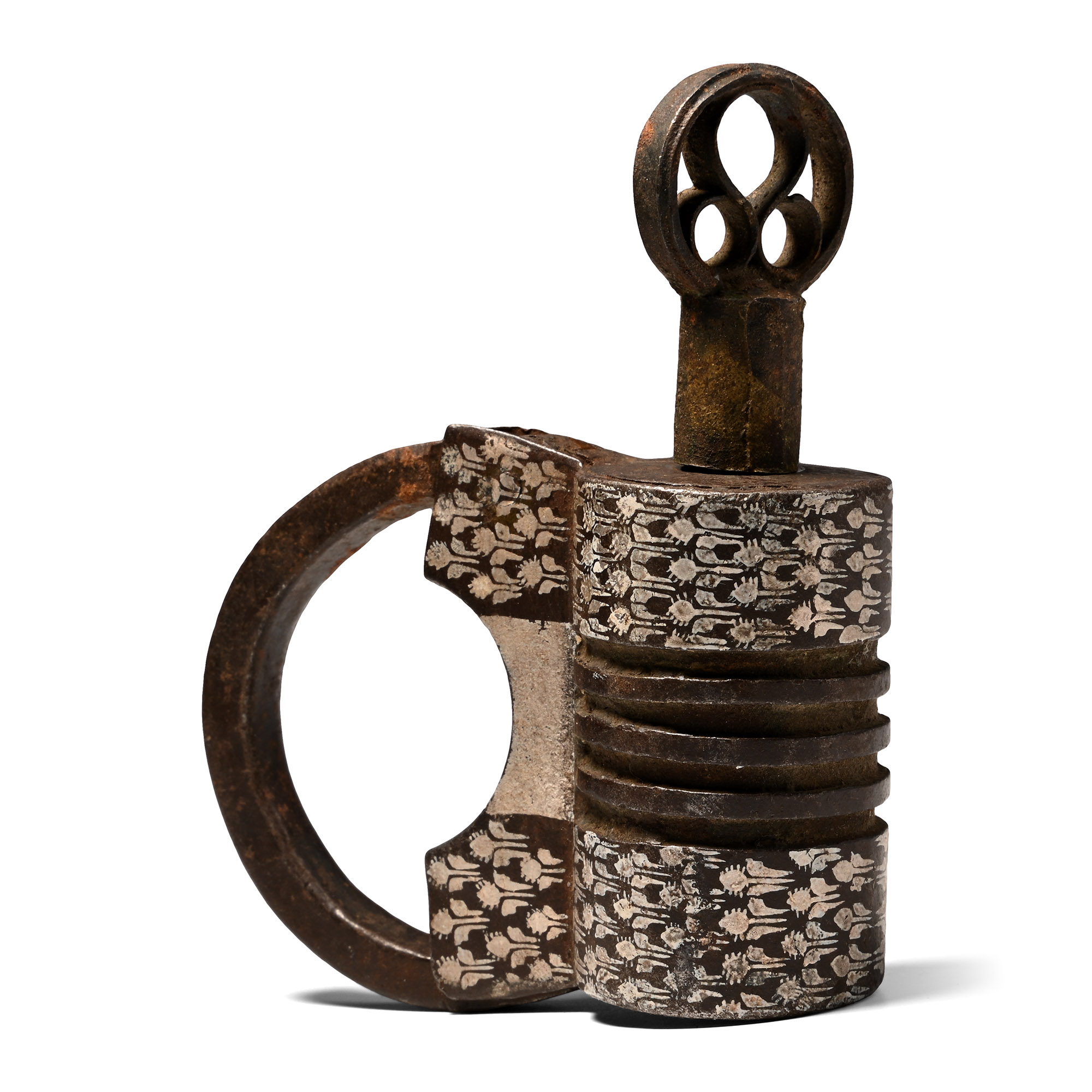
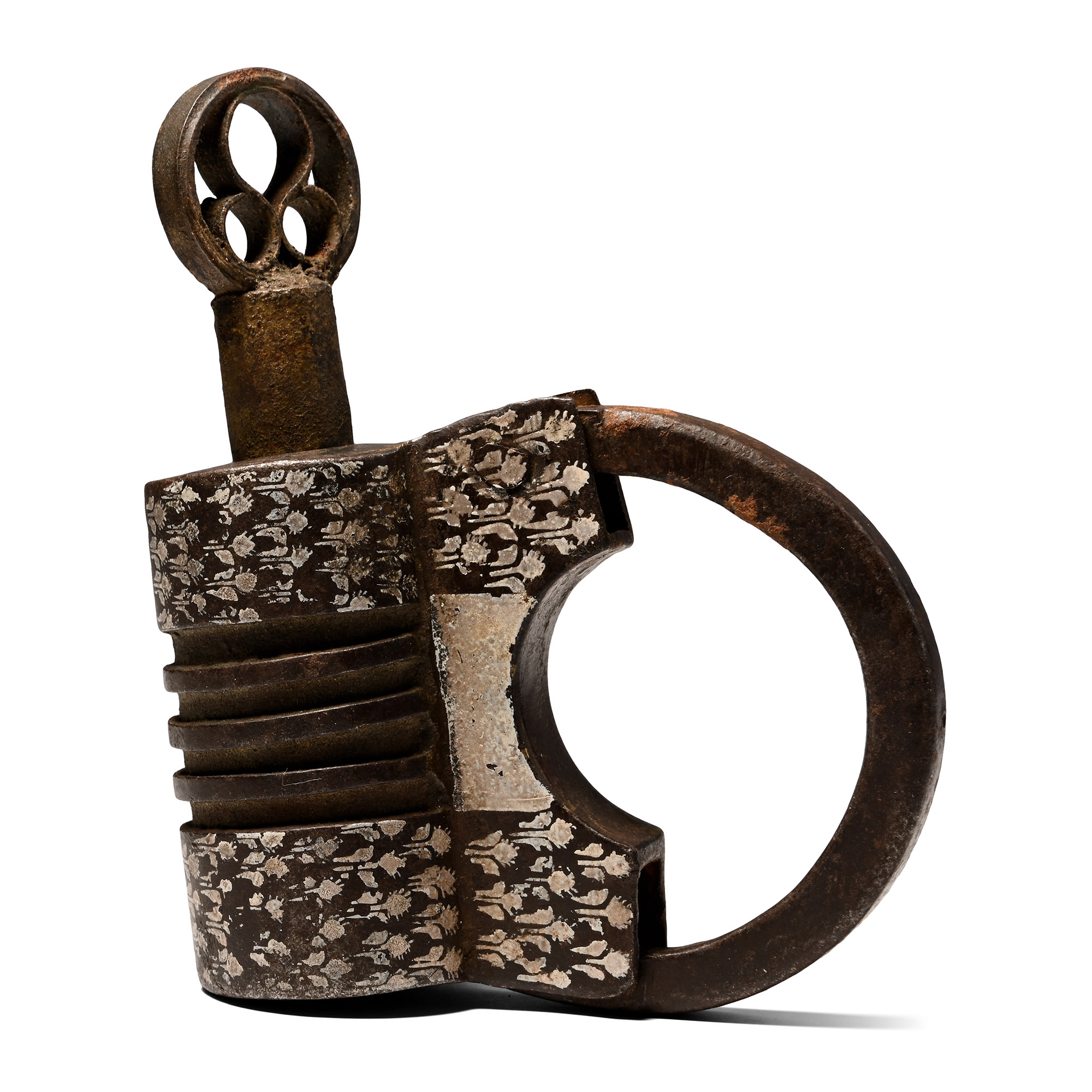
Inlaid Iron Padlock with Key
20TH CENTURY A.D.
4 1/4 in. (253 grams, 11 cm wide).
Barrel-shaped with arched lock mechanism and inlaid floral design in white metal, key with screw closure, openwork handle. [No Reserve]
ProvenanceAcquired on the UK art market in the early 2000s.
CONDITIONTimeLine Auctions follows a vetting process to ensure the authenticity and legality of all items, reinforcing our commitment to integrity and responsible trading. Each antiquity, antique, and coin lot undergoes thorough examination by a vetting committee of at least ten external specialists, professional trade association members, scientists, and archaeologists: Our Vetting Process
AUCTIONS:
TimeLine is a leading auction house specialising in antiquities, ancient art, collectables, natural history, coins, medals, and books. Our auctions offer museums, collectors, historians, and enthusiasts the opportunity to acquire unique and historically significant pieces.
-
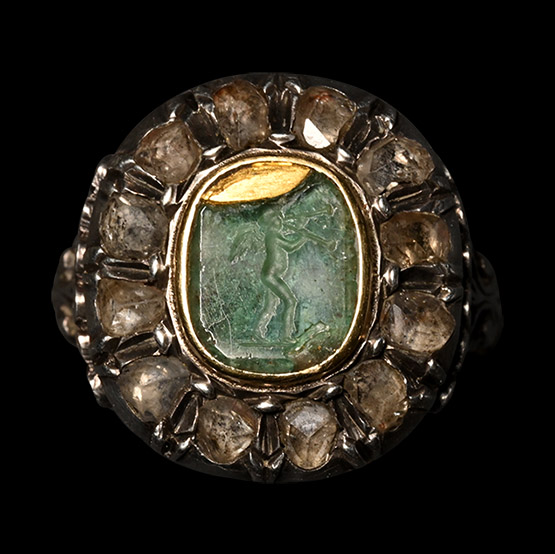
Diamond Locket Ring Set with Emerald Intaglio of Eros, the Greek God of Love, Playing Aulos
Late 19th century A.D.Estimate: £1,500 - 2,000 (+bp*)
Opening Bid: £800
Comprising a segmented hoop with scroll-shaped shoulders, a hinged oval bezel with a secret compartment, and a bezel decorated with twelve cut diamonds around a central green stone intaglio of a winged figure on a pillar playing an aulos. 5.82 grams, 23.60 mm overall, 16.50 mm internal diameter (approximate size British L 1/2, USA 6, Europe 11.87, Japan 11)
Private collection, Europe. Acquired on the English art market. -
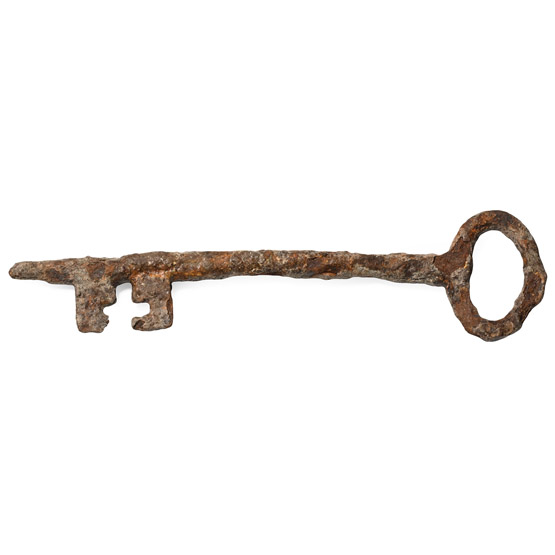
Very Large Post Medieval Iron Key
Circa 18th century A.D.Sold for (Inc. bp): £26
With slender shank, loop bow, bit with cruciform ward; possibly from a church or other large door. 116 grams, 20 cm
From the collection of a Buckinghamshire, UK, collection established from the earlier 1960s. -

Miscellaneous Vintage Pin Badge Collection
Circa 1980s A.D. and laterSold for (Inc. bp): £7
Including 'Chile Vencera', 'Was the last owner of your coat murdered?' and other types. 41 grams total, 25-63 mm
From the private collection of a S.W. London gentleman, acquired in the 1970s. This lot is accompanied by an illustrated lot declaration signed by the Head of the Antiquities Department, Dr Raffaele D'Amato.
