
Loading, please wait...
LOT 2681
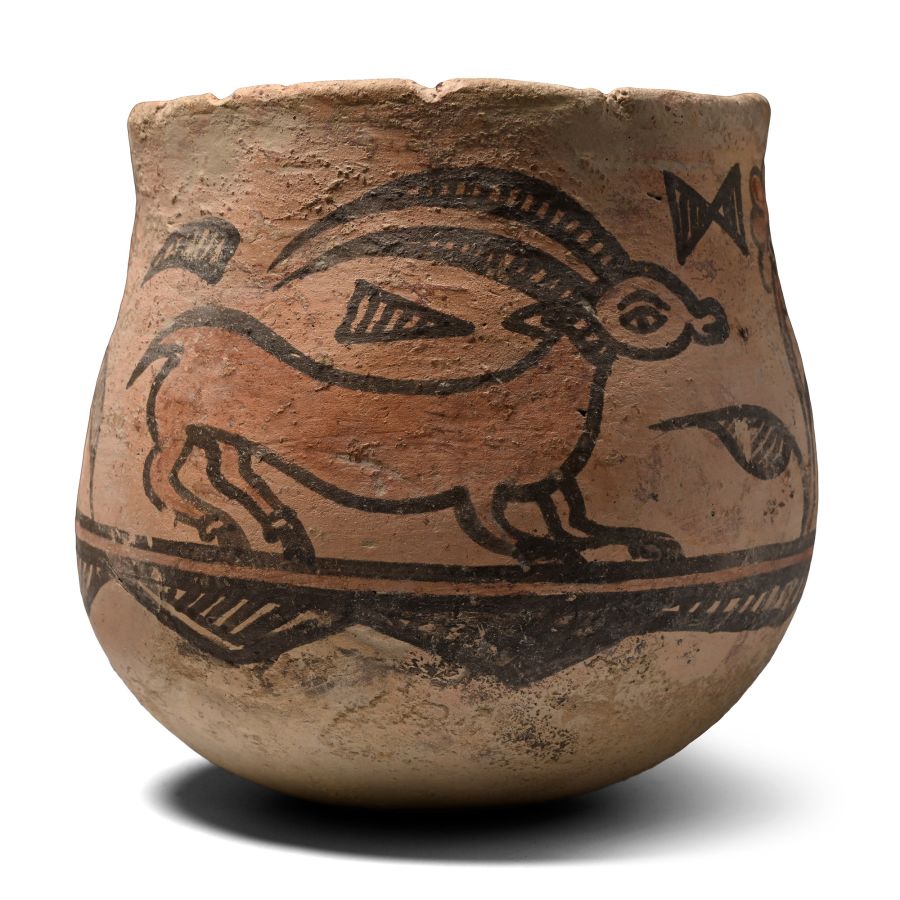
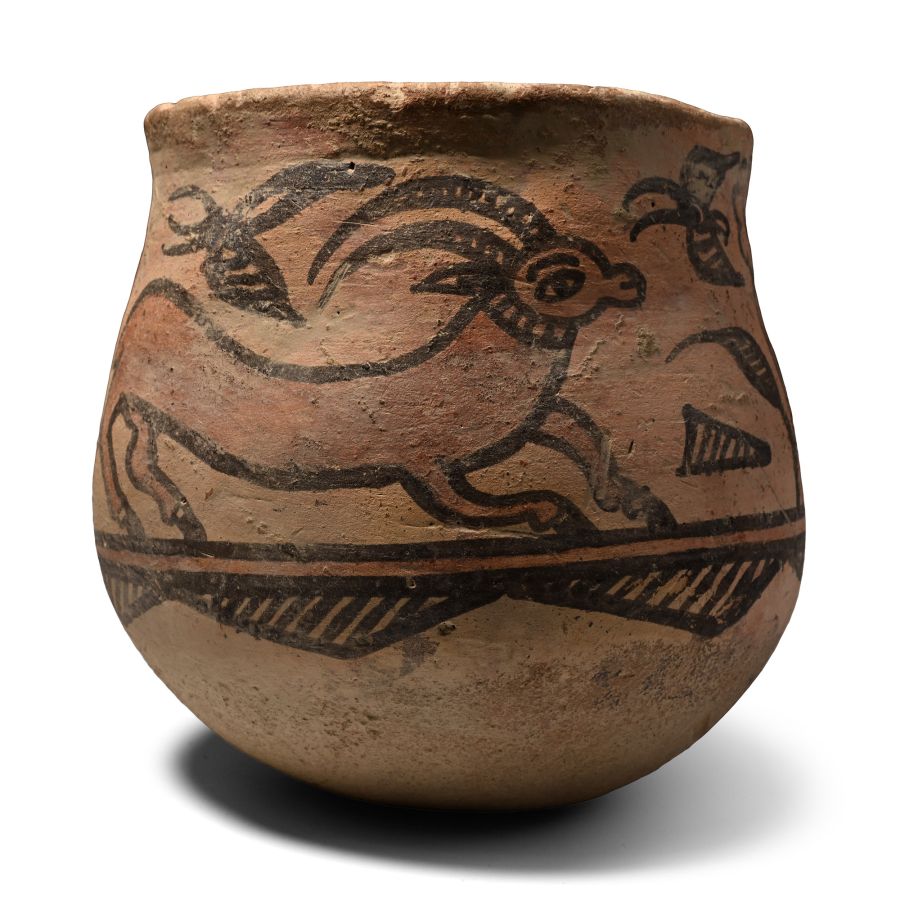
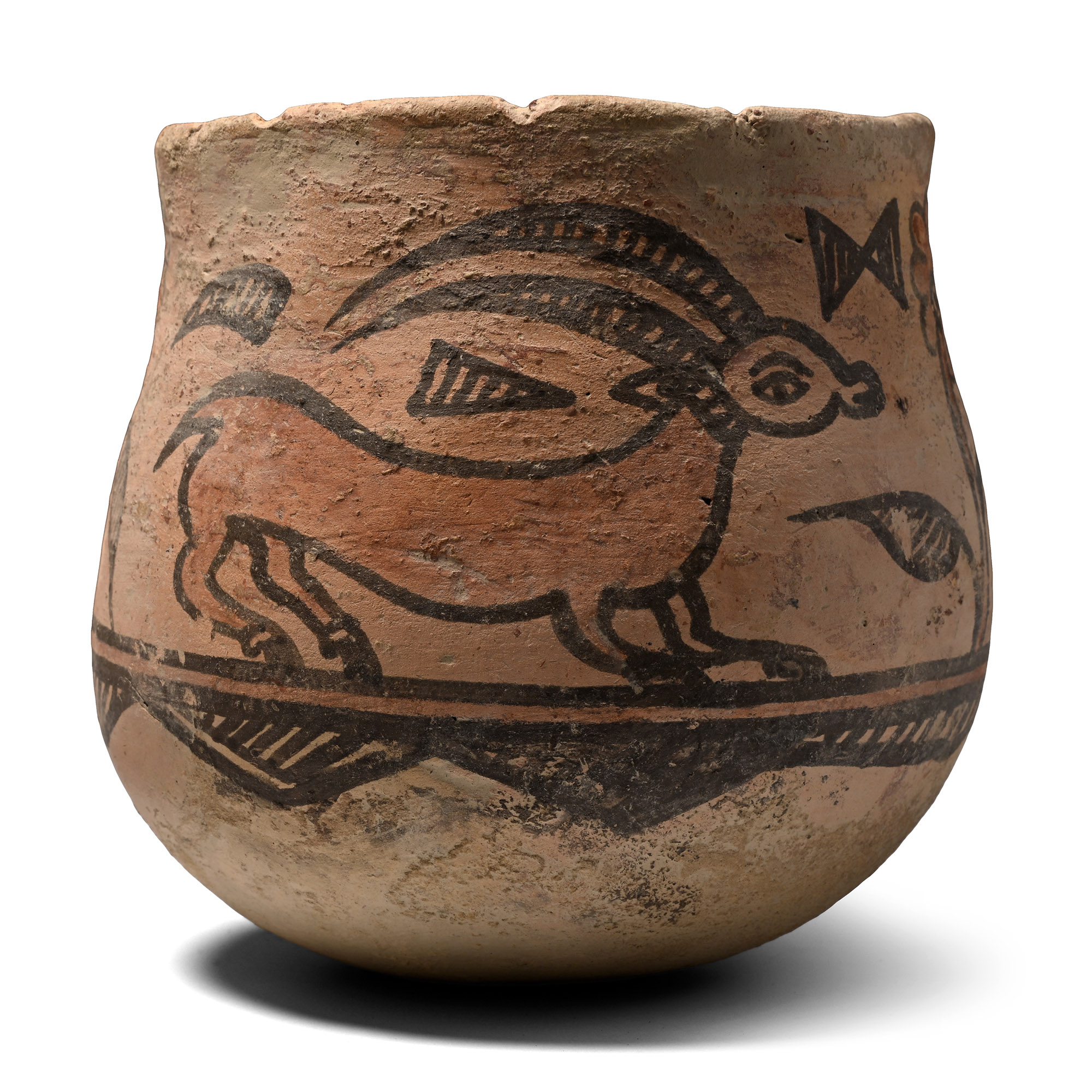
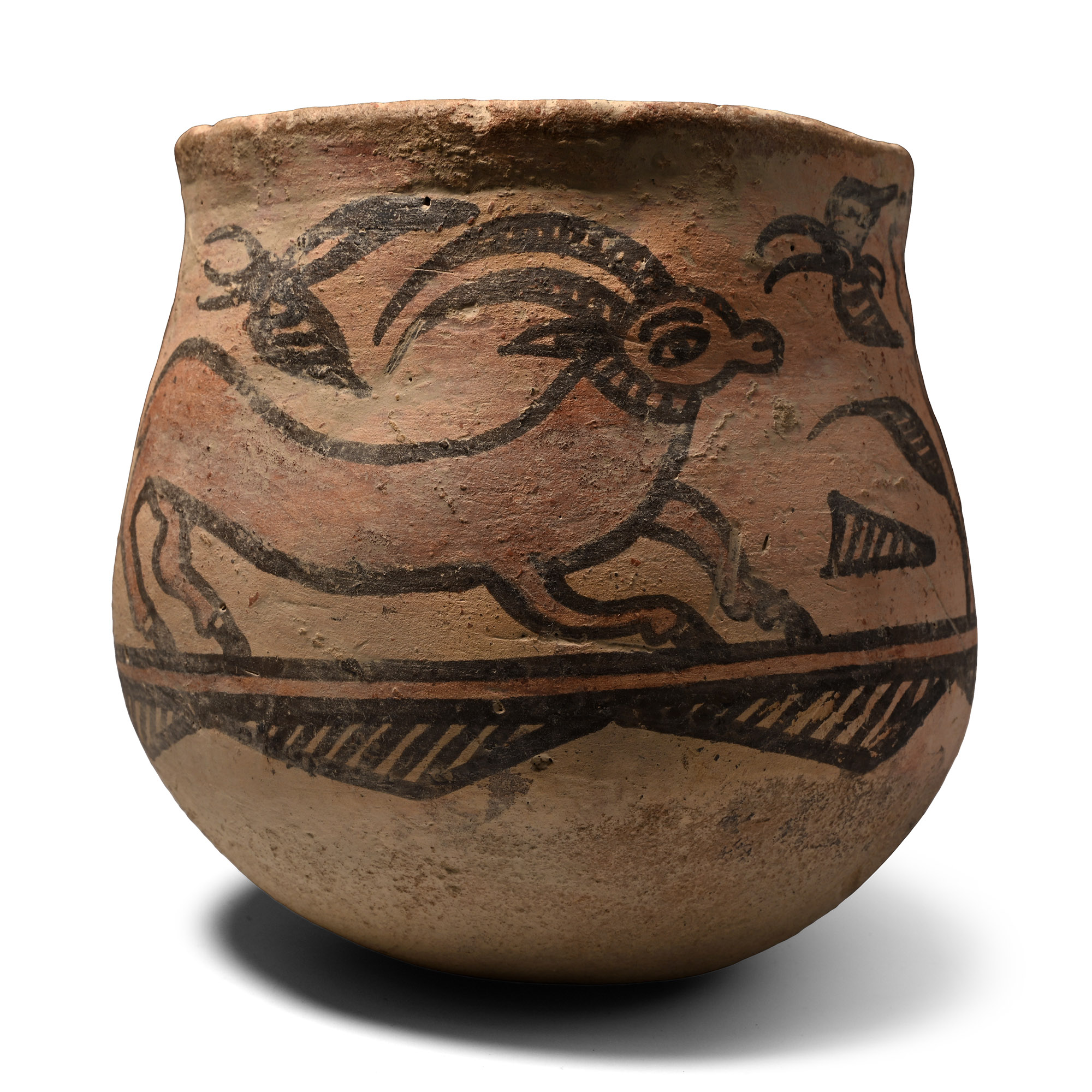
Indus Valley Terracotta Vessel with Ibex
3RD-2ND MILLENNIUM B.C.
5 1/4 in. (754 grams, 13.5 cm).
Biconvex with chamfered rim, painted frieze of advancing ibexes and plants to the shoulder. [No Reserve]
ProvenanceFrom the private collection of the late David Gold, 1990s.
David Gold was one of the co founders of the Iconic Lord John brand in Carnaby Street that sparked a style revolution in the swinging sixties dressing The Rolling Stones, The Beatles and The Kinks and were at the heart of 'all things cool'.
See Satyawadi, S., Proto-Historic Pottery of Indus Valley Civilisation: Study of Painted Motifs, Perspectives in Indian Art and Archaeology vol.2, New Delhi, 1994, for discussion.
CONDITIONTimeLine Auctions follows a vetting process to ensure the authenticity and legality of all items, reinforcing our commitment to integrity and responsible trading. Each antiquity, antique, and coin lot undergoes thorough examination by a vetting committee of at least ten external specialists, professional trade association members, scientists, and archaeologists: Our Vetting Process
AUCTIONS:
TimeLine is a leading auction house specialising in antiquities, ancient art, collectables, natural history, coins, medals, and books. Our auctions offer museums, collectors, historians, and enthusiasts the opportunity to acquire unique and historically significant pieces.
-
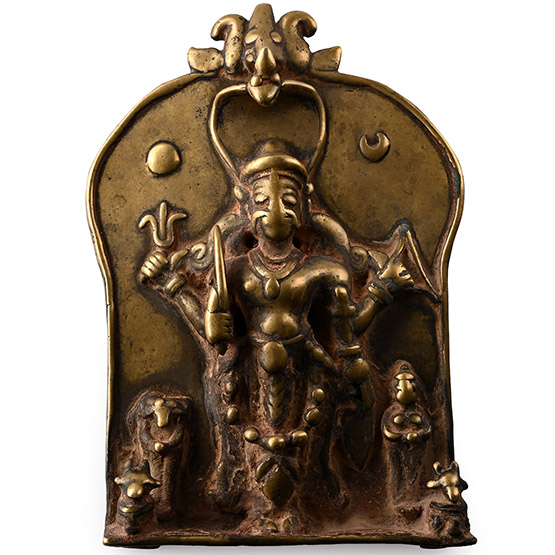
Sacred Copper-Alloy Plaque with Shiva and Attendants
India, 19th century A.D.Sold for (Inc. bp): £78
Tongue-shaped plaque with half-round facing figure of Virabhadra Shiva holding various attributes, an attendant and bull on each side. 1.54 kg, 21 cm
From an important collection of Hindu art formed by Jeffrey Romer, 1990s. Ex central London, UK, gallery. -
.jpg)
Indus Valley Terracotta Vessel with Painted Scene
3rd-2nd millennium B.C.Sold for (Inc. bp): £546
With everted rim, painted frieze to the shoulder and sidewall in two panels of a youthful female figure in profile facing a male presenting her with a bunch of flowers(?), in one scene with pointillé miasma surrounding the leaves; repaired. 1.13 kg, 17.5 cm
From the private collection of the late David Gold, 1990s. David Gold was one of the co founders of the Iconic Lord John brand in Carnaby Street that sparked a style revolution in the swinging sixties dressing The Rolling Stones, The Beatles and The Kinks and were at the heart of 'all things cool'. -
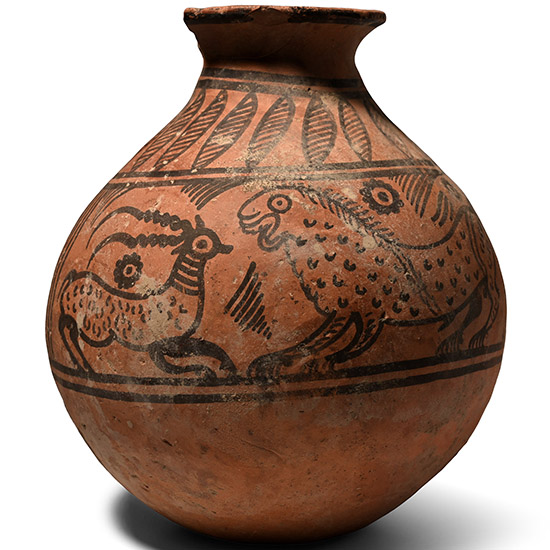
Large Indus Valley Terracotta Vessel with Animals
3rd-2nd millennium B.C.Sold for (Inc. bp): £390
Globular with everted rim, painted polychrome frieze of a lion and a facing ibex with geometric panels in between; rim chipped. 917 grams, 18.5 cm
From the private collection of the late David Gold, 1990s. David Gold was one of the co founders of the Iconic Lord John brand in Carnaby Street that sparked a style revolution in the swinging sixties dressing The Rolling Stones, The Beatles and The Kinks and were at the heart of 'all things cool'.
