
Loading, please wait...
LOT 2642
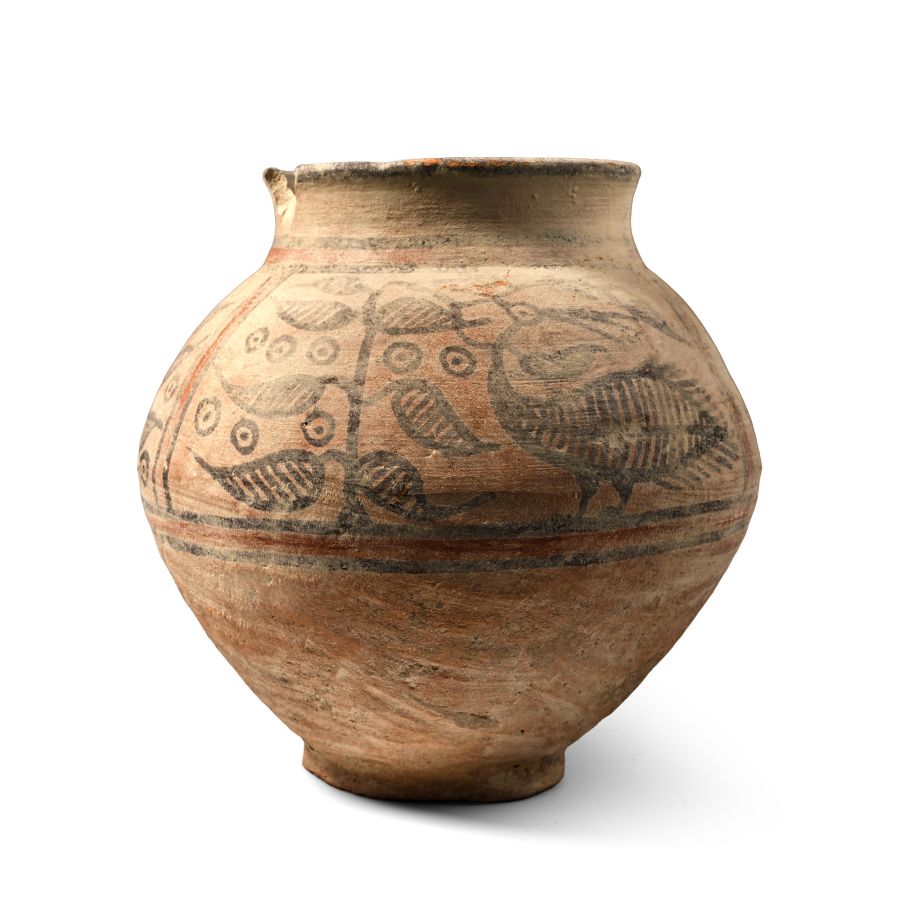
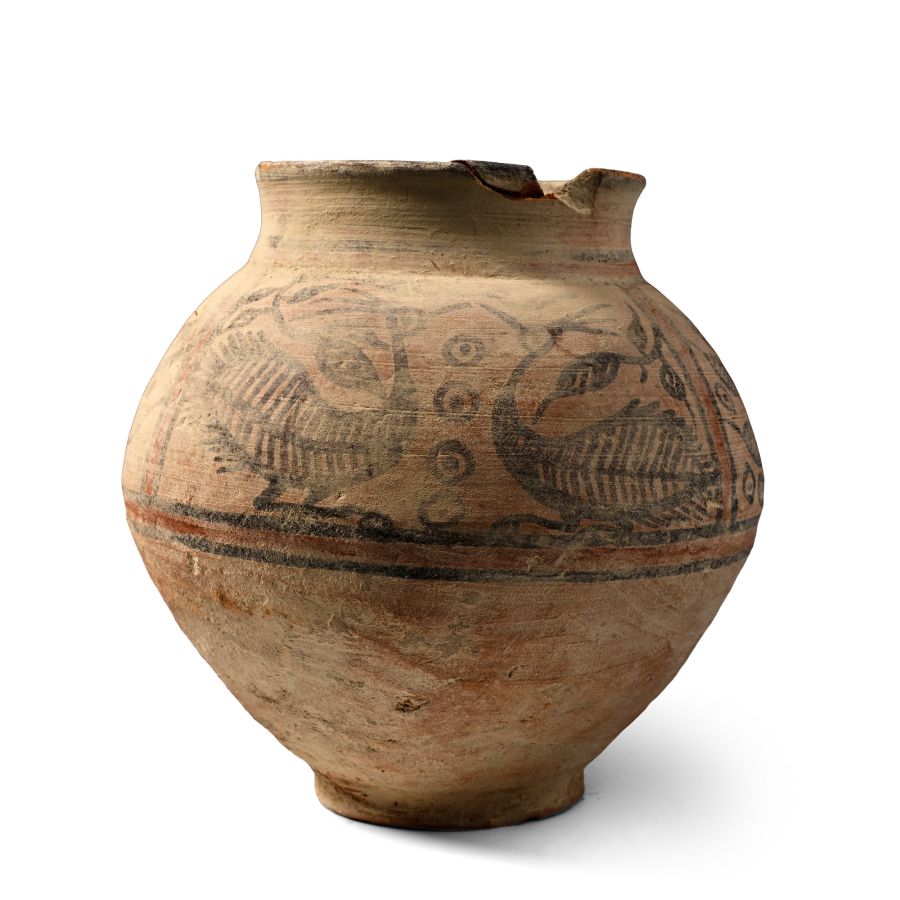
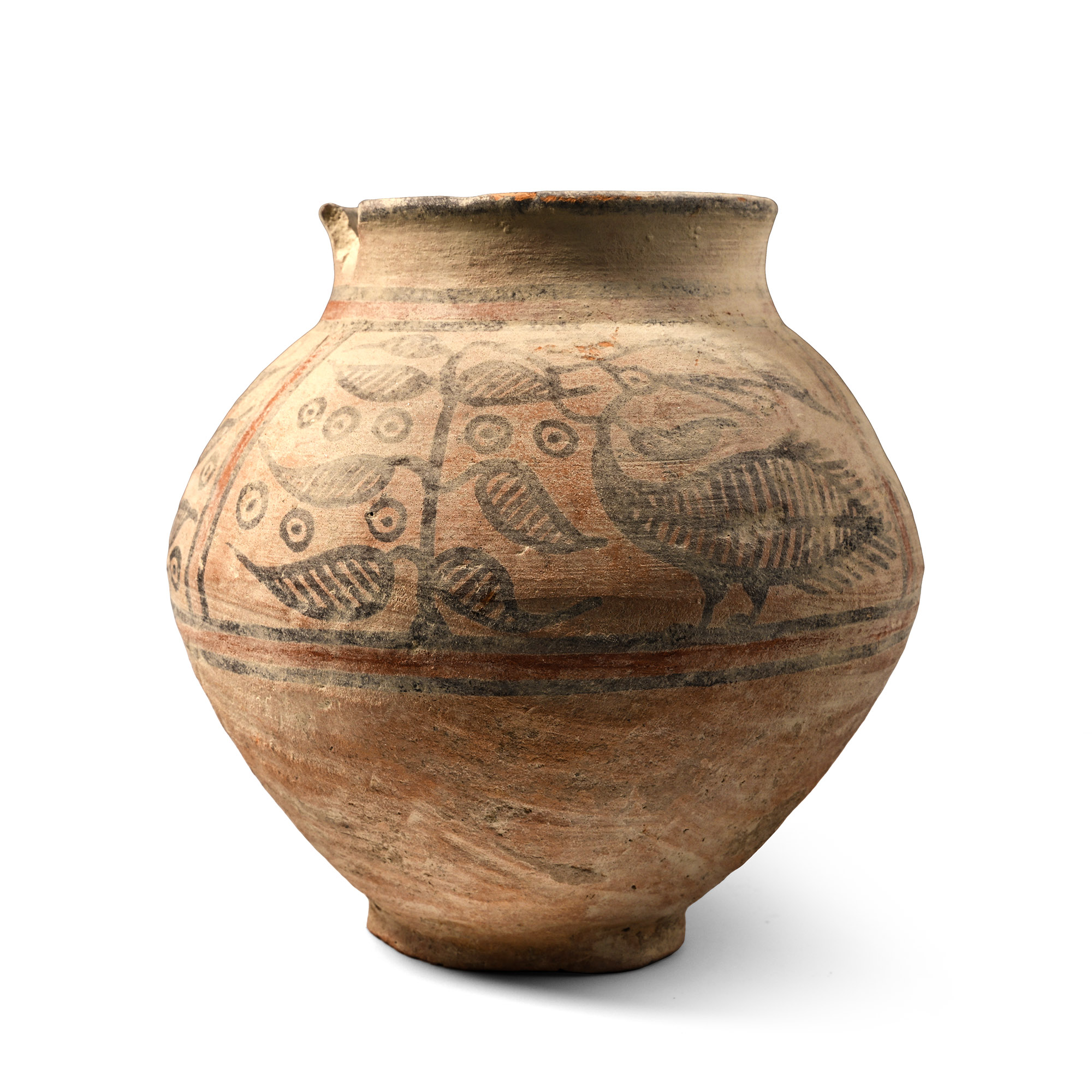
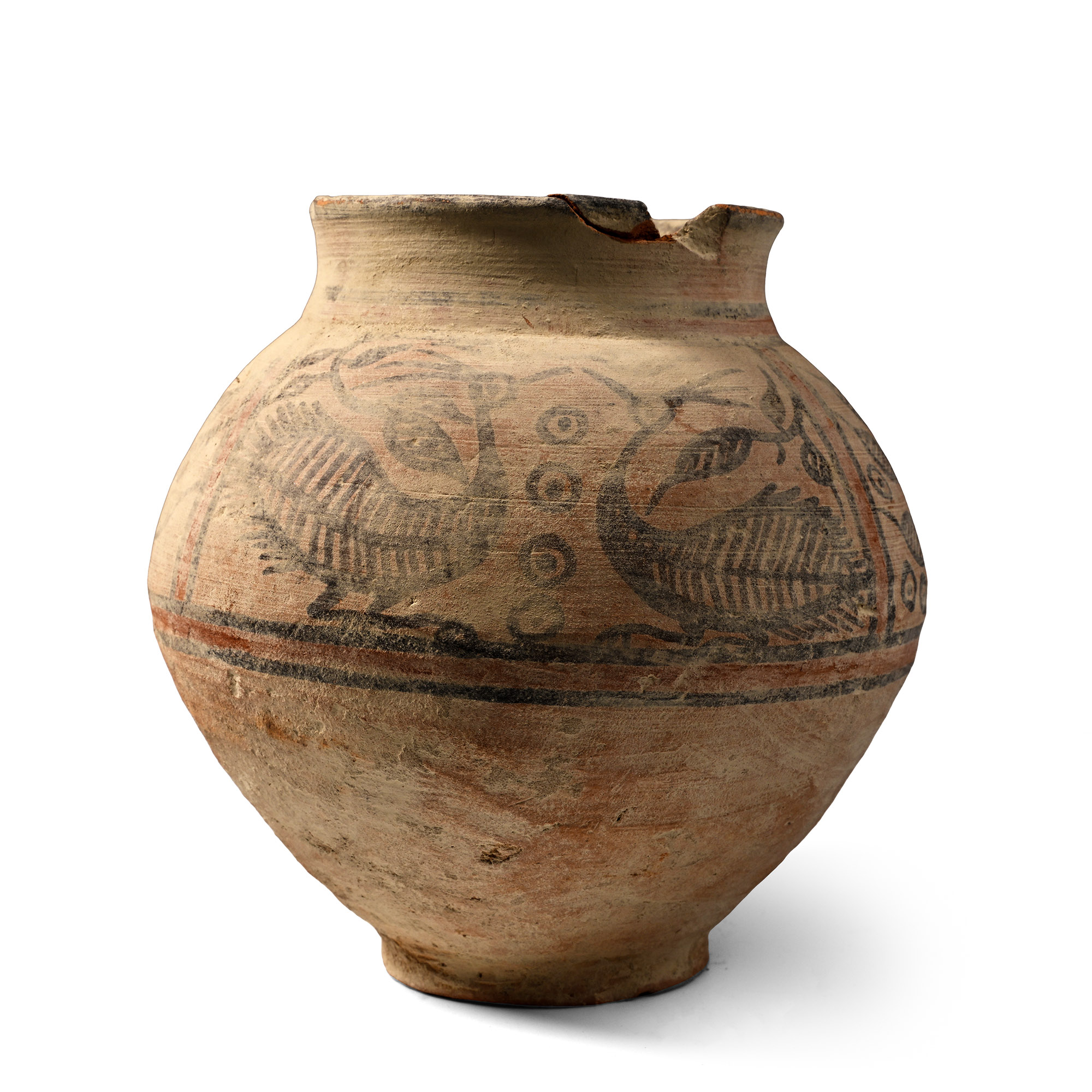
Indus Valley Terracotta Vessel with Birds
3RD-2ND MILLENNIUM B.C.
5 3/4 in. (580 grams, 14.5 cm).
Biconvex with flared mouth, painted bands of birds and peepal leaf ornament to the shoulder, rim chipped. [No Reserve]
ProvenanceFrom the private collection of the late David Gold, 1990s.
David Gold was one of the co founders of the Iconic Lord John brand in Carnaby Street that sparked a style revolution in the swinging sixties dressing The Rolling Stones, The Beatles and The Kinks and were at the heart of 'all things cool'.
See Satyawadi, S., Proto-Historic Pottery of Indus Valley Civilisation: Study of Painted Motifs, Perspectives in Indian Art and Archaeology vol.2, New Delhi, 1994, for discussion.
CONDITIONTimeLine Auctions follows a vetting process to ensure the authenticity and legality of all items, reinforcing our commitment to integrity and responsible trading. Each antiquity, antique, and coin lot undergoes thorough examination by a vetting committee of at least ten external specialists, professional trade association members, scientists, and archaeologists: Our Vetting Process
AUCTIONS:
TimeLine is a leading auction house specialising in antiquities, ancient art, collectables, natural history, coins, medals, and books. Our auctions offer museums, collectors, historians, and enthusiasts the opportunity to acquire unique and historically significant pieces.
-
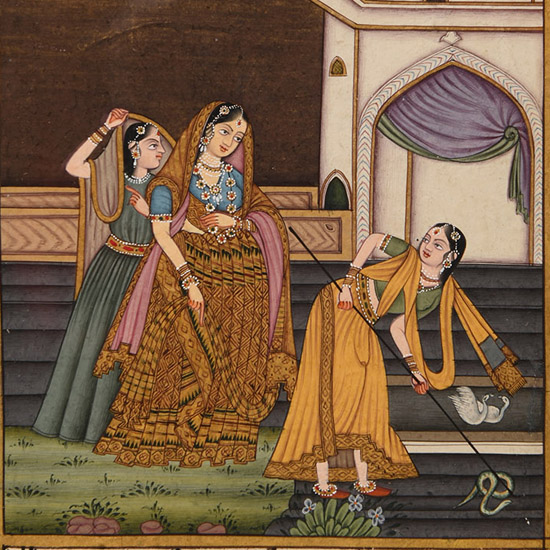
Framed Indian Watercolour Manuscript Leaf with Noble Ladies
19th-early 20th century A.D.Sold for (Inc. bp): £26
A rectangular manuscript page with watercolour scene of three noble females in a landscape, one leaning forward to pierce a snake with a lance(?); panels of nasta'liq text above and below; mounted in a glazed wooden frame. 480 grams, 29.7 x 21 cm
Very fine condition.
Acquired on the UK art market, 1980s-1990s. The Woodbridge collection of Indo-Persian art. -
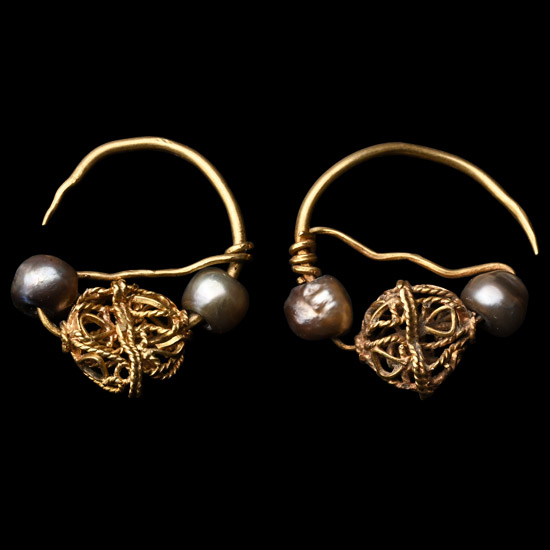
Moghul Indian Gold and Pearl Earrings
Circa 14th-15th century A.D.Sold for (Inc. bp): £156
Matched pair, each a crescentic hoop with an openwork filigree sphere and two pearls. 2.71 grams total, 18-19.1 mm
From the private collection of a European gentleman (1942-2024), formed since the 1970s. -
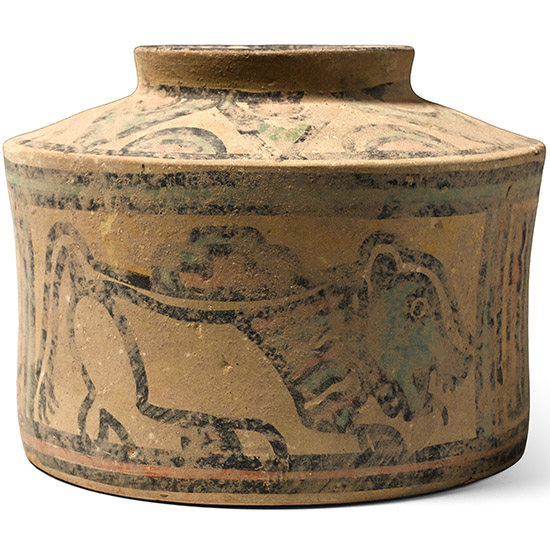
Indus Valley Terracotta Vessel with Animals
3rd-2nd millennium B.C.Sold for (Inc. bp): £164
With slightly sloping sidewall, flat shoulder and everted rim to the broad mouth; painted geometric bands and zoomorphic panels to side and shoulder. 458 grams, 12 cm wide
From the private collection of the late David Gold, 1990s. David Gold was one of the co founders of the Iconic Lord John brand in Carnaby Street that sparked a style revolution in the swinging sixties dressing The Rolling Stones, The Beatles and The Kinks and were at the heart of 'all things cool'.
Similar bowls were found at Nal, appearing to be canister-like vessels with circular openings. As here, it is a buff ware with traces of blue and red patterns, and repeated geometrical design, here enriched with the image of a wild beast.
