
Loading, please wait...
LOT 1718
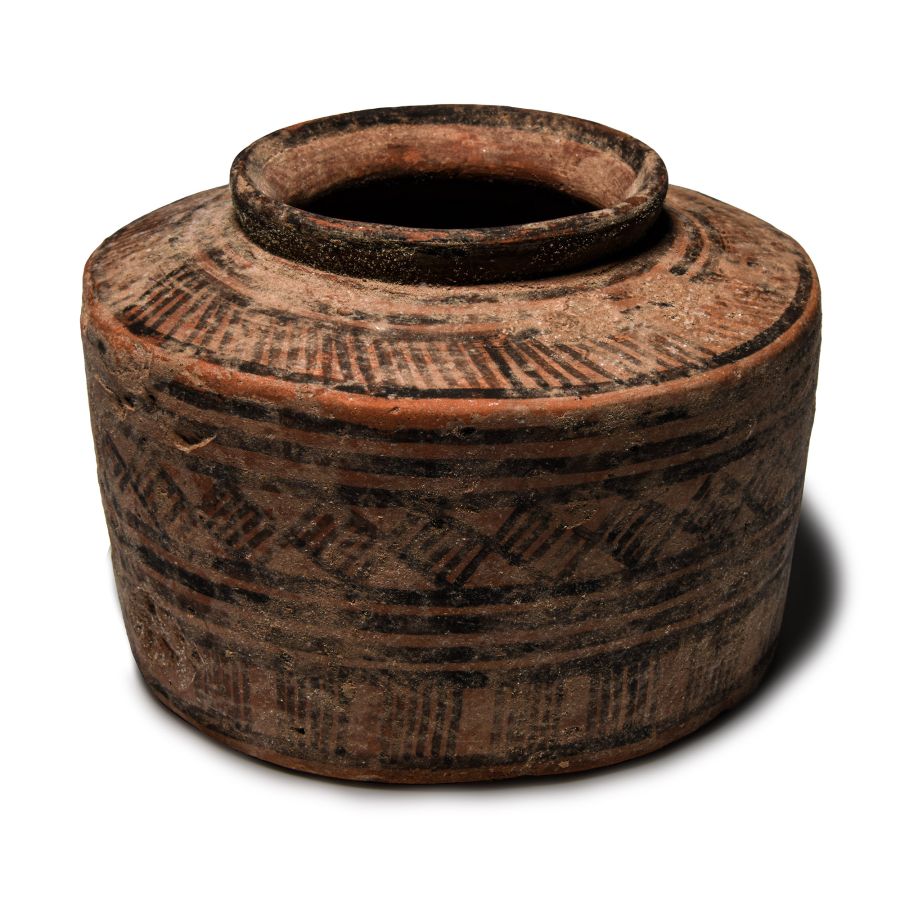
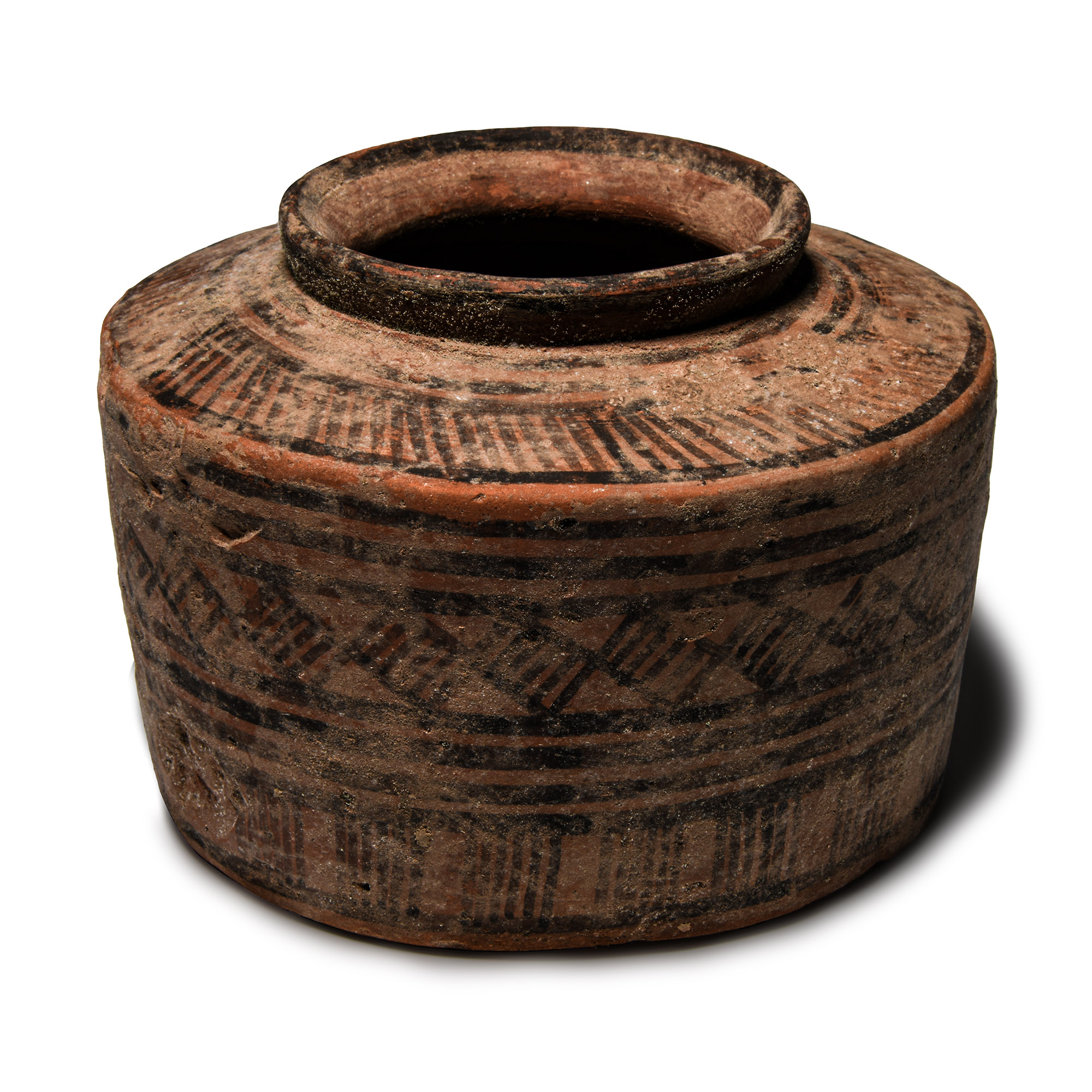
Indus Valley Terracotta Jar
3RD MILLENNIUM B.C.
5 in. (500 grams, 12.9 cm wide).
Drum-shaped jar with raised gange rim, hatched band to the shoulder, tiered geometric bands to the body. [No Reserve]
ProvenanceEx M. Schoyen London, UK, collection, 1990-2000s.
CONDITIONTimeLine Auctions follows a vetting process to ensure the authenticity and legality of all items, reinforcing our commitment to integrity and responsible trading. Each antiquity, antique, and coin lot undergoes thorough examination by a vetting committee of at least ten external specialists, professional trade association members, scientists, and archaeologists: Our Vetting Process
AUCTIONS:
TimeLine is a leading auction house specialising in antiquities, ancient art, collectables, natural history, coins, medals, and books. Our auctions offer museums, collectors, historians, and enthusiasts the opportunity to acquire unique and historically significant pieces.
-
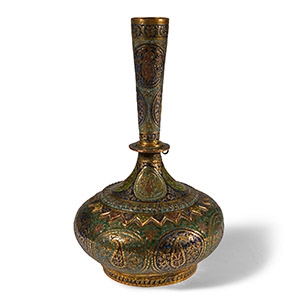
Kashmir Gilt Enamelled Vessel
Late 19th century A.D.Estimate: £300 - 400 (+bp*)
Opening Bid: £125
With squat body and tall expanding neck, flange collar; ornamented with panels of repoussé floral ornament reserved against a coloured enamel field. 742 grams, 26.5 cm
London, UK gallery, 1971-early 2000s. -
.jpg)
Indus Valley Etched Orange Carnelian Necklace Bead Group
Circa 2nd millennium B.C. or laterSold for (Inc. bp): £624
Comprising a group of orange carnelian beads with white line etched geometric patterns, the beads of various forms and types; each pierced for stringing. 19.1 grams total, 2-23 mm
UK gallery, early 2000s. -
.jpg)
Indian Earthenware Vessel with Elephant Impressions
Early 1st millennium B.C.Estimate: £500 - 700 (+bp*)
Opening Bid: £278
With bulbous body, broad mouth with returned rim; band of impressed stamps to the shoulder, each an advancing elephant with fronds; mounted on a custom-made stand, repaired. 16.3 kg, 68.5 cm including stand
Fine condition; repaired.
Acquired before 1972. Mahboubian Gallery, London, UK. Property of a central London collector.
