
Loading, please wait...
LOT 2465
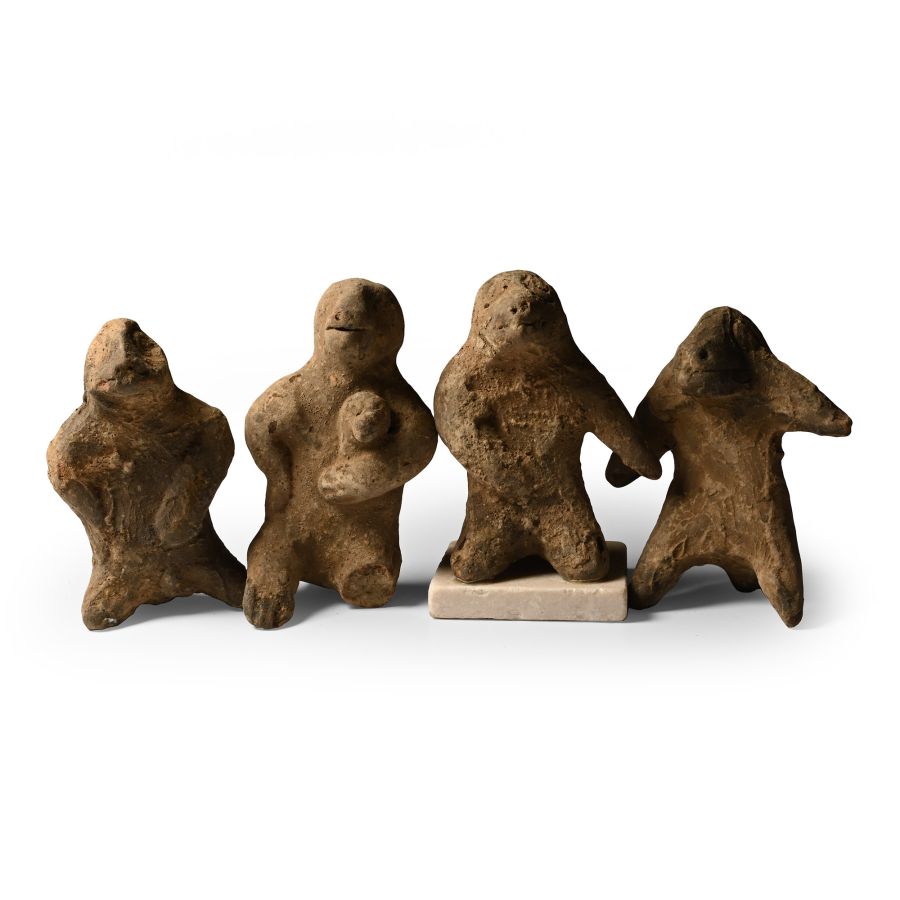
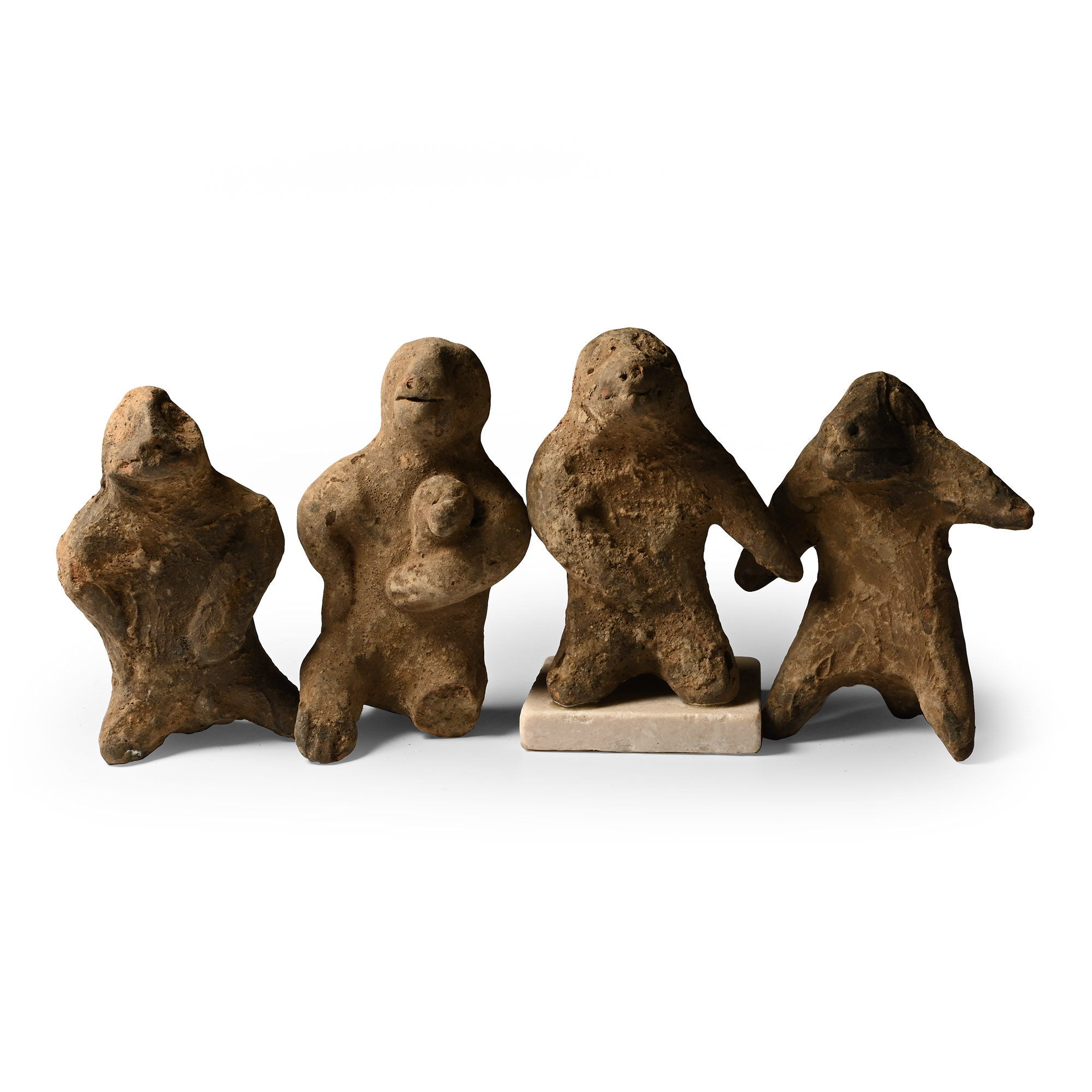
Indus Valley Terracotta Figure Collection
2ND-1ST MILLENNIUM B.C. OR LATER
2 3/4 - 3 1/4 in. (327 grams total, 72-84 mm).
Including simians with extended tails and other types, one mounted on a ceramic base. [4, No Reserve]
ProvenanceFrom a collection acquired on the UK art market from various auction houses and collections mostly before 2000.
From an important Cambridgeshire estate; thence by descent.
This lot is accompanied by an illustrated lot declaration signed by the Head of the Antiquities Department, Dr Raffaele D’Amato.
TimeLine Auctions follows a vetting process to ensure the authenticity and legality of all items, reinforcing our commitment to integrity and responsible trading. Each antiquity, antique, and coin lot undergoes thorough examination by a vetting committee of at least ten external specialists, professional trade association members, scientists, and archaeologists: Our Vetting Process
AUCTIONS:
TimeLine is a leading auction house specialising in antiquities, ancient art, collectables, natural history, coins, medals, and books. Our auctions offer museums, collectors, historians, and enthusiasts the opportunity to acquire unique and historically significant pieces.
-
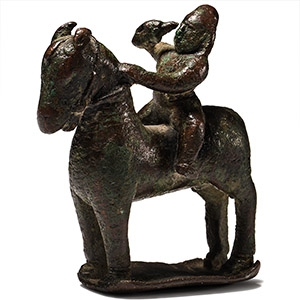
Ancient Indian Bronze Horse and Rider Figure
4th-6th century A.D.Estimate: £1,000 - 1,400 (‡+bp*)
Opening Bid: £500
Formed in the round standing on an oblong base; stylised detailing to the anatomy and trappings of both figures. 92 grams, 52 mm
Acquired in Europe before 1992. This lot has been checked against the Interpol Database of stolen works of art and is accompanied by search certificate no.11813-206792. This lot is accompanied by an illustrated lot declaration signed by the Head of the Antiquities Department, Dr Raffaele D’Amato. -
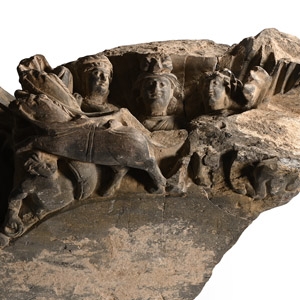
Gandharan Schist Frieze Fragment
2nd-4th century A.D. or laterSold for (Inc. bp): £286
Carved corbel or column fragment with scrolled foliage to three faces and socket to upper face to accept a statue; three youthful figures - two females flanking a larger male - each wearing the hair dressed in a topknot, with radiating sunburst behind them and below a team of two horses galloping left with empty saddles and their reins flung back towards the central character, probably a charioteer. 13.3 kg, 37 cm wide
London, UK, collection, 1990s. This lot is accompanied by an illustrated lot declaration signed by the Head of the Antiquities Department, Dr Raffaele D’Amato. -
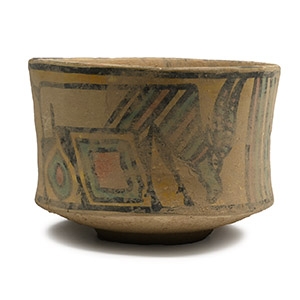
Indus Valley Painted Terracotta Vessel with Zebu
3rd-2nd millennium B.C.Sold for (Inc. bp): £208
Squat in profile with slightly waisted sidewall and carination, narrow foot; painted polychrome panels with zebu, ibex and geometric motifs. 260 grams, 10.8 cm
From the private collection of the late David Gold, 1990-2000s. This lot is accompanied by an illustrated lot declaration signed by the Head of the Antiquities Department, Dr Raffaele D’Amato.
