
Loading, please wait...
LOT 2685
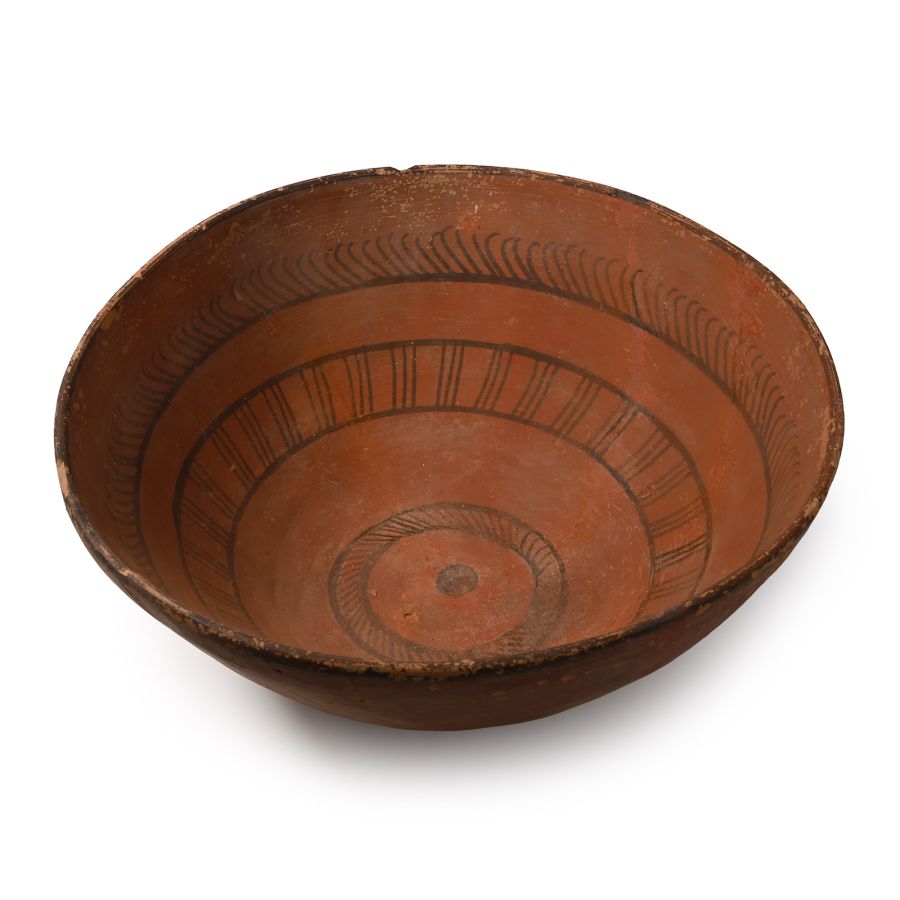
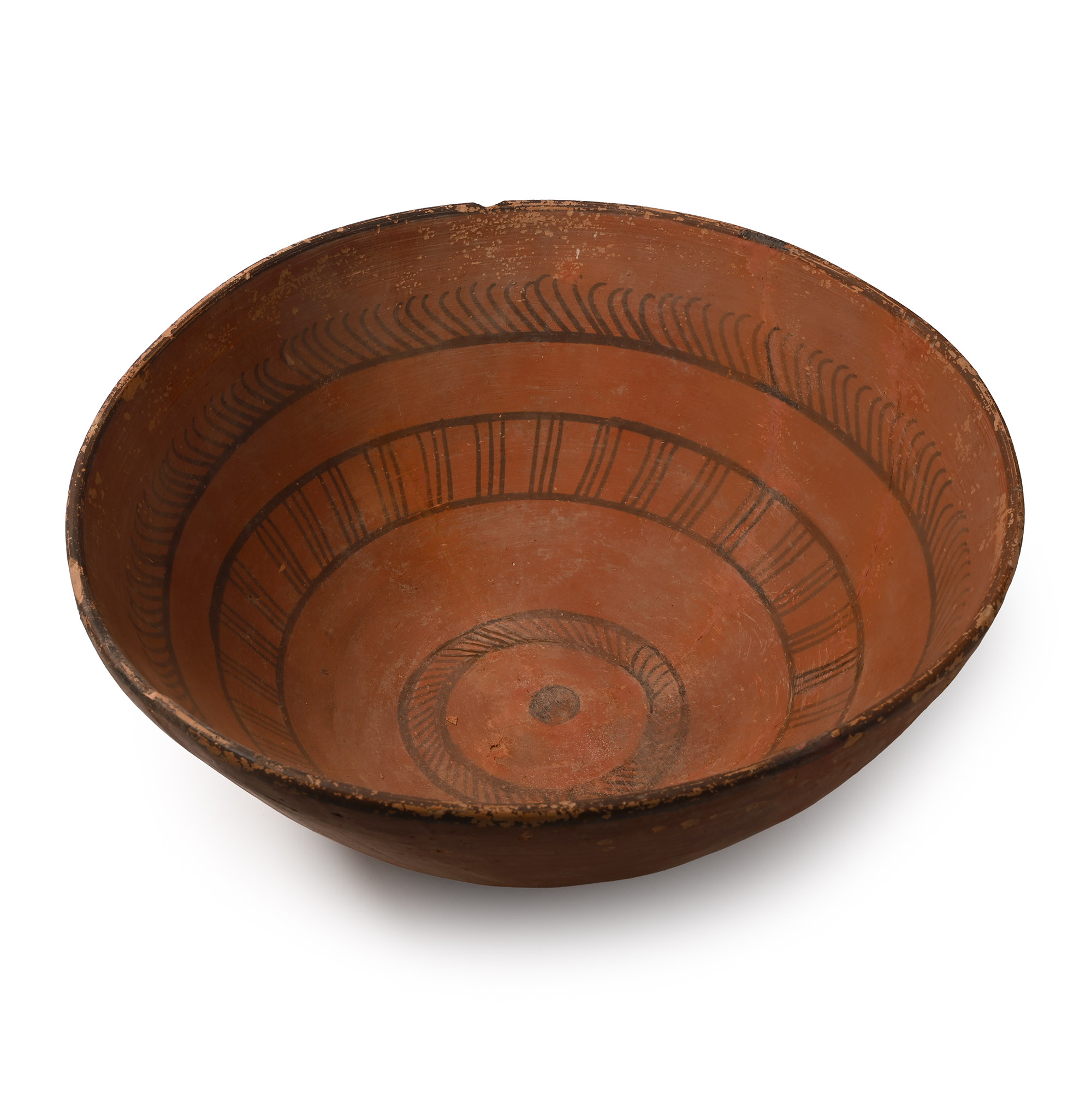
Indus Valley Terracotta Bichrome Bowl
3RD-2ND MILLENNIUM B.C.
10 3/4 in. (891 grams, 27.2 cm wide).
Broad and squat with rounded rim; inner face with concentric painted design (wreath, ladder, comb) and outer face with a single line above the base.
ProvenanceEx Abelita family collection, 1980s-2000s.
CONDITIONTimeLine Auctions follows a vetting process to ensure the authenticity and legality of all items, reinforcing our commitment to integrity and responsible trading. Each antiquity, antique, and coin lot undergoes thorough examination by a vetting committee of at least ten external specialists, professional trade association members, scientists, and archaeologists: Our Vetting Process
AUCTIONS:
TimeLine is a leading auction house specialising in antiquities, ancient art, collectables, natural history, coins, medals, and books. Our auctions offer museums, collectors, historians, and enthusiasts the opportunity to acquire unique and historically significant pieces.
-
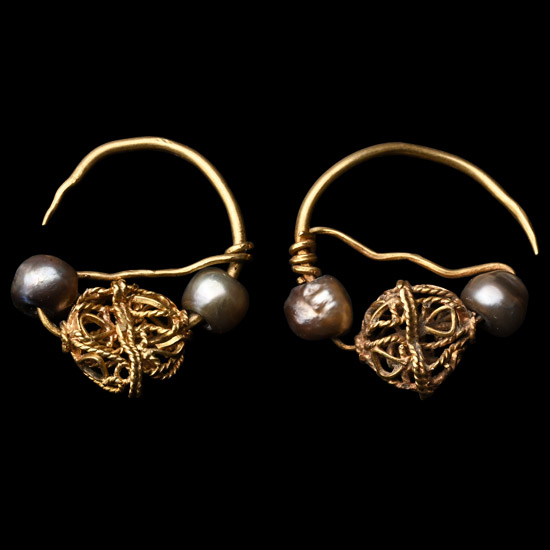
Moghul Indian Gold and Pearl Earrings
Circa 14th-15th century A.D.Sold for (Inc. bp): £156
Matched pair, each a crescentic hoop with an openwork filigree sphere and two pearls. 2.71 grams total, 18-19.1 mm
From the private collection of a European gentleman (1942-2024), formed since the 1970s. -
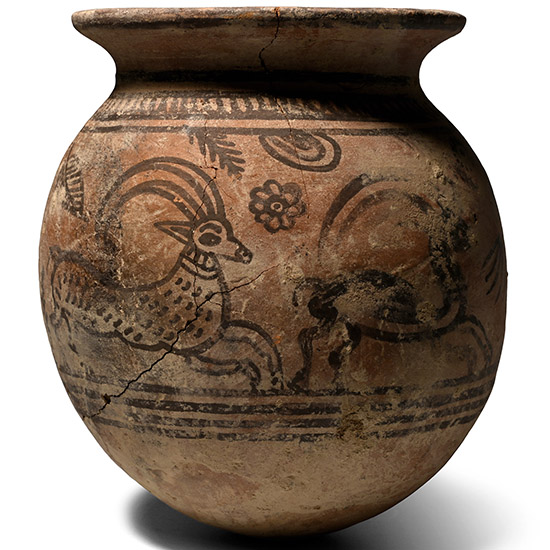
Large Indus Valley Terracotta Vessel with Animals
3rd-2nd millennium B.C.Sold for (Inc. bp): £286
A biconvex jar with chamfered and everted rim, painted frieze of advancing ibexes and plants to the shoulder. 1.16 kg, 19 cm
From the private collection of the late David Gold, 1990s. David Gold was one of the co founders of the Iconic Lord John brand in Carnaby Street that sparked a style revolution in the swinging sixties dressing The Rolling Stones, The Beatles and The Kinks and were at the heart of 'all things cool'. -
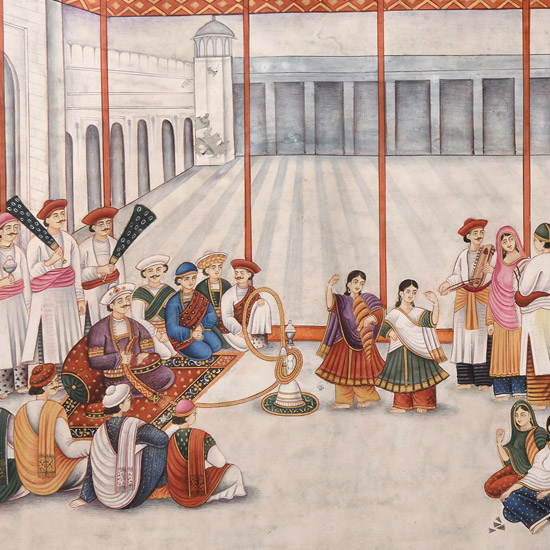
Indian Framed Watercolour Painting
Late 20th century A.D.Sold for (Inc. bp): £169
A watercolour painting depicting figures in a grand architectural setting, a nobleman kneeling on a rug against a cushion, smoking a pipe, attendants on three sides, guards and musicians gathered opposite, dancing women between, surrounded by polychrome borders; mounted in a reveal and a glazed wooden frame. 1.02 kg, 36.5 x 30 cm
Very fine condition.
Acquired on the UK art market, 1980s-1990s. The Woodbridge collection of Indo-Persian art.
