
Loading, please wait...
LOT 1960
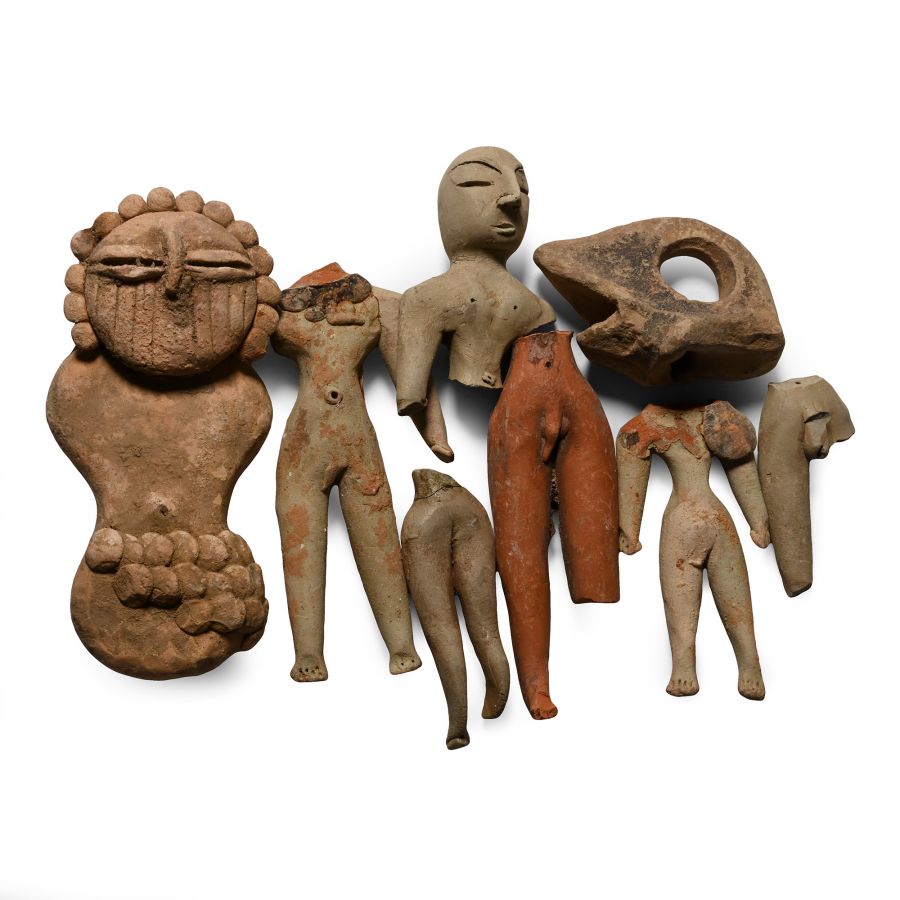
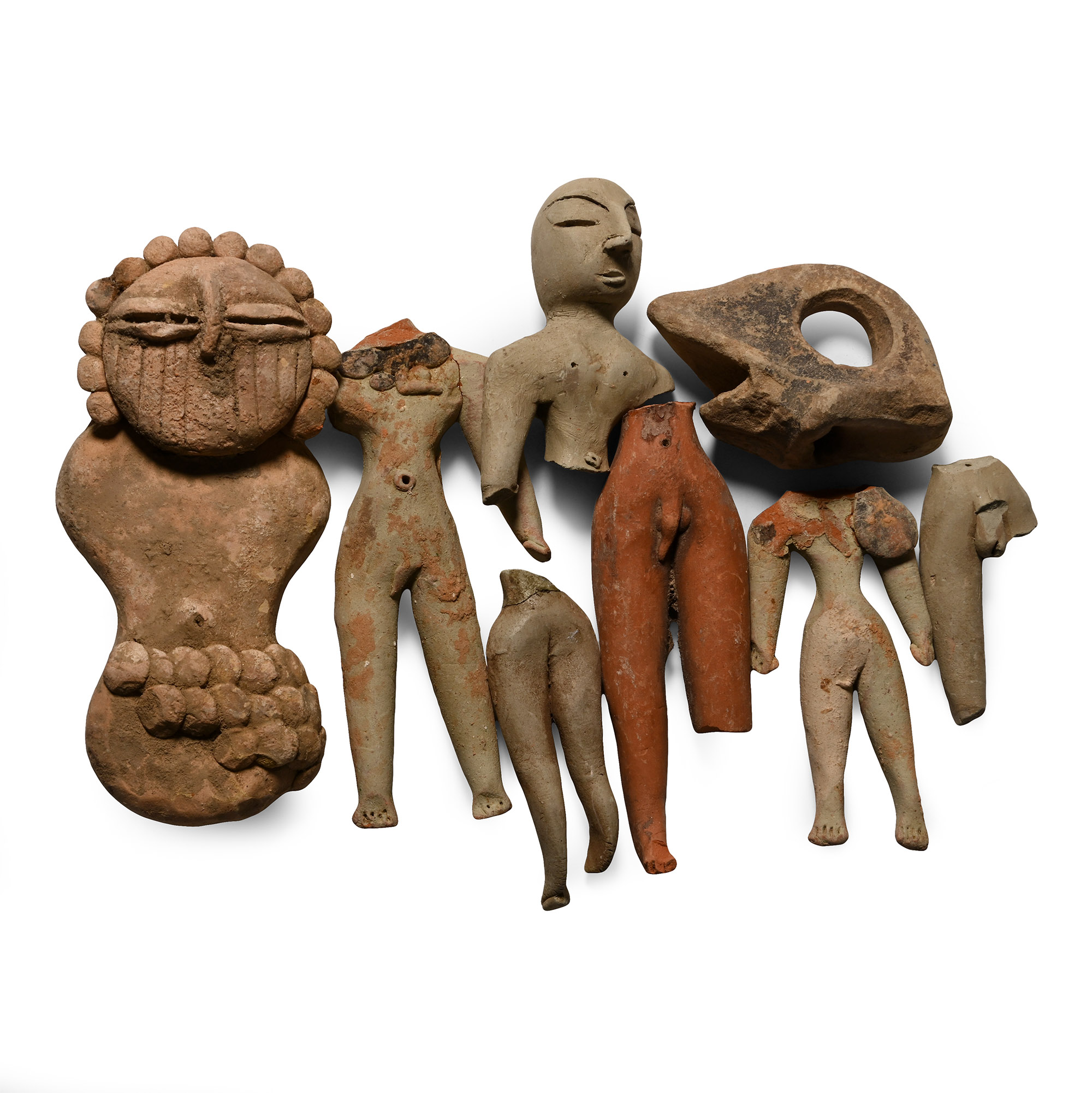
Indus Valley Style Terracotta Idol Fragment Group
20TH CENTURY A.D. OR EARLIER
1 5/8 - 3 1/2 in. (156 grams total, 41-90 mm).
Including standing figures and body parts. [8, No Reserve]
ProvenanceEx London, UK, collection, 1990s.
CONDITIONTimeLine Auctions follows a vetting process to ensure the authenticity and legality of all items, reinforcing our commitment to integrity and responsible trading. Each antiquity, antique, and coin lot undergoes thorough examination by a vetting committee of at least ten external specialists, professional trade association members, scientists, and archaeologists: Our Vetting Process
AUCTIONS:
TimeLine is a leading auction house specialising in antiquities, ancient art, collectables, natural history, coins, medals, and books. Our auctions offer museums, collectors, historians, and enthusiasts the opportunity to acquire unique and historically significant pieces.
-
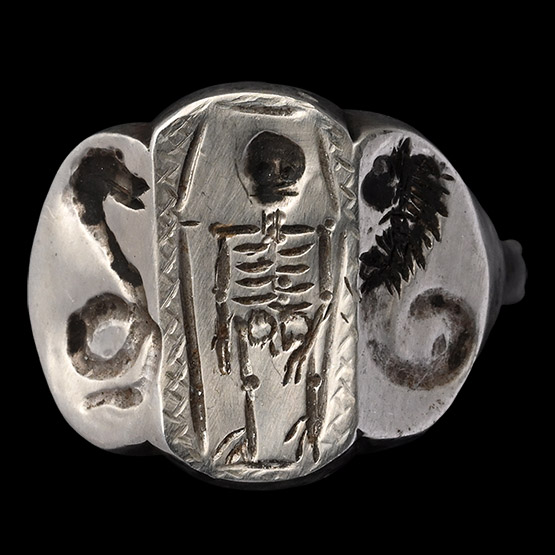
Post Medieval Silver Memento Mori Ring with Skeleton in Coffin Flanked by Rearing Snakes
18th-19th century A.D.Sold for (Inc. bp): £117
With facetted hoop, quatrefoil bezel with serpents flanking a coffin with skeleton inside; italic script legend to reverse 'jeap[...]'. 5.28 grams, 20.97 mm overall, 16.91 mm internal diameter (approximate size British N, USA 6 1/2, Europe 13.72, Japan 13)
Ex East Sussex private collection, 1970s-1980s. -

Renaissance Silver Interlinking Necklace
Germany, 16th century A.D.Sold for (Inc. bp): £2,340
Comprising interlinking flat loops with pierced spacers decorated with Renaissance motifs, winged telamon and ‘jewels’; sturdy hook-and-eye closure. 110 grams, 49 cm
Private collection, Europe. Acquired on the English art market. This lot has been checked against the Interpol Database of stolen works of art and is accompanied by search certificate number no.13154-248389.
Such chains were known as a 'Sivlonot' in German Jewish tradition dating from the 16th century, in a custom whereby silver or gold chains were sent as a gift by the bridegroom to his future bride. They were worn under the bridal canopy and throughout the following week, then often brought out again for holidays and ceremonial occasions. -
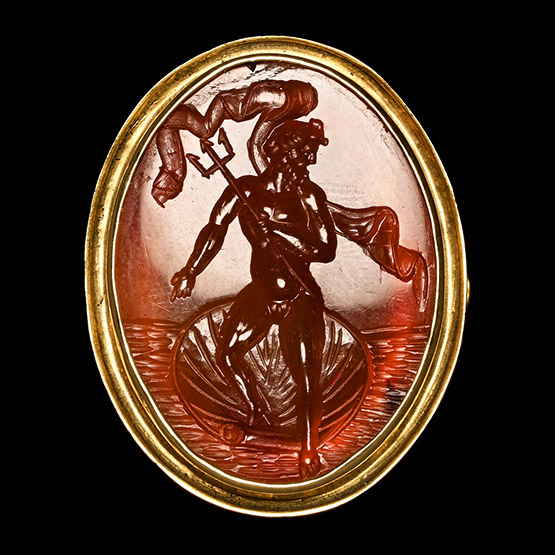
Post Medieval Gold Ring with Carnelian Gemstone Depicting the Roman God Neptune
Italy, 19th century A.D.Sold for (Inc. bp): £2,340
Depicting Neptune advancing nude from a scallop shell, holding a trident in one hand and pointing with the other; billowing banner to his rear; supplied with a museum-quality impression. 15.19 grams, 31.43 mm overall, 19.60 mm internal diameter (approximate size British R, USA 8 1/2, Europe 18 3/4, Japan 18)
Private collection, Europe. Acquired on the English art market. This lot has been checked against the Interpol Database of stolen works of art and is accompanied by search certificate number no.13053-248373.
Throughout Europe, and far beyond, talented gem-cutters were at work in the 19th century. Neptune was appreciated by Neoclassical cutters, as shown by a carnelian gemstone with the profile of Neptune, his face serene amidst a storm, by the American engraver George Hewitt Cushman (1814-1876).
