
Loading, please wait...
LOT 2004
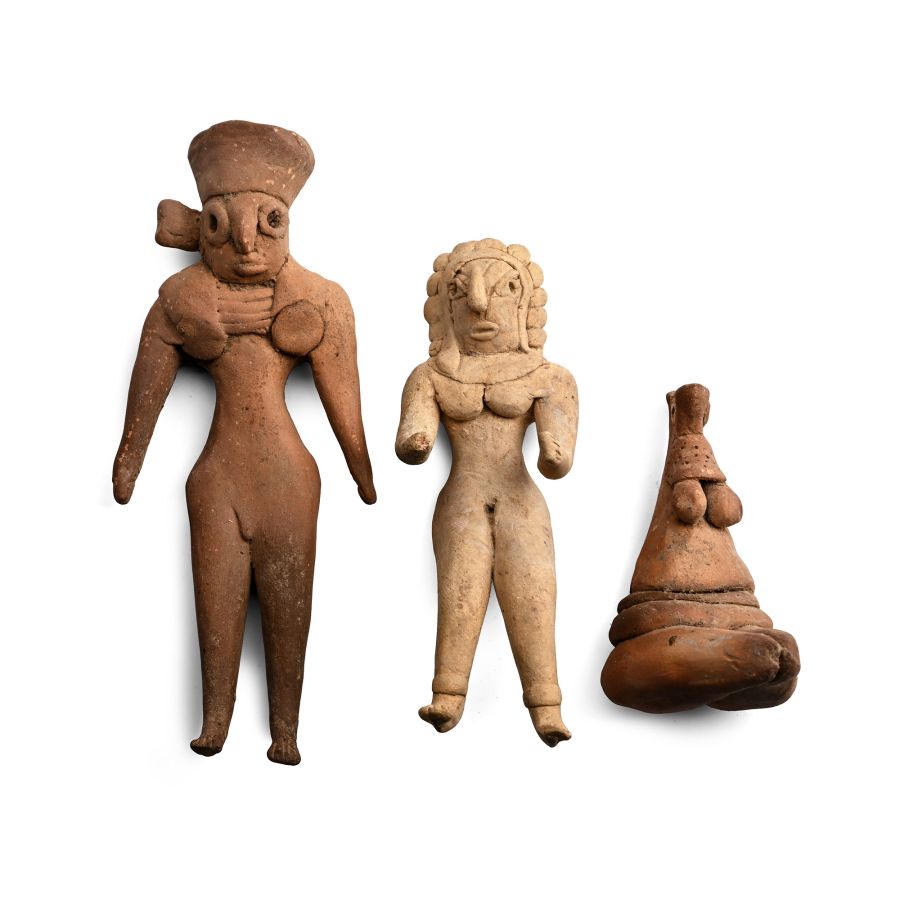
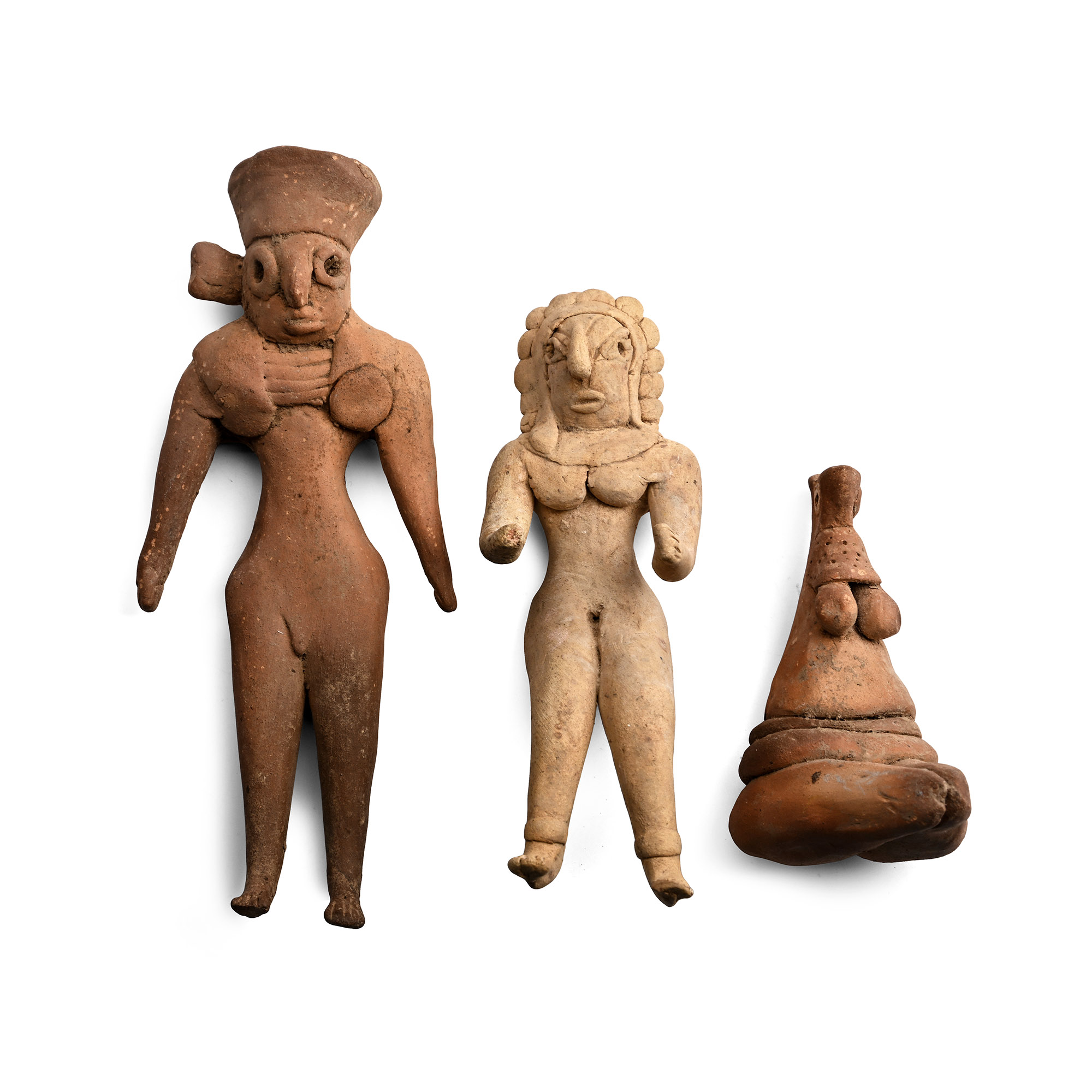
Indus Valley Style Terracotta Fertility Idol Group
20TH CENTURY A.D.
3 1/8 - 6 in. (291 grams total, 8-15.3 cm).
Comprising two stylised female figures in seated pose and a third standing wearing a headdress. [3, No Reserve]
ProvenancePrivate collection, UK.
CONDITIONTimeLine Auctions follows a vetting process to ensure the authenticity and legality of all items, reinforcing our commitment to integrity and responsible trading. Each antiquity, antique, and coin lot undergoes thorough examination by a vetting committee of at least ten external specialists, professional trade association members, scientists, and archaeologists: Our Vetting Process
AUCTIONS:
TimeLine is a leading auction house specialising in antiquities, ancient art, collectables, natural history, coins, medals, and books. Our auctions offer museums, collectors, historians, and enthusiasts the opportunity to acquire unique and historically significant pieces.
-
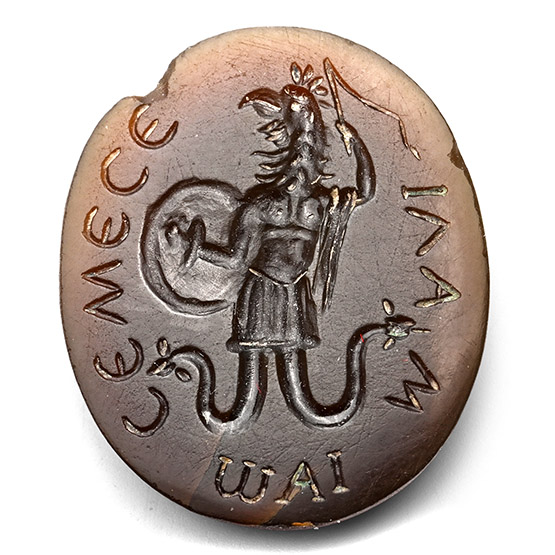
Post-Classical Agate Gnostic Gemstone with Anguiped
18th-19th century A.D. or earlierSold for (Inc. bp): £572
Incuse motif of serpent-legged rooster facing left holding a shield and solar whip; enigmatic agical inscriptions surrounding; supplied with a museum-quality impression. 3.41 grams, 23 mm
Collection of Mr and Mrs V.A., Monte Carlo, 1960s. Acquired on the European art market. Private collection, England. -
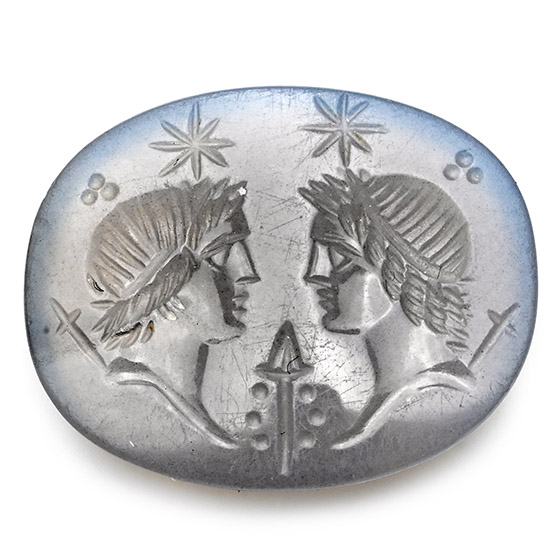
Post-Classical Chalcedony Gemstone with Two Facing Busts of the Dioscuri
19th century A.D. or laterEstimate: £600 - 800 (+bp*)
Opening Bid: £300
Incuse male profile busts with stars in the background and other objects in the field; supplied with a museum-quality impression. 2.17 grams, 19 mm
Acquired on the French art market. Private collection, England. -
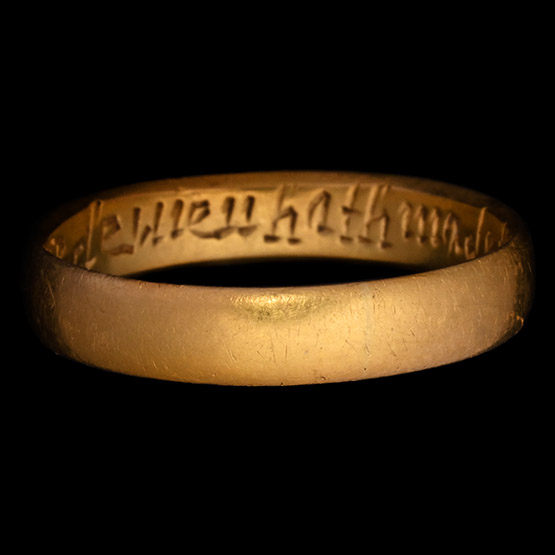
Large Post Medieval 'Providence Divine Hath Made Thee Mine' Gold Posy Ring
Circa 18th century A.D.Sold for (Inc. bp): £2,080
D-shaped in section with minuscule italic inscription to inner face 'prouidence deuien hath made thee mine'. 5.12 grams, 22.51 mm overall, 19.59 mm internal diameter (approximate size British T, USA 9 1/2, Europe 21.26, Japan 20)
From a collection which predates 1982. Property of a Somerset collector, UK, since circa 2013.
