
Loading, please wait...
LOT 1956
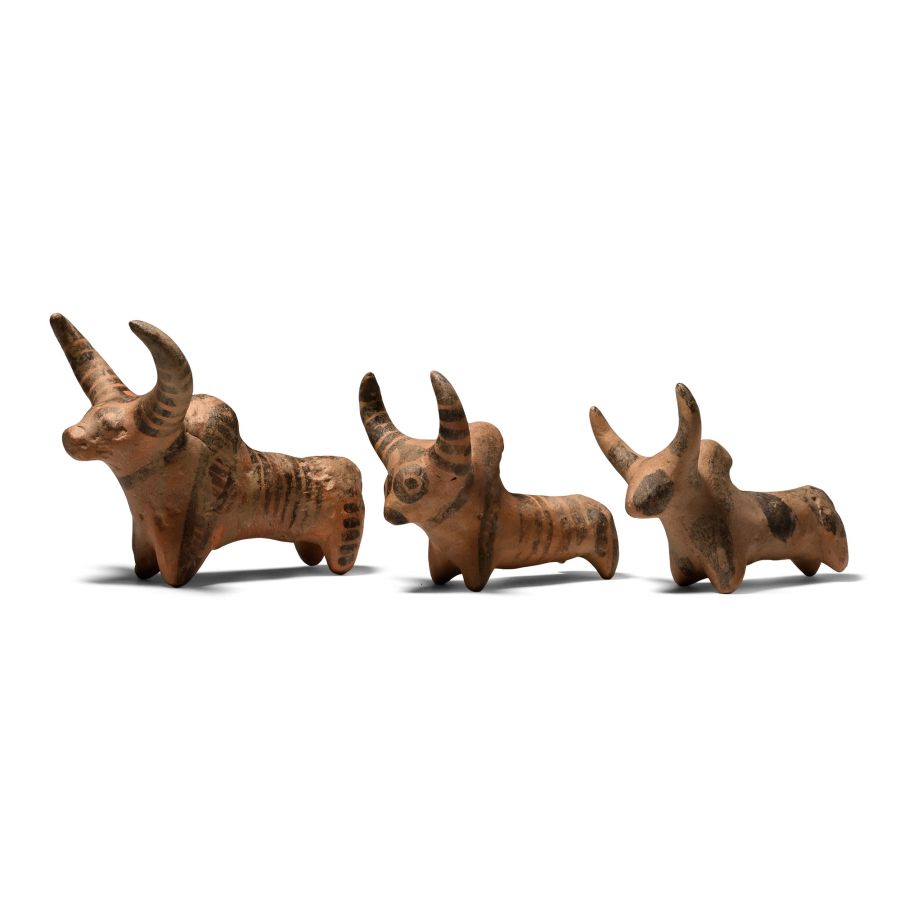
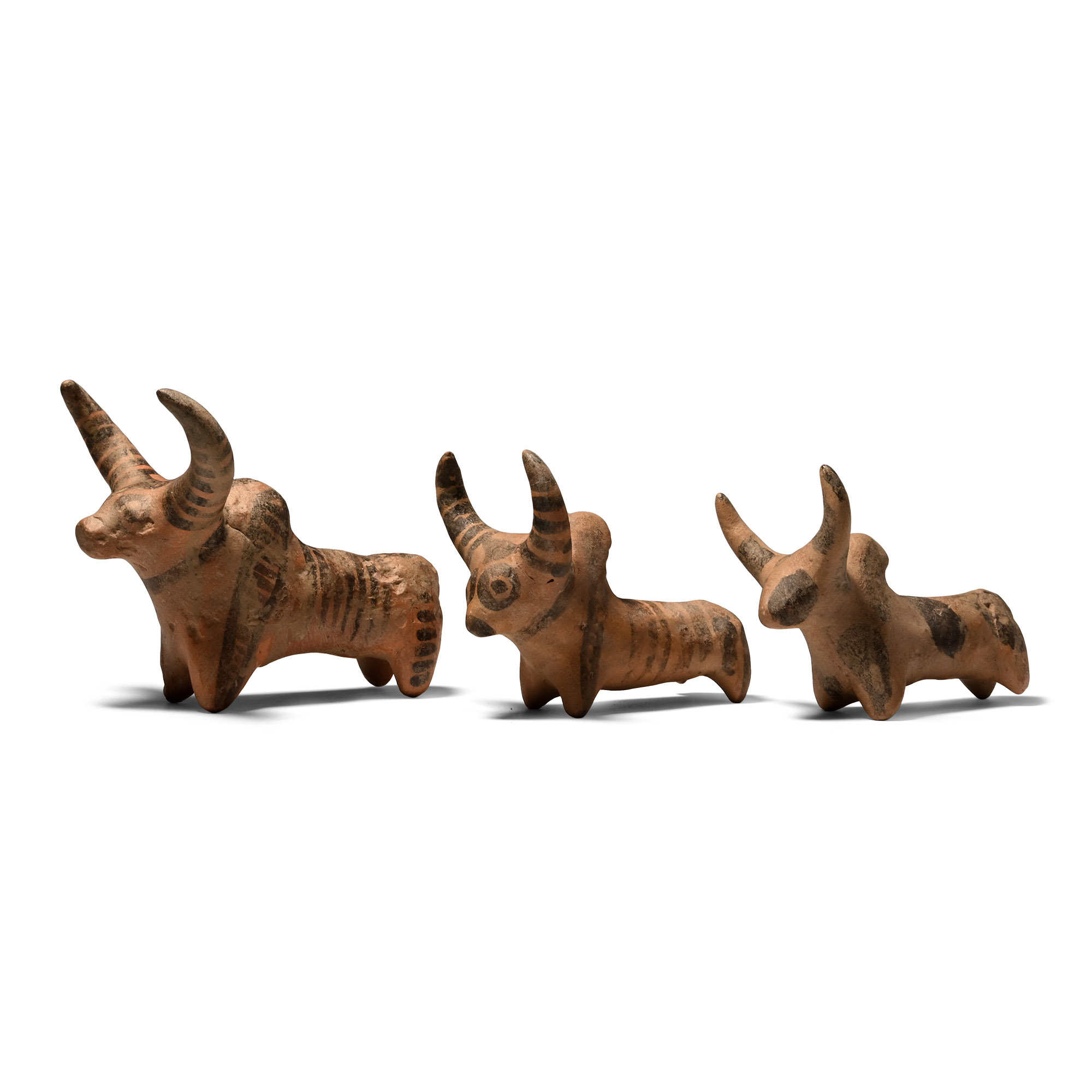
Indus Valley Style Terracotta Bull Group
20TH CENTURY A.D.
3 1/4 - 4 1/8 in. (294 grams total, 85-105 mm).
A group of three zebu bulls, each with painted details. [3, No Reserve]
ProvenanceEx Lockdales, Suffolk, UK, auction 156, nos.892 and 906; and 159, no.1513.
From the private collection of John Meredith, acquired since the 1990s; thence by descent.
TimeLine Auctions follows a vetting process to ensure the authenticity and legality of all items, reinforcing our commitment to integrity and responsible trading. Each antiquity, antique, and coin lot undergoes thorough examination by a vetting committee of at least ten external specialists, professional trade association members, scientists, and archaeologists: Our Vetting Process
AUCTIONS:
TimeLine is a leading auction house specialising in antiquities, ancient art, collectables, natural history, coins, medals, and books. Our auctions offer museums, collectors, historians, and enthusiasts the opportunity to acquire unique and historically significant pieces.
-
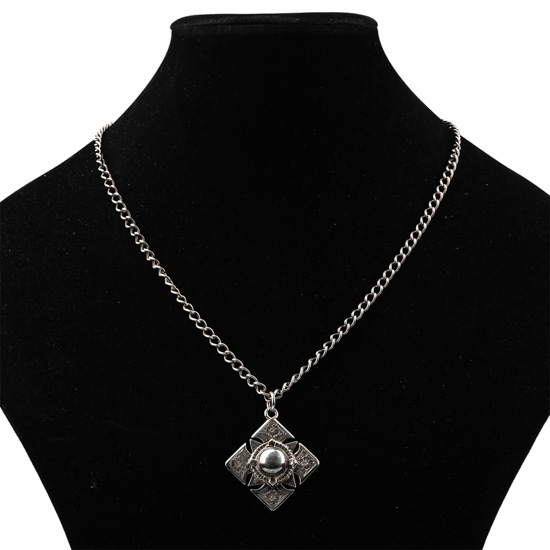
Post Medieval Engraved Silver Cross Pendant with Monogram
Late 19th-20th century A.D.Sold for (Inc. bp): £72
Quatrefoil in plan with interstitial tags, central pelleted collar and dome; incised hatched rosette to each petal; copperplate monogram to reverse with 'FG'; with late 20th century chain. 26 grams, 56.8 cm
Acquired on the UK art market before 2000. Property of an Essex, UK, gentleman. -
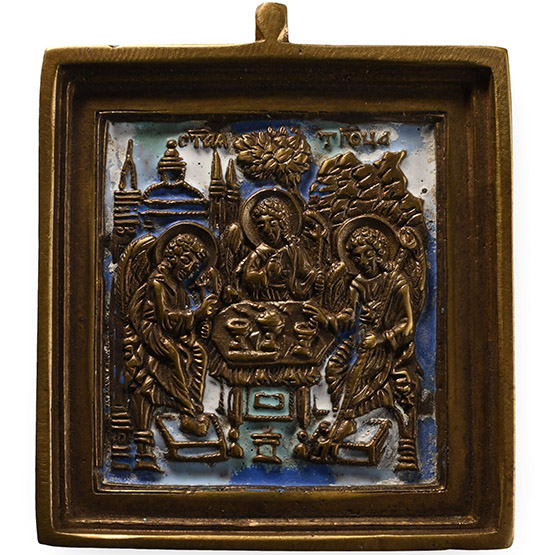
Russian Orthodox Enamelled Bronze Travel Icon with the Old Testament Trinity
19th century A.D.Sold for (Inc. bp): £117
Depicting the Holy Trinity, represented by three winged figures, each with a three-prong staff, sitting on stools around a table with three cups, trees and the outline of a cathedral behind. 67.5 grams, 62 mm
Acquired from Chris Martin-Zakheim, Iconastas, 5 Piccadilly Arcade, London SW1. From the private collection of a West London, UK, gentleman, formed since the early 2000s.
The subject is based on the traditional Russian interpretation of Genesis,18, in which three figures appear to Abraham at the oak tree of Mamre. The central figure is usually identified as Jesus Christ, while God the Father is on the right and the Holy Spirit on the left. The subject of the icon originated from a very famous 15th century painting by Andrei Rublev. -
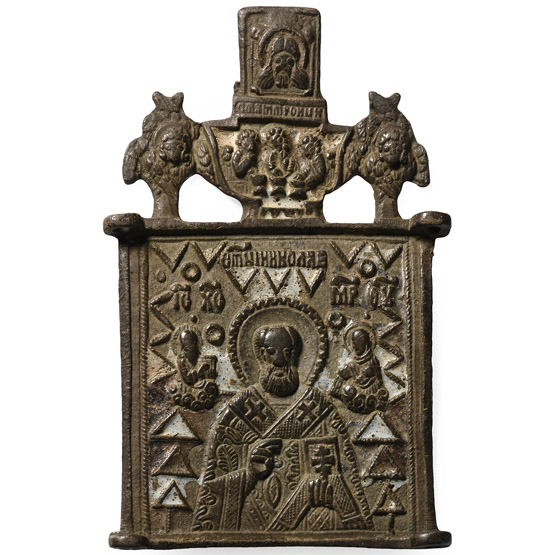
Eastern European Enamelled Bronze Icon of St Nicholas
Circa 18th-19th century A.D.Sold for (Inc. bp): £39
Central panel of triptych formed as a rectangular plaque of low-relief figure of Saint Nicholas flanked by smaller figures of Jesus and Mary to each side, a suspension hoop to each corner; upper panel with central image of trinity with cherubs and vernicle; remains of pale blue enamel. 47 grams, 90 mm
Ex Constable collection, 1990s. Ex P. Morris collection.
