
Loading, please wait...
LOT 1614
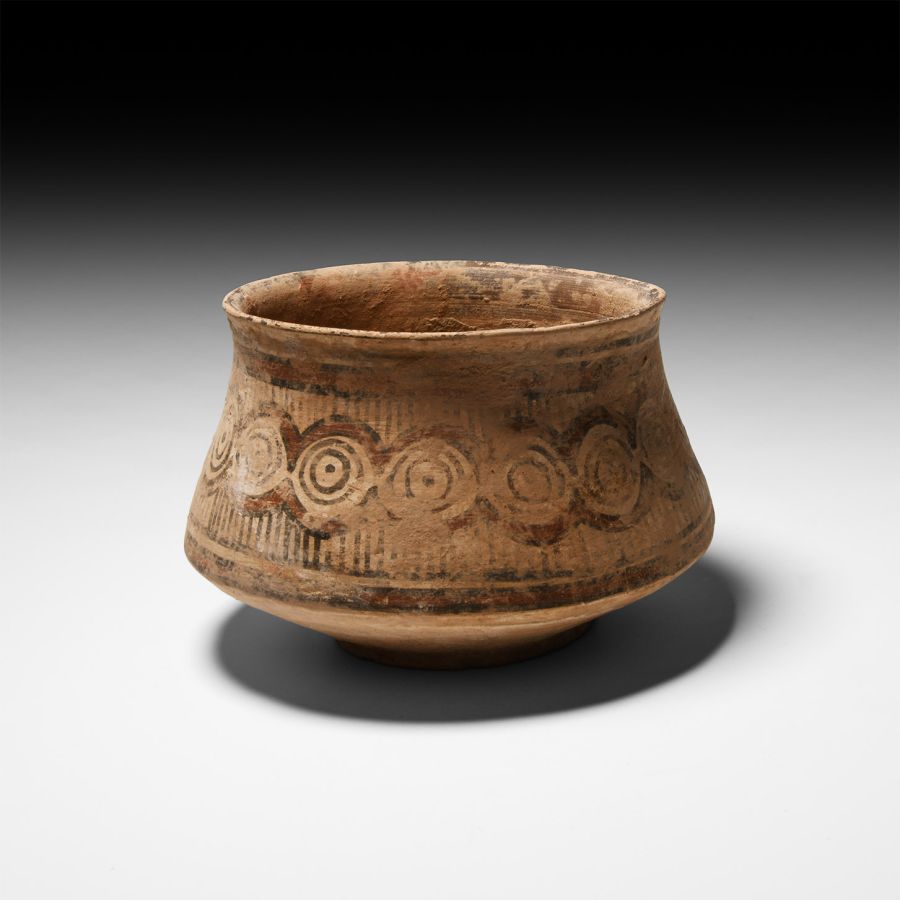
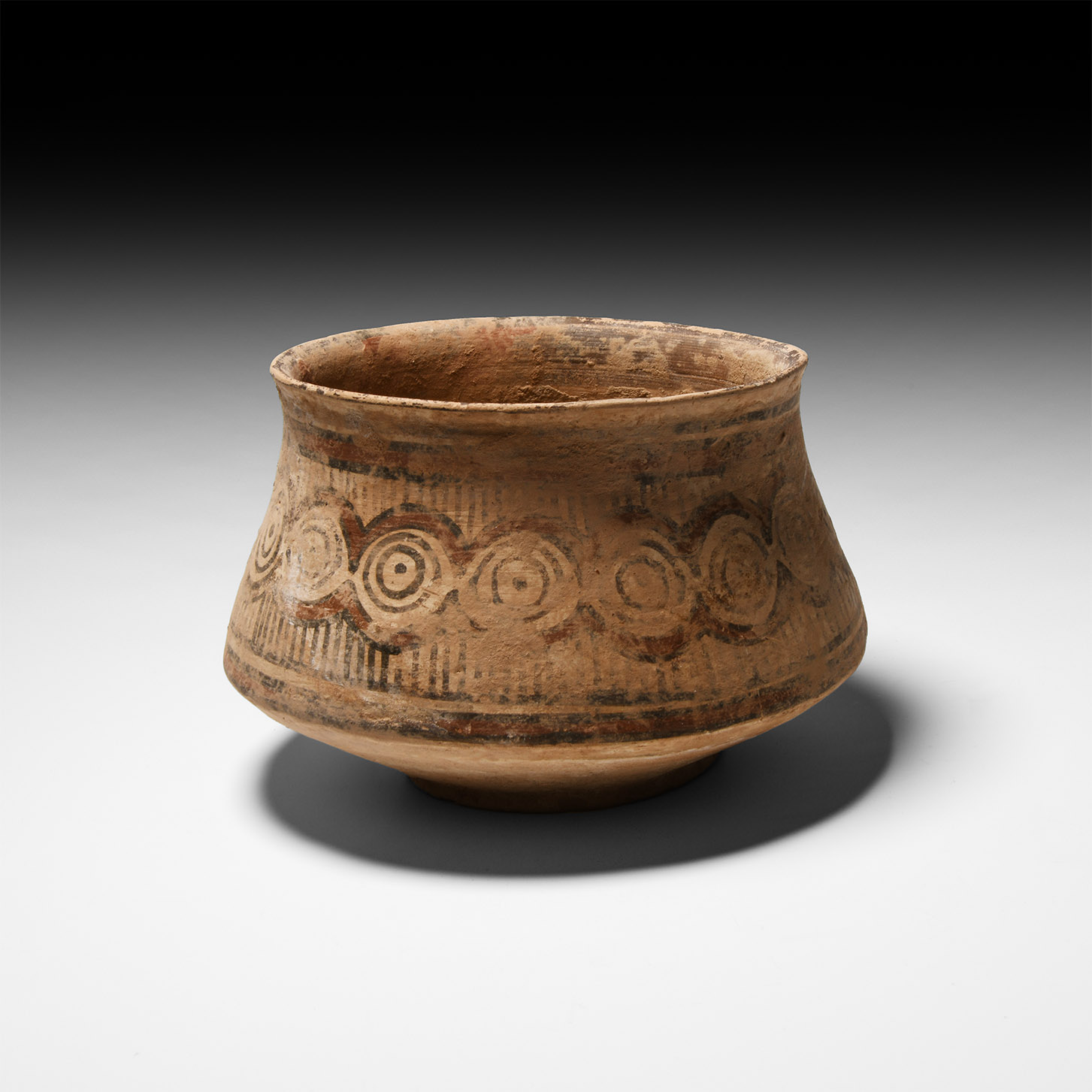
Indus Valley Painted Vessel
3RD MILLENNIUM B.C.
5 3/4 in. (300 grams, 14.7 cm wide).
A ceramic vessel of carinated form with waisted upper body, everted rim and shallow foot, decorated with painted polychrome frieze composed of a medial band of concentric and conjoined circles against a field of vertical striations, framed above and below by circumferential tracks with coloured fill.
ProvenanceAcquired 1990s-2000s.
From the late David Gold (d. 2015) collection of Indus Valley civilisation pottery.
David Gold and his brother were famous for setting up the first clothes shop in Carnaby Street and dressed the famous in the swinging 1960s, making Carnaby Street famous.
TimeLine Auctions follows a vetting process to ensure the authenticity and legality of all items, reinforcing our commitment to integrity and responsible trading. Each antiquity, antique, and coin lot undergoes thorough examination by a vetting committee of at least ten external specialists, professional trade association members, scientists, and archaeologists: Our Vetting Process
AUCTIONS:
TimeLine is a leading auction house specialising in antiquities, ancient art, collectables, natural history, coins, medals, and books. Our auctions offer museums, collectors, historians, and enthusiasts the opportunity to acquire unique and historically significant pieces.
-
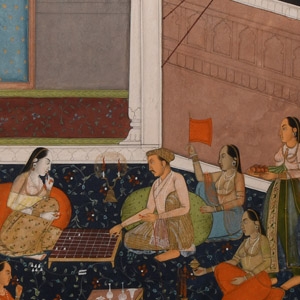
Framed Indian Watercolour Painting
20th century A.D.Estimate: £80 - 100 (+bp*)
Opening Bid: £40
A watercolour painting showing figures in an architectural setting, a man and woman sitting against cushions whilst playing a board game, attendants around them, floral border; mounted in a reveal and a glazed wooden frame. 1.1 kg, 39.5 x 32 cm
Very fine condition.
Acquired on the UK art market, 1980s-1990s. The Woodbridge collection of Indo-Persian art. -
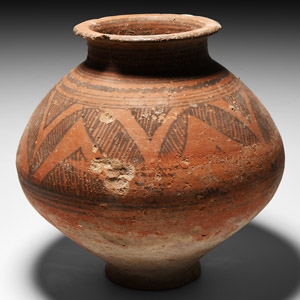
Baluchistan Jar with Leaf and Chevron Design
3rd-2nd millennium B.C.Estimate: £100 - 140 (+bp*)
Opening Bid: £50
A bulbous ceramic jar with narrow base, biconvex body and flared rim; bands of hatched linear decoration below the rim, central band of hatched fronds. 1 kg, 18.5 cm high
Fine condition; hole to shoulder.
From the Martin Schoyen collection of artefacts from the Indus Valley culture, 1990s. -
.jpg)
Framed Indian Watercolour Painting
20th century A.D.Estimate: £100 - 140 (+bp*)
Opening Bid: £50
A watercolour painting showing two figures standing in a courtyard, the woman with her head covered, pointing towards the hills beyond, gold-coloured embellishments to their clothes, border around the whole, Indian workmanship; set in a glazed wooden frame. 370 grams, 25.5 x 19.5 cm
Very fine condition.
Acquired on the UK art market, 1980s-1990s. The Woodbridge collection of Indo-Persian art.
