
Loading, please wait...
LOT 2459
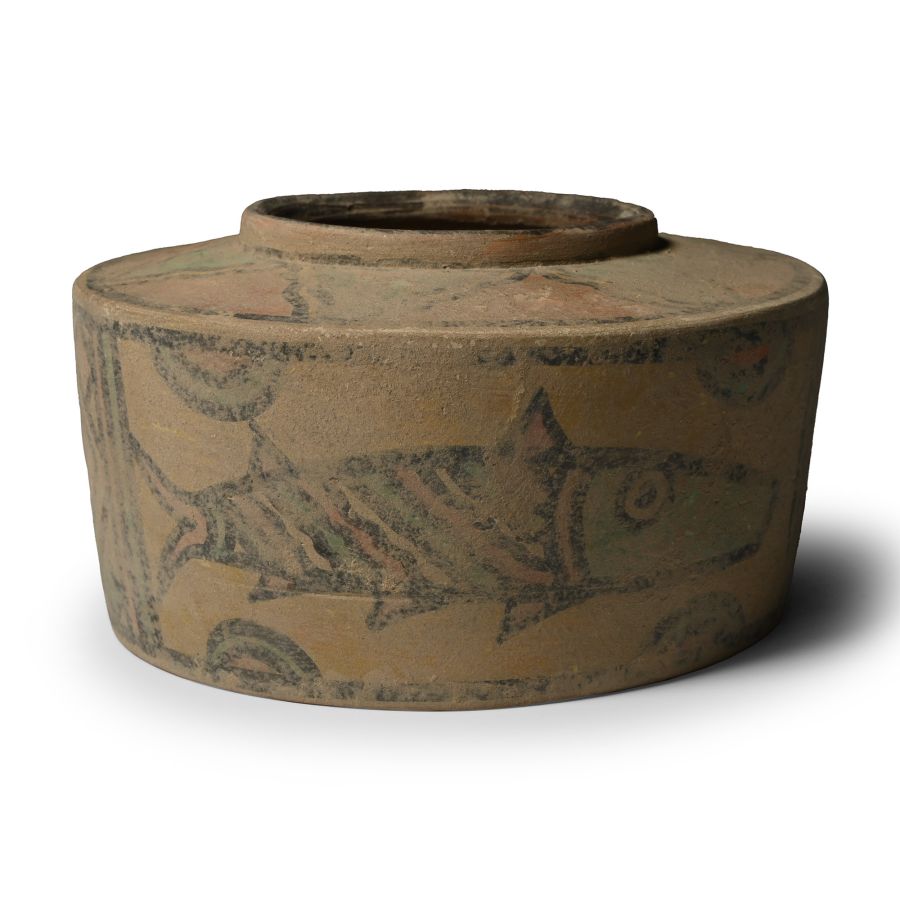
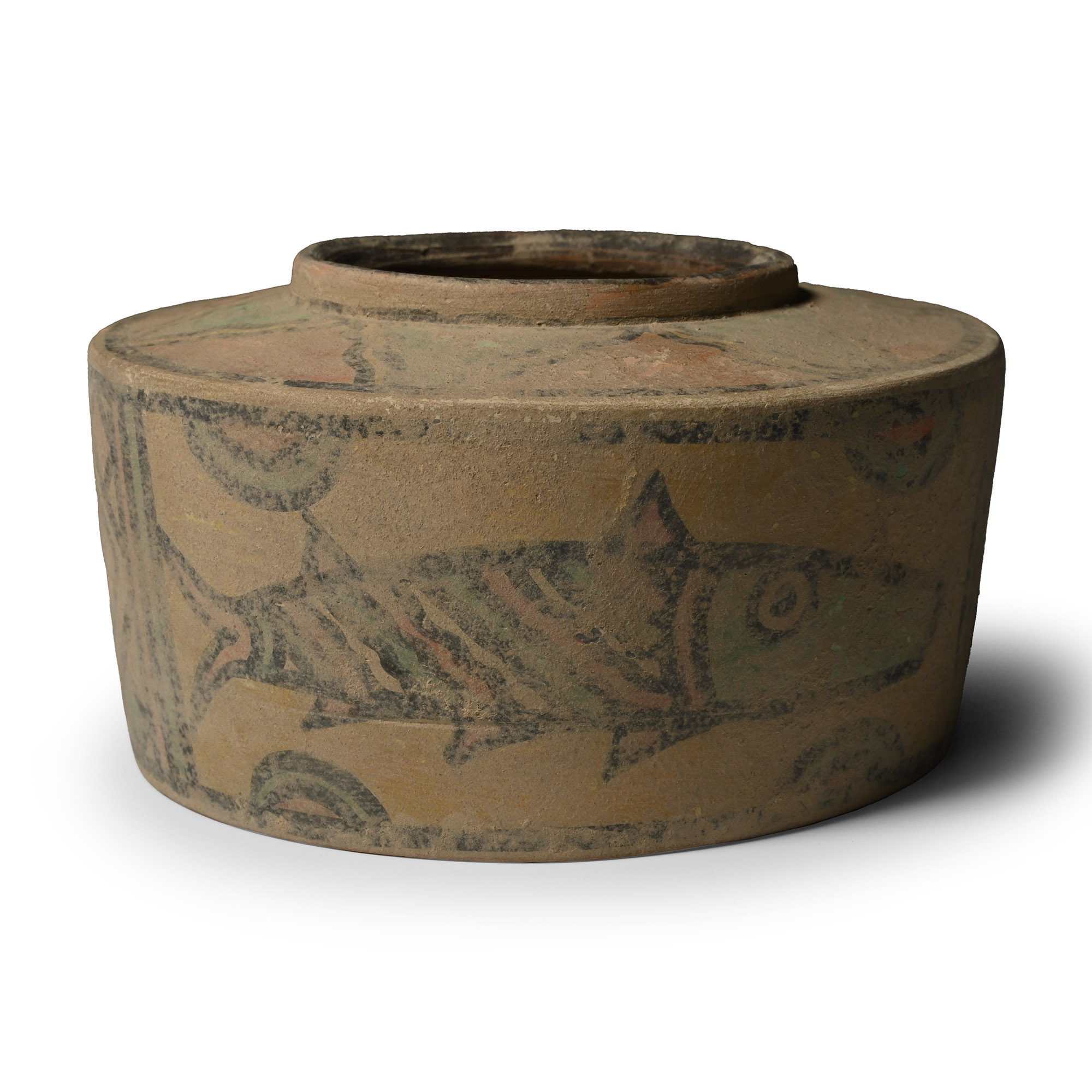
Indus Valley Painted Terracotta Vessel with Fishes
3RD-2ND MILLENNIUM B.C.
4 5/8 in. (390 grams, 11.8 cm).
Squat in profile with slightly deep shoulder, low neck, flat sidewall, narrow foot; painted polychrome panels with fishes and geometric motifs. [No Reserve]
ProvenanceFrom the private collection of the late David Gold, 1990-2000s.
This lot is accompanied by an illustrated lot declaration signed by the Head of the Antiquities Department, Dr Raffaele D’Amato.
TimeLine Auctions follows a vetting process to ensure the authenticity and legality of all items, reinforcing our commitment to integrity and responsible trading. Each antiquity, antique, and coin lot undergoes thorough examination by a vetting committee of at least ten external specialists, professional trade association members, scientists, and archaeologists: Our Vetting Process
AUCTIONS:
TimeLine is a leading auction house specialising in antiquities, ancient art, collectables, natural history, coins, medals, and books. Our auctions offer museums, collectors, historians, and enthusiasts the opportunity to acquire unique and historically significant pieces.
-
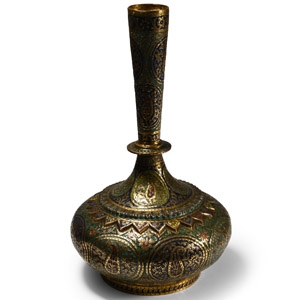
Indian Gilt Enamelled Vase
Isfahan, 19th century A.D.Estimate: £200 - 300 (+bp*)
Opening Bid: £75
With squat bulbous body, broad foot, gently flared neck with flange collar and carination at the base; repoussé foliage overall with reserved panels, enamelled surface in turquoise and deep blue. 758 grams, 26.7 cm
with a London, UK gallery 1971-early 2000s. This lot is accompanied by an illustrated lot declaration signed by the Head of the Antiquities Department, Dr Raffaele D’Amato. -
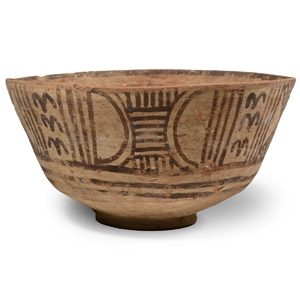
Indus Valley Painted Terracotta Bowl
3rd-2nd millennium B.C.Sold for (Inc. bp): £117
Carinated in profile with painted band to inner rim, painted latticework and geometric panels to sidewall. 122 grams, 11.3 cm
Ex M. Schoyen collection, 2000s. This lot is accompanied by an illustrated lot declaration signed by the Head of the Antiquities Department, Dr Raffaele D’Amato. -
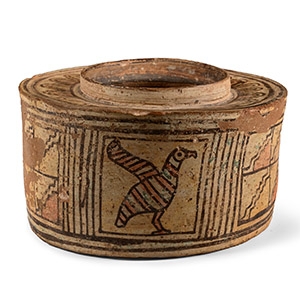
Indus Valley Terracotta Vessel with Birds and Geometric Designs
3rd millennium B.C.Estimate: £1,200 - 1,700 (‡+bp*)
Opening Bid: £600
With slightly sloping sidewall, flat shoulder and everted rim to the broad mouth; painted geometric bands and zoomorphic panels to side and shoulder; chipped, repaired. 406 grams, 12.8 cm wide
Acquired in the mid 1980s-1990s. Private collection, Switzerland, thence by descent. Private collection, since the late 1990s. This lot is accompanied by an illustrated lot declaration signed by the Head of the Antiquities Department, Dr Raffaele D’Amato.
