
Loading, please wait...
LOT 1707
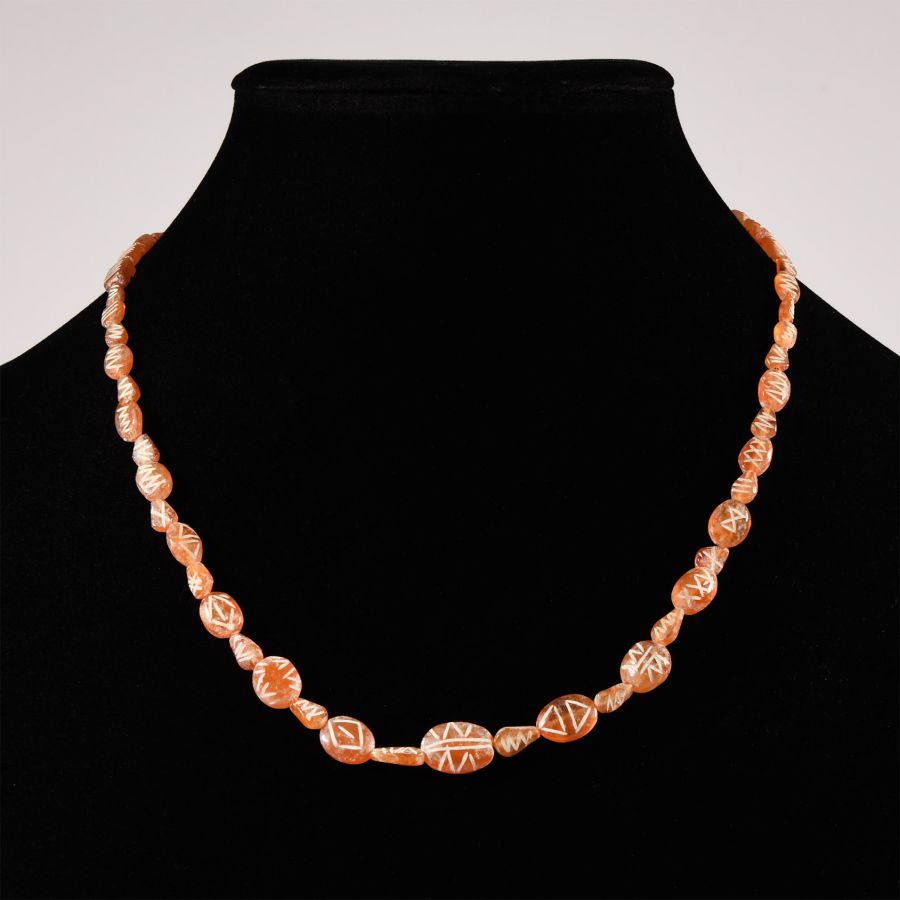
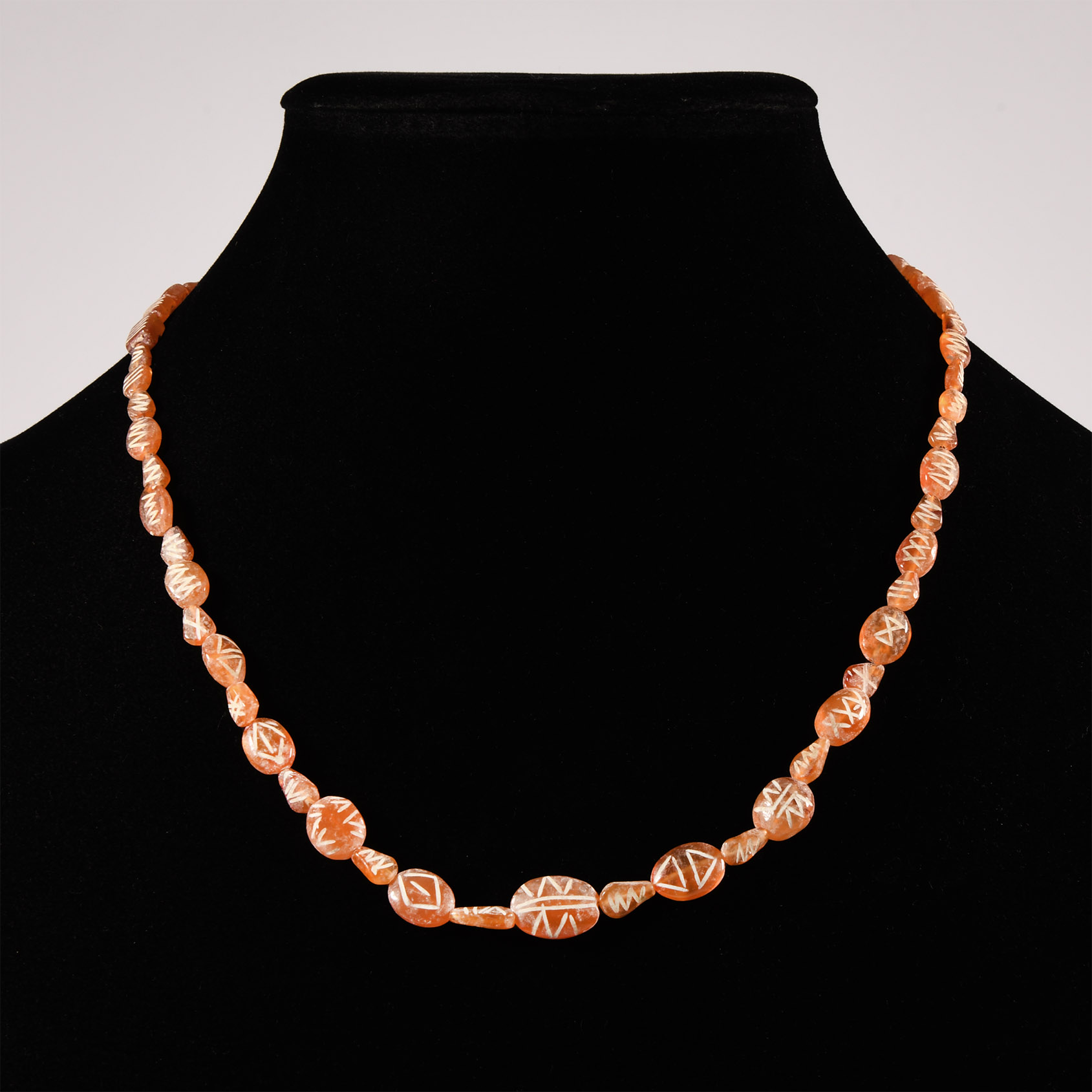
Indus Valley Etched Orange Carnelian Bead Necklace String
CIRCA 2ND MILLENNIUM B.C. OR LATER
19 in. (16.2 grams, 48 cm long).
Comprising polished carnelian beads etched with geometric motifs to both faces; restrung. [No Reserve]
ProvenanceUK gallery, early 2000s.
LiteratureCf. Nandagopal, P., ‘Decorated Carnelian Beads from the Indus Civilization Site of Dholavira (Great Rann of Kachchha, Gujarat)’ in Frenez, D., Jamison, G.M., Randall, W.L., Vidale, M., Meadow, R.H., Walking with the Unicorn Social Organization and Material Culture in Ancient South Asia, Oxford, 2018, pp.475-485, figs.3,8,9.
FootnotesEtched carnelian beads are characteristic of the Indus Valley culture and have been produced since the third millennium B.C. They are a typical product of the Harappa culture, but are also attested in later millennia and produced elsewhere in Southeast Asia. The oldest specimens come from the Indus Valley and from Mesopotamia. A few specimens were found in the so-called royal cemetery of Ur, where they were identified in the excavation publication as coming from India.
CONDITIONTimeLine Auctions follows a vetting process to ensure the authenticity and legality of all items, reinforcing our commitment to integrity and responsible trading. Each antiquity, antique, and coin lot undergoes thorough examination by a vetting committee of at least ten external specialists, professional trade association members, scientists, and archaeologists: Our Vetting Process
AUCTIONS:
TimeLine is a leading auction house specialising in antiquities, ancient art, collectables, natural history, coins, medals, and books. Our auctions offer museums, collectors, historians, and enthusiasts the opportunity to acquire unique and historically significant pieces.
LOT 1707
Indus Valley Etched Orange Carnelian Bead Necklace String
Sold for (Inc. bp): £247
-
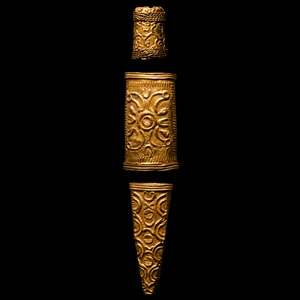
Indian Gold Dagger Scabbard Suite
17th-18th century A.D.Estimate: £1,000 - 1,400 (‡+bp*)
Opening Bid: £500
Belonging to a dagger and its scabbard, comprising: a tubular pommel cap with filigree ropework, repousse floral motifs; an elliptical-section scabbard throat with billetted border, reeded edges and floral motif; a triangular chape with reeded strip to the mouth. 27 grams total, 29-64 mm
From the collection of a North American gentleman, formed in the 1990s. -
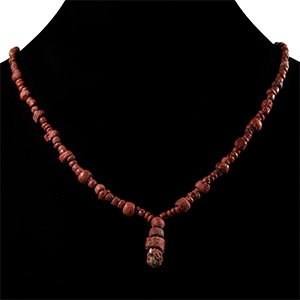
Furnace-Wound Bead Necklace String
20th century A.D.Sold for (Inc. bp): £13
Graduated group of annular and oblate beads with annular dangle as a centrepiece. 18.4 grams, 61 cm long
Acquired 1980-2015. Ex Abelita family collection. -
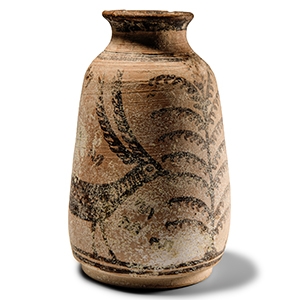
Indus Valley Harappan Ceramic Vessel with Antelope
Circa 2000 B.C.Sold for (Inc. bp): £520
With wide base, the body tapering to a narrow mouth with everted rim; the body with two painted antelopes with birds, separated by leafy trees. 339 grams, 15.1 cm high
Acquired before 1990s/early 2000s. From the family collection of Jack Lyttle (1944-2023), Kilmacolm, Scotland; thence by descent to his granddaughter. Property of an East Sussex, UK, gentleman.
