
Loading, please wait...
LOT 2167
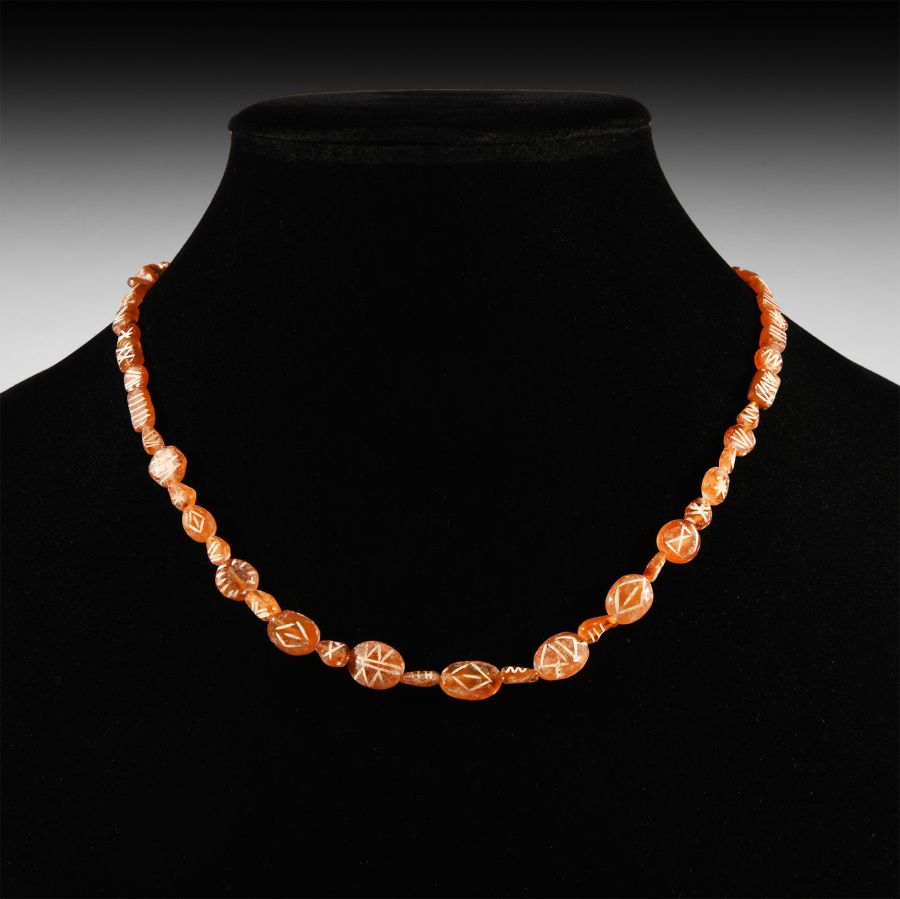
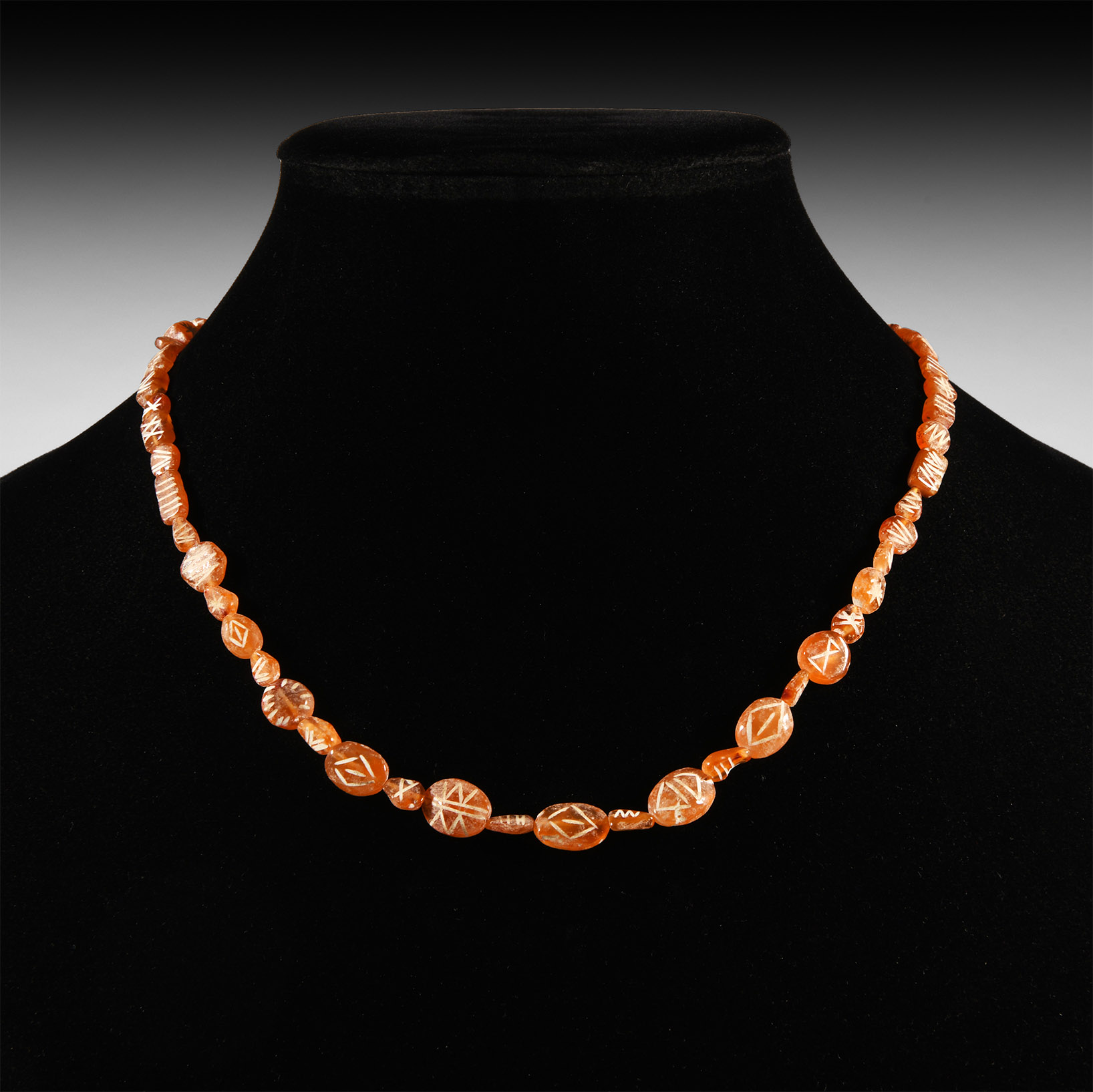
Indus Valley Etched Orange Carnelian Bead Necklace String
CIRCA 3RD MILLENNIUM B.C. OR LATER
18 7/8 in. (14.6 grams, 48 cm long).
Composed of restrung graduated and polished beads, each etched with a white geometric design on both faces. [No Reserve]
ProvenanceUK gallery, early 2000s.
CONDITIONTimeLine Auctions follows a vetting process to ensure the authenticity and legality of all items, reinforcing our commitment to integrity and responsible trading. Each antiquity, antique, and coin lot undergoes thorough examination by a vetting committee of at least ten external specialists, professional trade association members, scientists, and archaeologists: Our Vetting Process
AUCTIONS:
TimeLine is a leading auction house specialising in antiquities, ancient art, collectables, natural history, coins, medals, and books. Our auctions offer museums, collectors, historians, and enthusiasts the opportunity to acquire unique and historically significant pieces.
LOT 2167
Indus Valley Etched Orange Carnelian Bead Necklace String
Sold for (Inc. bp): £286
-
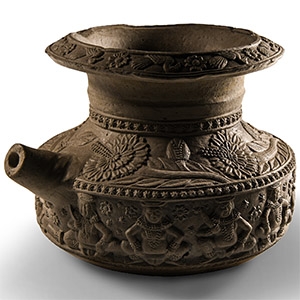
Chandraketugarh Ceramic Vessel with Seated Gods
2nd century B.C.-1st century A.D.Estimate: £800 - 1,000 (+bp*)
Opening Bid: £400
The squat, drum-shaped pouring vessel with conical spout, broad neck, chamfered rim and rounded base; dense panels of moulded ornament displaying alternating rosettes and birds to the rim, large-headed flowers between band of rosettes to the shoulder, lower body featuring a frieze of squatting male figures displaying their genitalia, all wearing cloth headdresses, ornamental collars, arm bangles and anklets, a number holding knives; chipped. 416 grams, 16 cm wide
Private collection, 1989. Acquired on the UK art market. -
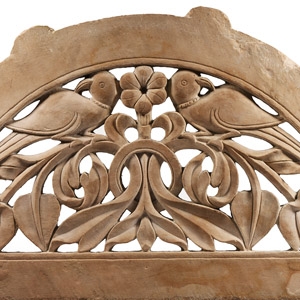
Mughal Stone Openwork Arch with Birds
15th-16th century A.D.Estimate: £1,200 - 1,700 (+bp*)
Opening Bid: £533
Carved in limestone with a D-shaped frame enclosing openwork panel with fronds of leaves and flowers and a pair of addorsed doves and a median rosette; mounted on a custom-made stand; from north India region. 20 kg total, 74.5 cm wide including stand
with a London, UK gallery 1971-early 2000s. This lot has been checked against the Interpol Database of stolen works of art and is accompanied by search certificate number no.202355.
The motif of two birds flanking a plant on which they stand is well-known from Late Antique and Byzantine art, although the central stem is usually a cross or christogram in such cases e.g. on the left side of the sarcophagus of St. Savino, Fusignano, Italy. Islamic art generally does not favour the inclusion of naturalistic representations of living beings. -
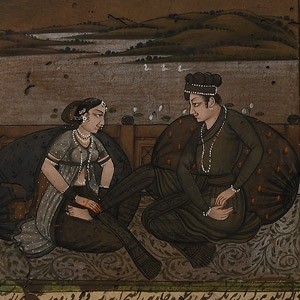
India Framed Watercolour Painting
Early 20th century A.D.Estimate: £60 - 80 (+bp*)
Opening Bid: £30
With watercolour scene of a man and woman seated against cushions in a courtyard, river meandering through hilly landscape beyond, panels of text above and below, green border around the whole; set in a glazed wooden frame. 714 grams, 33 x 26 cm
Fair condition.
Acquired on the UK art market, 1980s-1990s. The Woodbridge collection of Indo-Persian art.
