
Loading, please wait...
LOT 2193
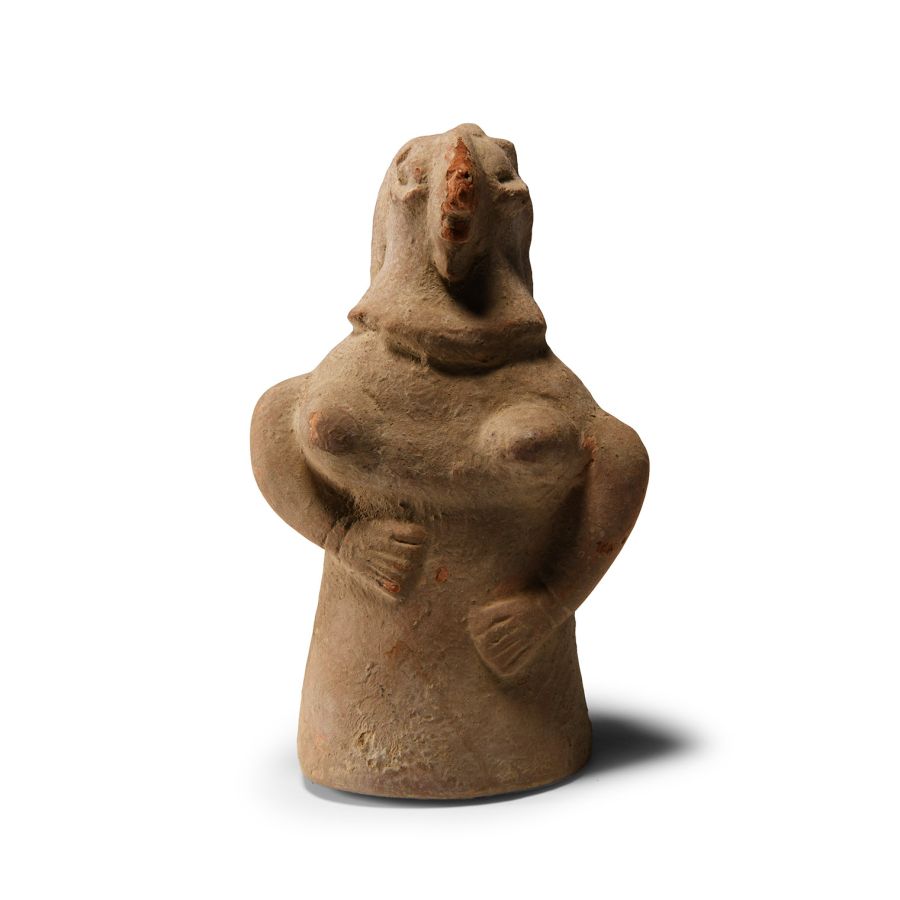
Indus Valley Ceramic Fertility Idol
3RD-2ND MILLENNIUM B.C.
5 1/8 in. (326 grams, 13 cm high).
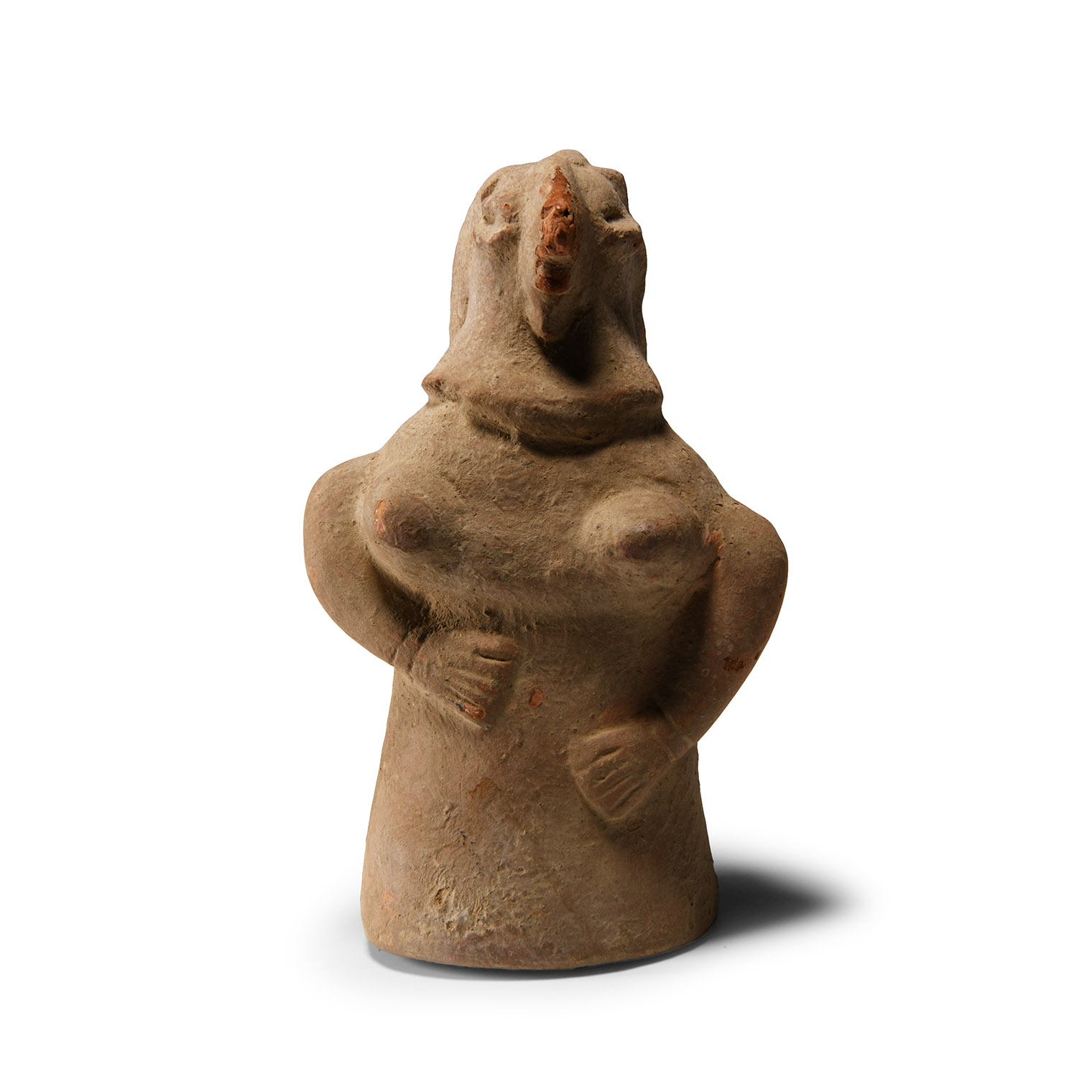
Modelled as a free-standing, stylised female figure with a pinched face, dressed hair, bulbous breasts and hands pressed palms-down against her torso and waist.
ProvenancePrivate collection, 1989.
Acquired on the UK art market.
TimeLine Auctions follows a vetting process to ensure the authenticity and legality of all items, reinforcing our commitment to integrity and responsible trading. Each antiquity, antique, and coin lot undergoes thorough examination by a vetting committee of at least ten external specialists, professional trade association members, scientists, and archaeologists: Our Vetting Process
AUCTIONS:
TimeLine is a leading auction house specialising in antiquities, ancient art, collectables, natural history, coins, medals, and books. Our auctions offer museums, collectors, historians, and enthusiasts the opportunity to acquire unique and historically significant pieces.
-
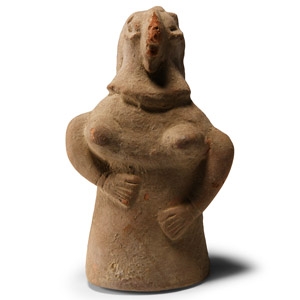
Indus Valley Ceramic Fertility Idol
3rd-2nd millennium B.C.Sold for (Inc. bp): £124
Modelled as a free-standing, stylised female figure with a pinched face, dressed hair, bulbous breasts and hands pressed palms-down against her torso and waist. 326 grams, 13 cm high
Private collection, 1989. Acquired on the UK art market. -
Indus Valley Fertility Idol Group
3rd-2nd millennium B.C.Sold for (Inc. bp): £585
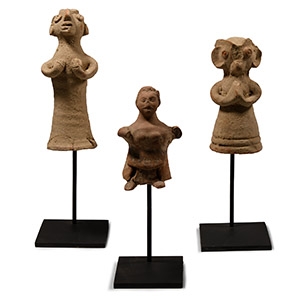
Three bell-shaped female figures with stylised anatomical and facial features, two shown cupping their breasts; one idol with remains of painted detailing to the lower body and semi-naturalistic hair and face detailing as well as feet emerging from beneath her garments; each mounted on a custom-made display stand. 2.39 kg total, 24.5-32.5 cm
Private collection, 1989. Acquired on the UK art market. -
India Framed Watercolour Painting
Early 20th century A.D.Estimate: £60 - 80 (+bp*)
Opening Bid: £30
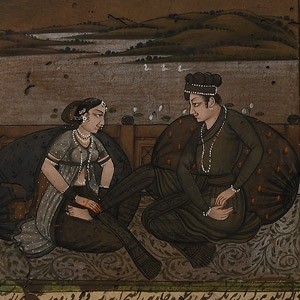
With watercolour scene of a man and woman seated against cushions in a courtyard, river meandering through hilly landscape beyond, panels of text above and below, green border around the whole; set in a glazed wooden frame. 714 grams, 33 x 26 cm
Fair condition.
Acquired on the UK art market, 1980s-1990s. The Woodbridge collection of Indo-Persian art.
