
Loading, please wait...
LOT 0225
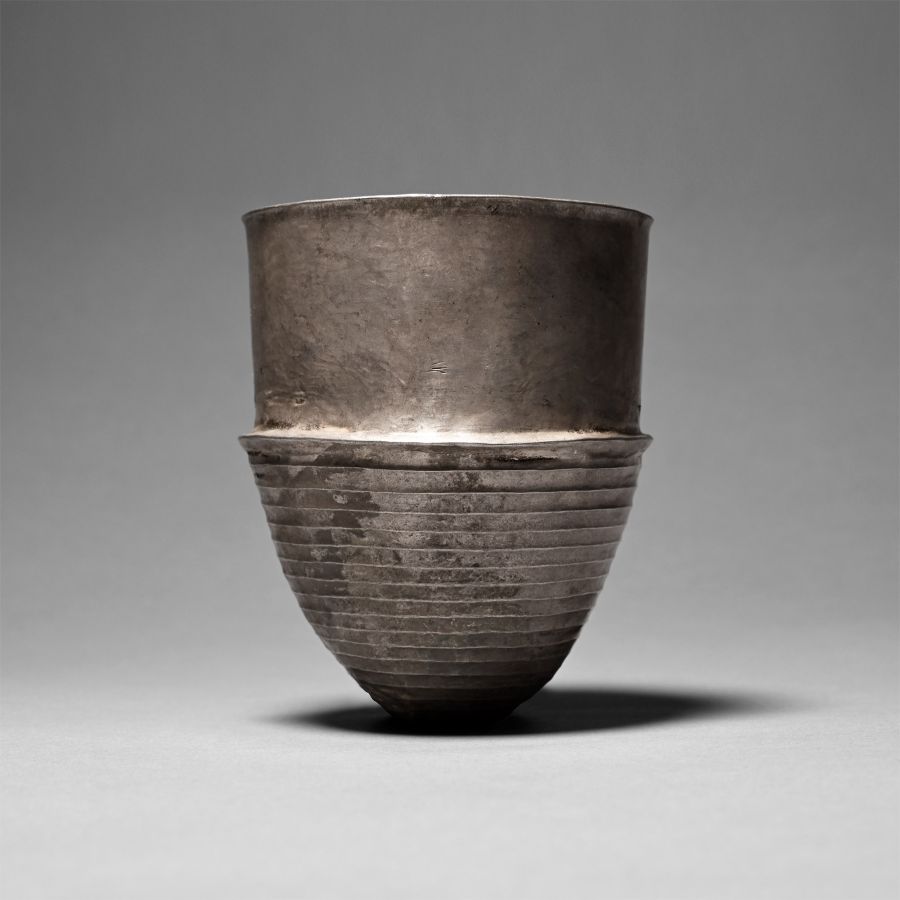
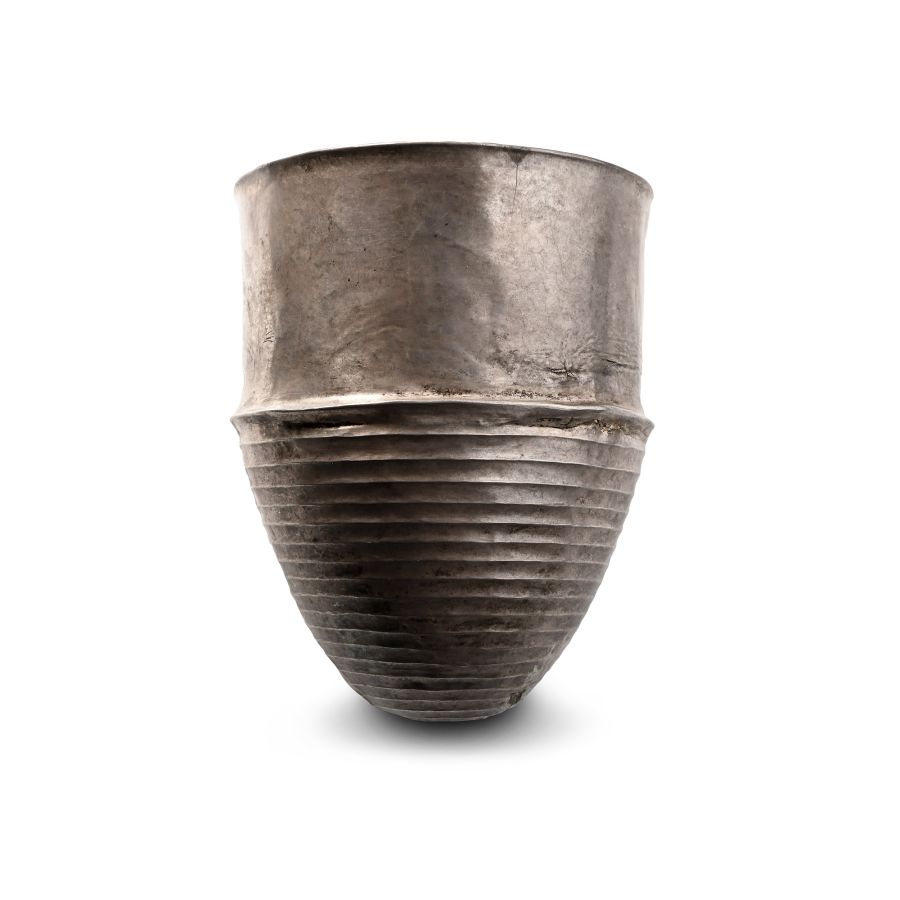
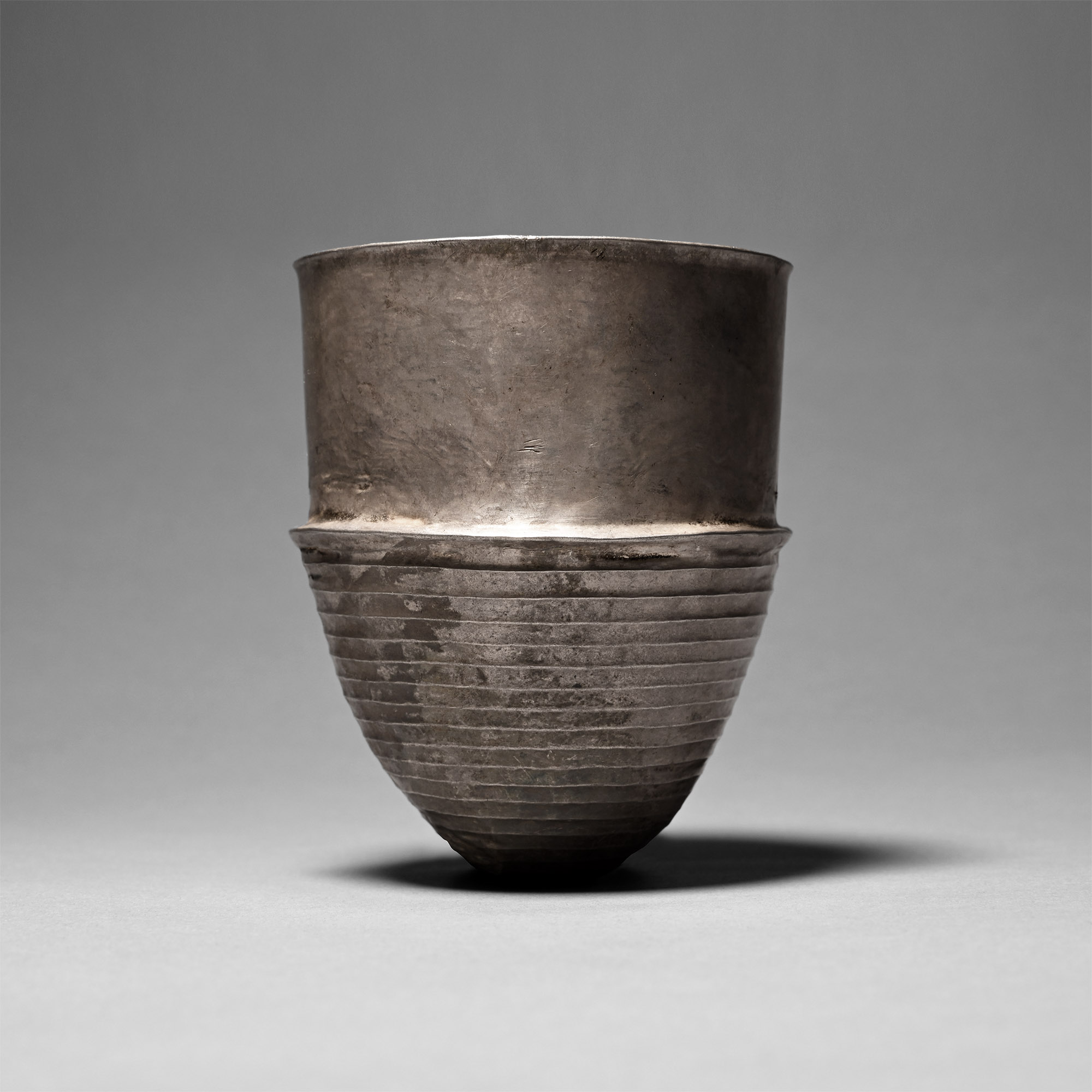
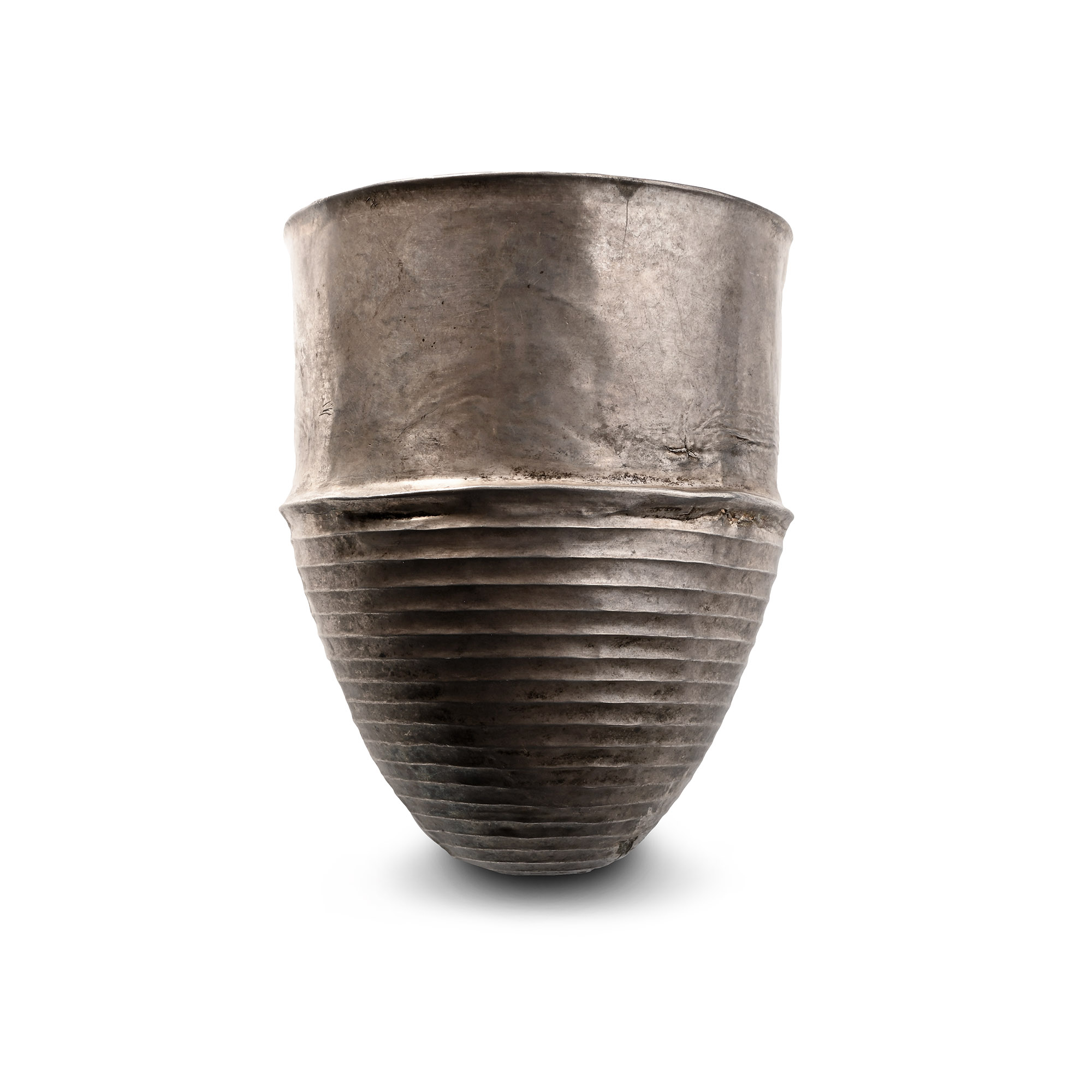
Indo-Parthian Silver Carinated Cup
CIRCA LATE 1ST CENTURY B.C.-EARLY 1ST CENTURY A.D.
4 in. (95 grams, 10.4 cm).
Formed from a single sheet, the ovoid base carinated with plain upper portion, slightly flared lip to the rim.
ProvenanceAcquired from a private UK collection prior to 1979.
Ex Julian Sherrier collection, a leading figure in Gandharan art.
with Christie's, New York, sale 2337, 14th September 2010, no.56A (part).
Accompanied by the original Christie's lot ticket.
This lot has been checked against the Interpol Database of stolen works of art and is accompanied by search certificate number no.12961-244455.
Cf. Barratte, F., East and West, A Central Asia Silver hoard from the Parthian East, 2002, p.41-42, fig.21.
FootnotesThe taste for beautifully decorated cups and drinking vessels was a hallmark of the later Seleucid Empire and early Arsacid Dynasty. Various beakers and cups were used by the Parthians according to the style of the Hellenized East.
CONDITIONTimeLine Auctions follows a vetting process to ensure the authenticity and legality of all items, reinforcing our commitment to integrity and responsible trading. Each antiquity, antique, and coin lot undergoes thorough examination by a vetting committee of at least ten external specialists, professional trade association members, scientists, and archaeologists: Our Vetting Process
AUCTIONS:
TimeLine is a leading auction house specialising in antiquities, ancient art, collectables, natural history, coins, medals, and books. Our auctions offer museums, collectors, historians, and enthusiasts the opportunity to acquire unique and historically significant pieces.
LOT 0225
Indo-Parthian Silver Carinated Cup
Estimate £2,000 - 3,000€2,320 - 3,480 (for guidance only)$2,700 - 4,050 (for guidance only)
-
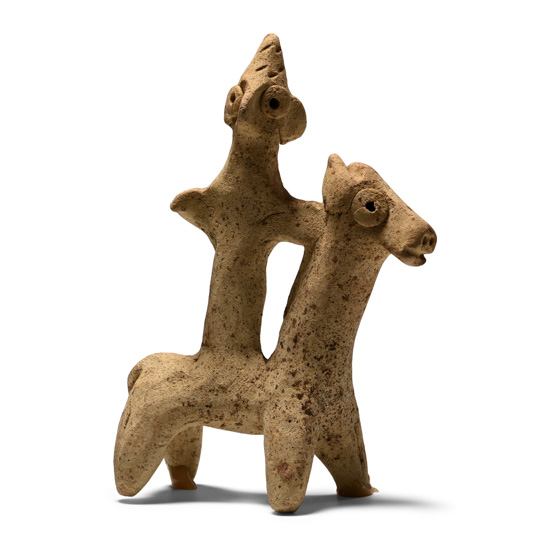
Syro-Hittite Terracotta Horse and Rider
Early 1st millennium B.C.Sold for (Inc. bp): £1,170
Modelled standing facing, with stub legs, ears pinned backwards, stylised detailing to the eyes and muzzle; the rider shown mounted sideways indicating a female rider, holding the horse's cropped mane with the left hand, the right hand extended outwards, pinched face with applied circular eyes, detailing to conical headpiece; mounted on a custom-made display base. 317 grams total, 15 cm high including stand
Collection of a deceased London gentleman, 1979-1999, by descent. From the private collection of John Meredith, acquired since the 1990s; thence by descent. Accompanied by a copy of a thermoluminescence analysis report no.N122k29 from Oxford Authentication. -
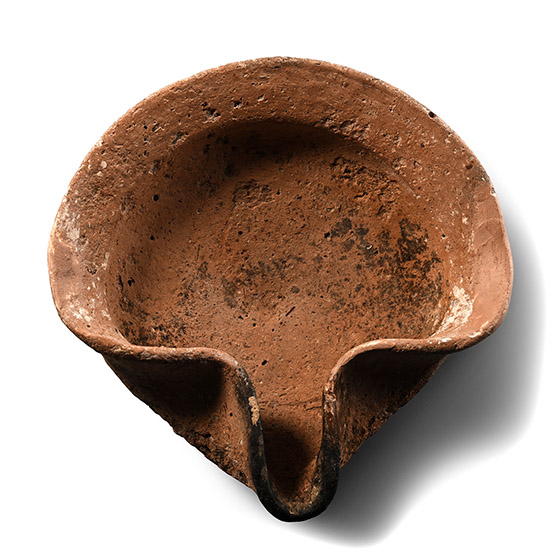
Large Bronze Age Holy Land Terracotta Pinched Rim Oil Lamp
Kingdom of Judah, circa 930-700 B.C.Sold for (Inc. bp): £143
Discoid in plan with carinated rim pinched to form a nozzle. 128 grams, 11.7 cm
From the Lloyd and Jeanne Raport collection, Washington, D.C. and Florida, USA, formed between 1972-2000. Acquired through Bonhams, London, UK. -
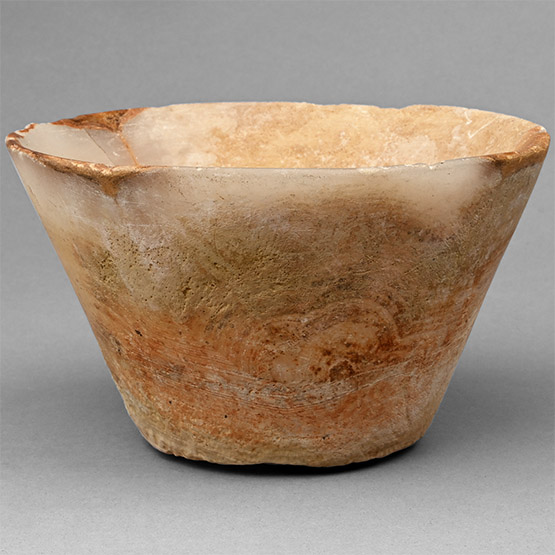
Sumerian Alabaster Bowl
3rd millennium B.C.Sold for (Inc. bp): £572
Conical with rounded rim and slightly rounded base. 1.09 kg, 16 cm wide
Ex private collection, Contessa L.J., since the 1980s. Private collection, Switzerland, 2001.
