
Loading, please wait...
LOT 0514
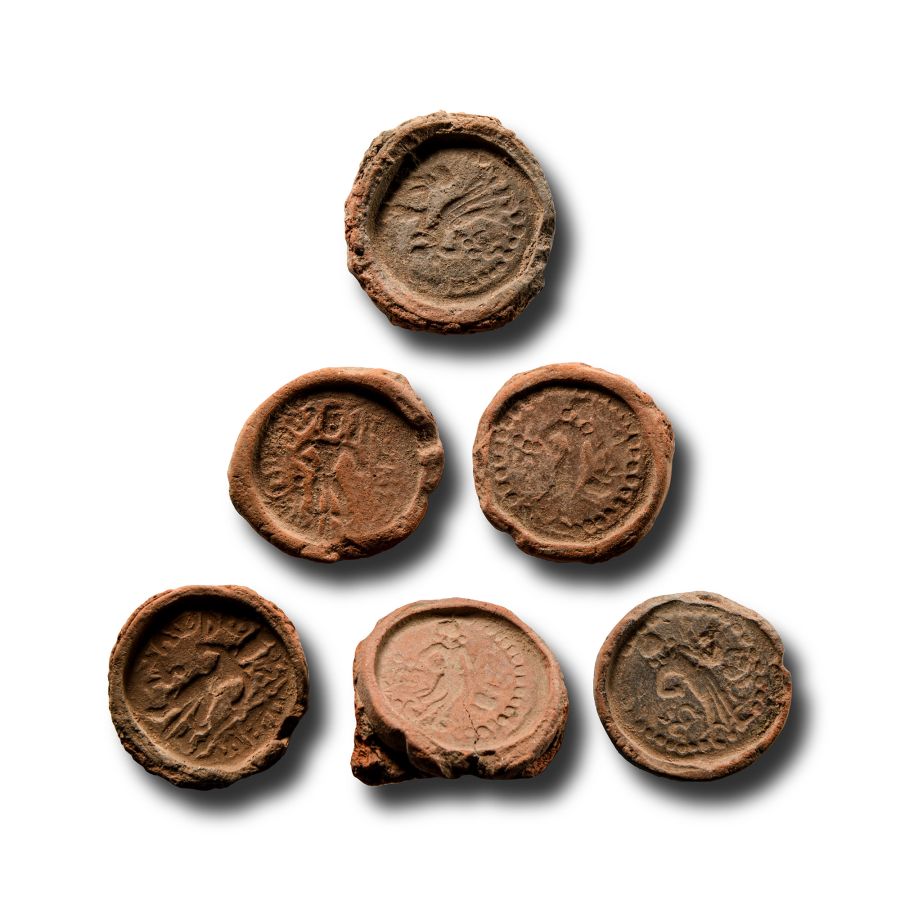
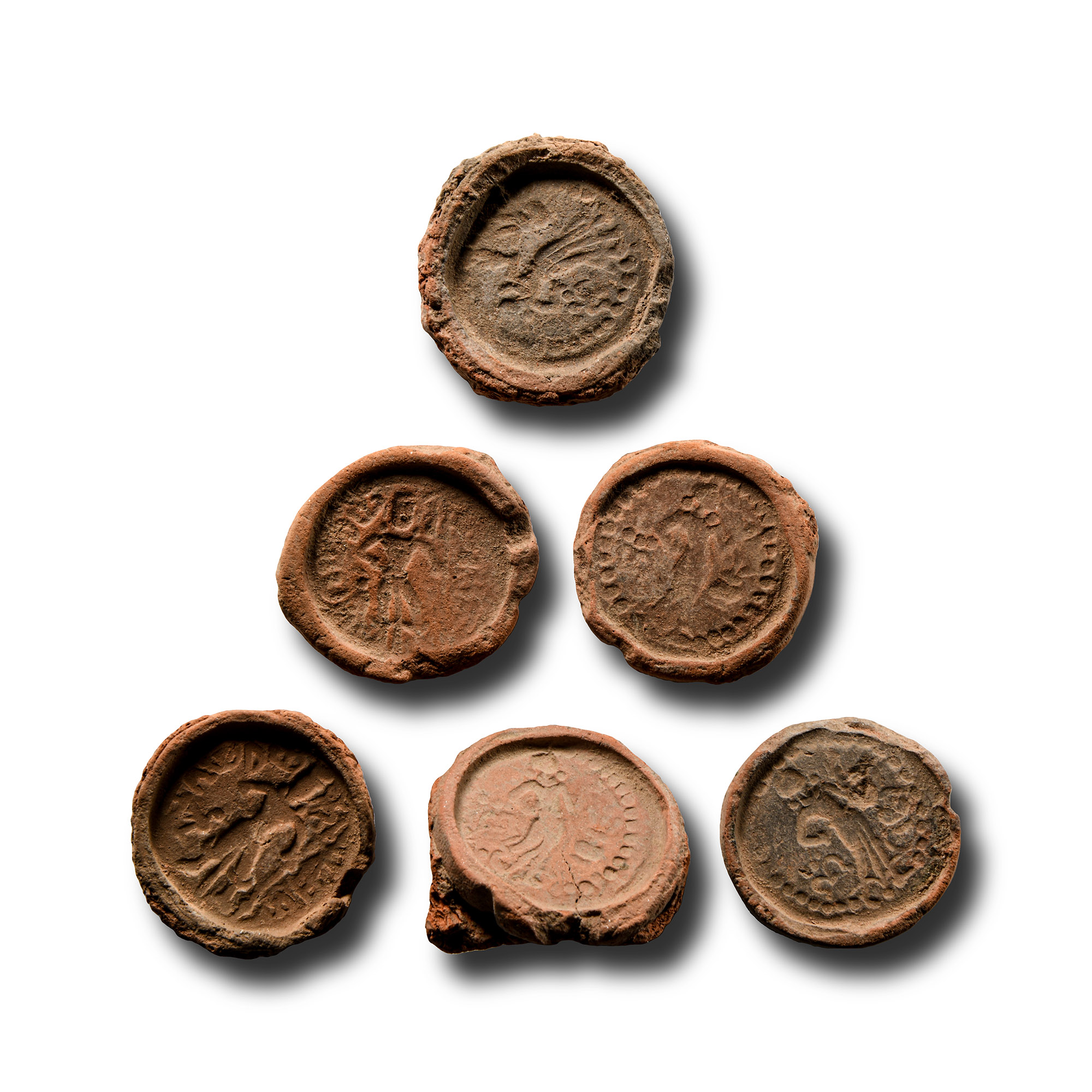
Indo-Greek Terracotta Forger's Mold Group
CIRCA 2ND-1ST CENTURY B.C.
1 - 1 1/4 in. (40 grams total, 27-32 mm).
Group of discoid clay moulds for casting contemporary counterfeit coins. [6, No Reserve]
ProvenancePrivate collection formed in the 1990s.
Acquired from a central London gallery.
Property of an Essex gentleman.
TimeLine Auctions follows a vetting process to ensure the authenticity and legality of all items, reinforcing our commitment to integrity and responsible trading. Each antiquity, antique, and coin lot undergoes thorough examination by a vetting committee of at least ten external specialists, professional trade association members, scientists, and archaeologists: Our Vetting Process
AUCTIONS:
TimeLine is a leading auction house specialising in antiquities, ancient art, collectables, natural history, coins, medals, and books. Our auctions offer museums, collectors, historians, and enthusiasts the opportunity to acquire unique and historically significant pieces.
-
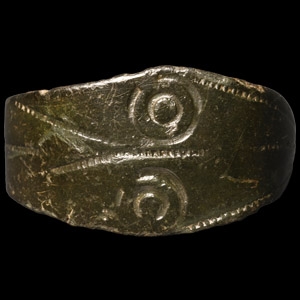
Greek Bronze Ring with Face
Circa 3rd-2nd century B.C.Sold for (Inc. bp): £117
With broad plaque, pointillé bands and roundels imitating a human mask. 7.47 grams, 27.25 mm overall, 23.27 mm internal diameter (approximate size British Y 1/2, USA 12 1/4, Europe 28.2, Japan 27)
From the collection of a High Wycombe, Buckinghamshire, UK, gentleman, circa 2000. -
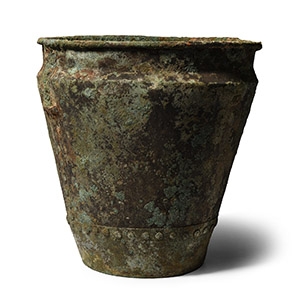
Greek Bronze Situla
5th-4th century B.C.Sold for (Inc. bp): £520
Tall vessel with dished underside, elegant carination at the shoulder, rolled rim; lateral vertical seams each covered by an applied rivetted strip, with remains of handle below the shoulder. 1.56 kg, 26 cm high
Ex Axel Guttmann Collection of Ancient Arms and Armour, Germany [1944-2001], AG 490. This lot has been checked against the Interpol Database of stolen works of art and is accompanied by search certificate no.11953-210857. -
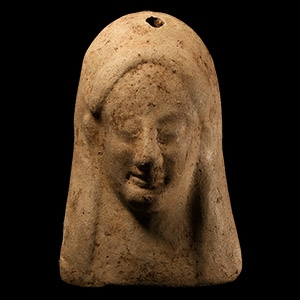
Greek Terracotta Protome Mask
Late 6th-early 5th century B.C.Sold for (Inc. bp): £156
Modelled as a female head with rounded oval face, slightly bulging eyes and pronounced chin, indistinct smiling mouth with thin lips, outline of ears; low straight polos with fastening hole. 130 grams, 12 cm
Acquired 1970s-1996. Property of a North American collector. London collection, 2016.
The figure belongs to a common type known from mainland Greece and the islands. The head clearly shows the so-called 'Archaic smile' visible on the dedicatory protomes of the same typology. They were terracotta votive offerings attached with a nail to the shrine of a goddess for ex-voto or to receive the grace of the represented goddess (Demeter?).
