
Loading, please wait...
LOT 1138
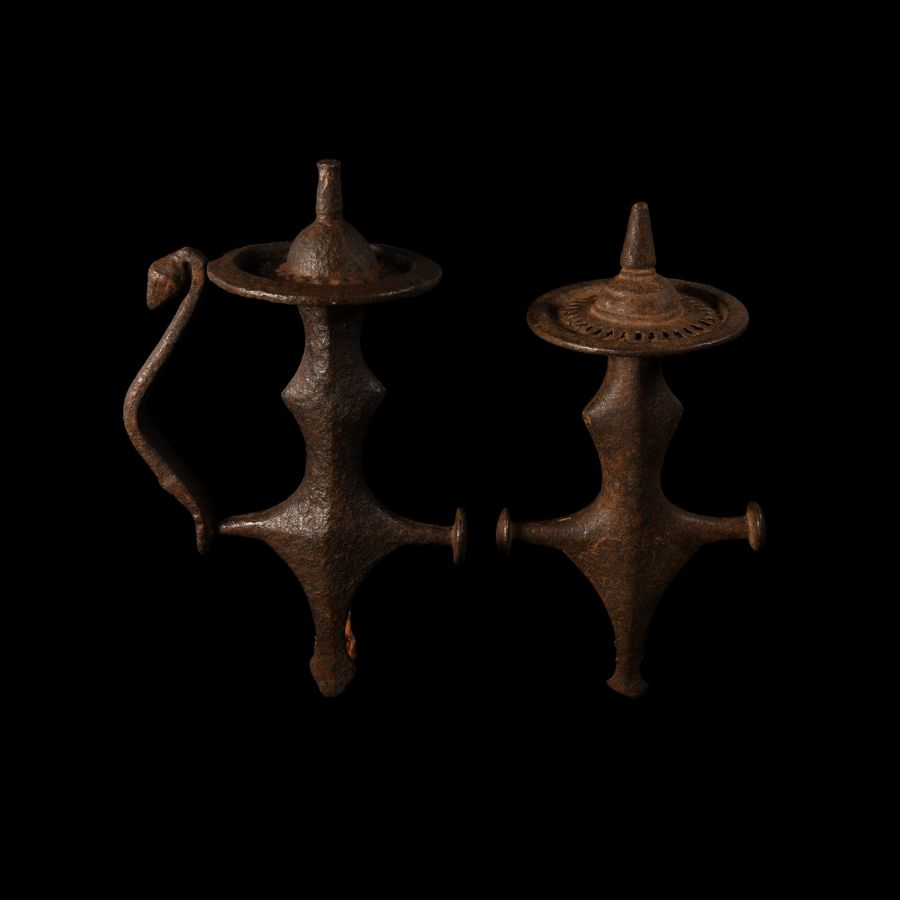
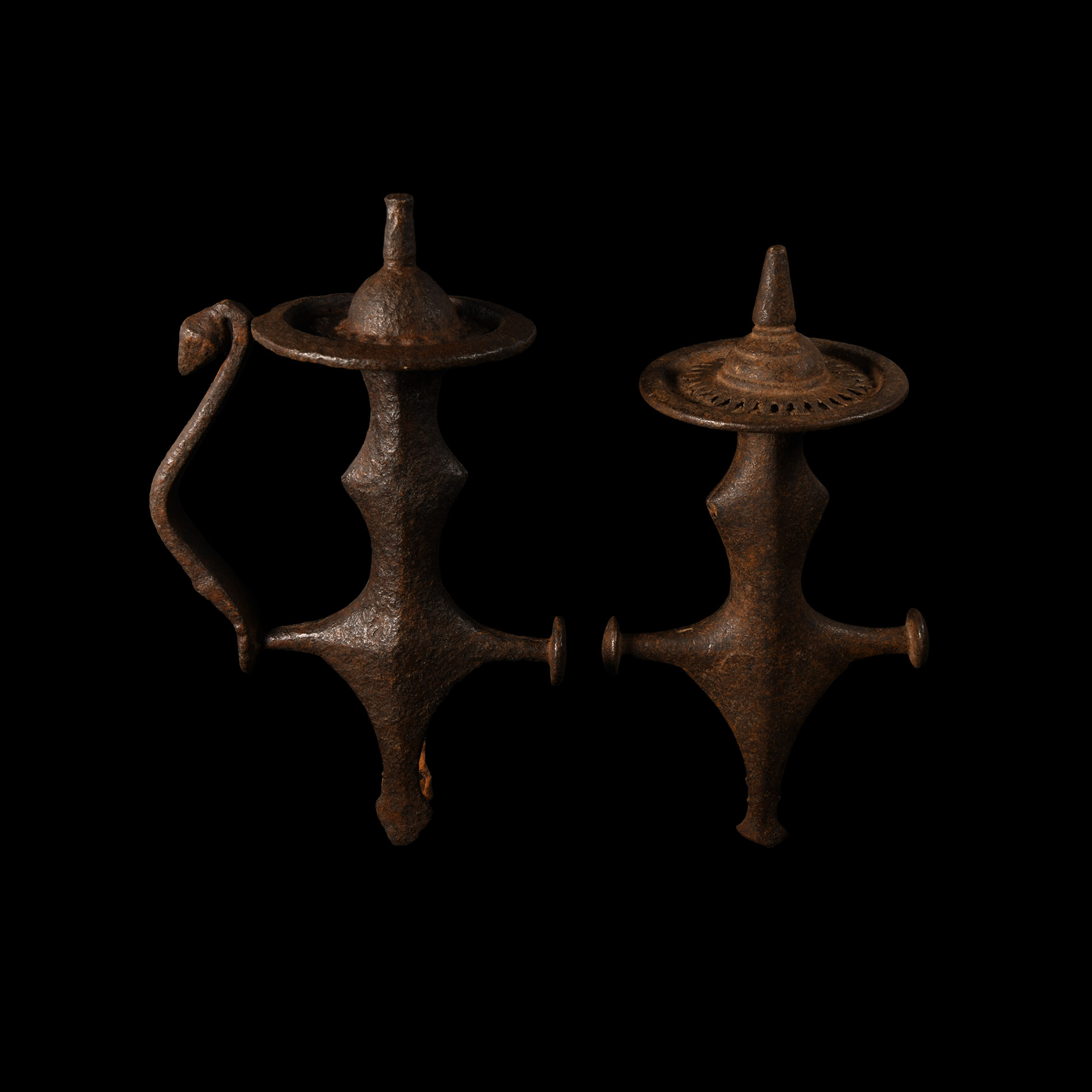
Indian Tulwar Iron Sword Hilt Pair
19TH CENTURY A.D.
7 - 7 1/4 in. (528 grams total, 18-18.5 cm).
Both with lozenge-section quillon block, shaped langet and scalloped grip, quillon with discoid terminals; one with knuckle guard with conical terminal. [2, No Reserve]
ProvenanceAcquired on the UK art market.
Property of a Ruislip, UK, gentleman, by inheritance.
TimeLine Auctions follows a vetting process to ensure the authenticity and legality of all items, reinforcing our commitment to integrity and responsible trading. Each antiquity, antique, and coin lot undergoes thorough examination by a vetting committee of at least ten external specialists, professional trade association members, scientists, and archaeologists: Our Vetting Process
AUCTIONS:
TimeLine is a leading auction house specialising in antiquities, ancient art, collectables, natural history, coins, medals, and books. Our auctions offer museums, collectors, historians, and enthusiasts the opportunity to acquire unique and historically significant pieces.
-
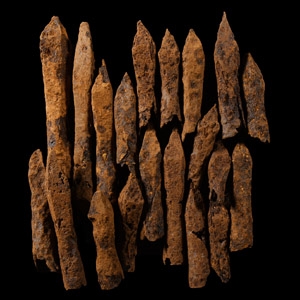
Medieval Iron Crossbow Bolt Group
Circa 12th-15th century A.D.Sold for (Inc. bp): £143
Mainly comprising socketted bolts with tapering and facetted square-section tips. 682 grams total, 4.6-11.7 cm
Acquired 1990s-early 2000s. East Anglian private collection.
In medieval warfare crossbows were of great importance, used especially by infantry. An improvement of their effectiveness by inceasing the weight of projectiles as well the strength of the bow caused a clear evolution of body defences between 13th and 15th centuries A.D. -
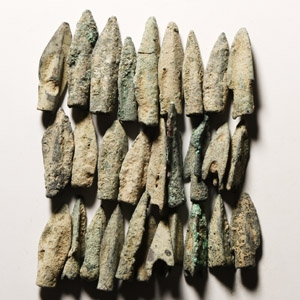
Achaemenid Bronze Arrowhead Group
6th-4th century B.C.Estimate: £100 - 140 (+bp*)
Opening Bid: £50
Comprising 29 shafted trilobate and pyramidal points, some with barbs. 108 grams total, 23-36 mm
Acquired 1980-2015. Ex Abelita family collection.
The Persians used the bow to forge their empire. They would have used bronze or iron arrows of various types which varied in length from three to four centimetres. Many were trilobite in shape, varying from the simple triangular head, the leaf-shaped head or the triangular head with square-section, tang and directional plumes. The old types, created by the Luristan armourers, were still in use in the Achaemenid period. -
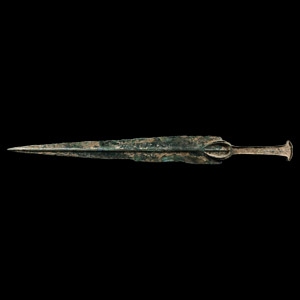
Marlik Bronze Sword
14th-10th century B.C.Sold for (Inc. bp): £416
With a slender triangular blade, raised midrib, penannular guard and scooped shoulders, columnar grip with two gusseted hoops, crescent pommel. 265 grams, 46 cm
Acquired 1980-2015. Ex Abelita family collection.
This short sword or dagger belongs to the category of blades with pennanular guard, with hilt and guard cast in one piece with the grip. Negahban excavated similar weapons from the Marlik cemeteries. Often this type combines grip and penannular guard with flanged hilts open to accept inlays.
