
Loading, please wait...
LOT 1113
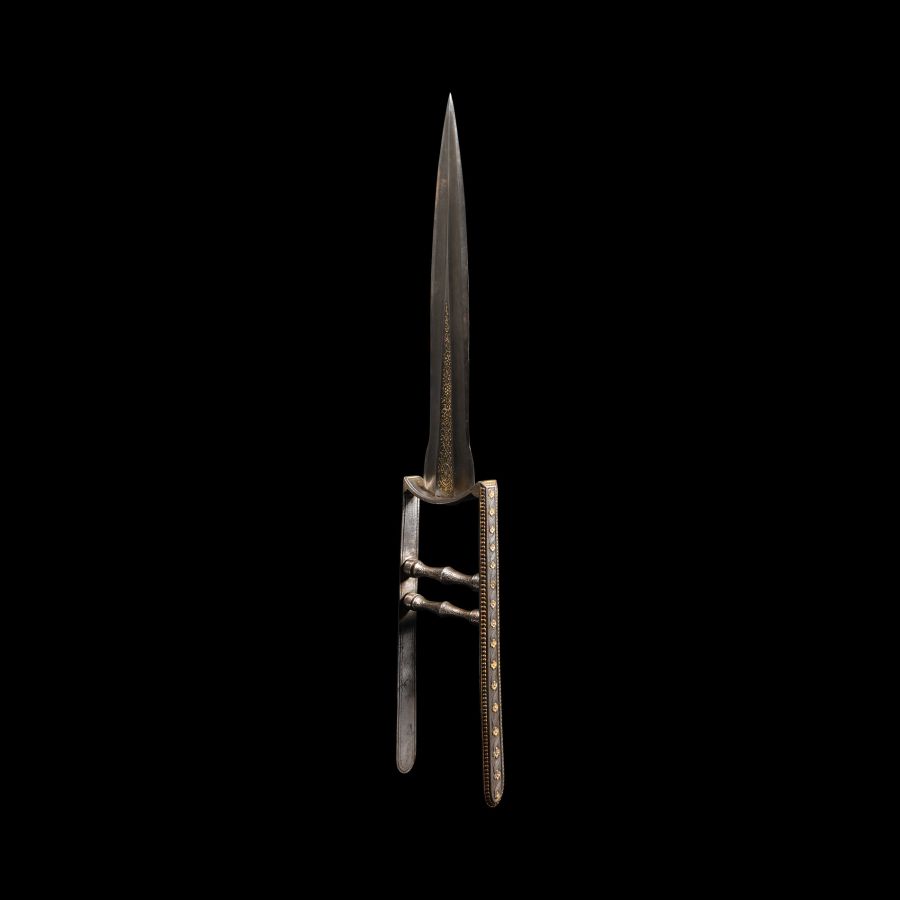
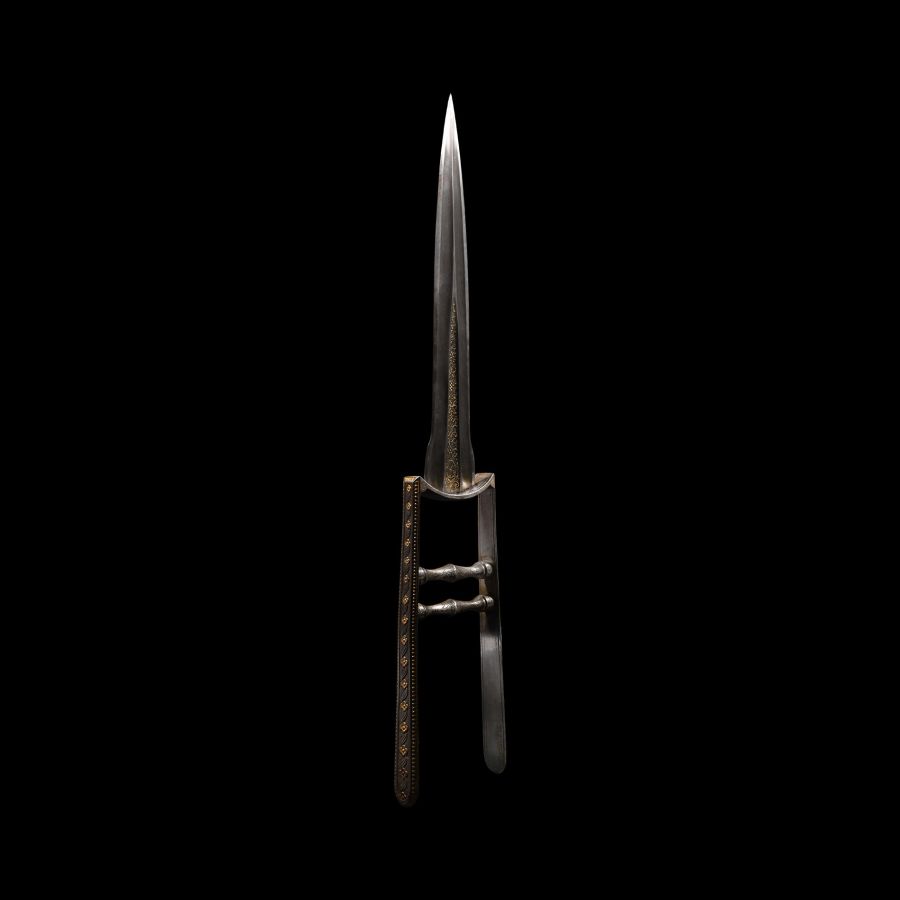
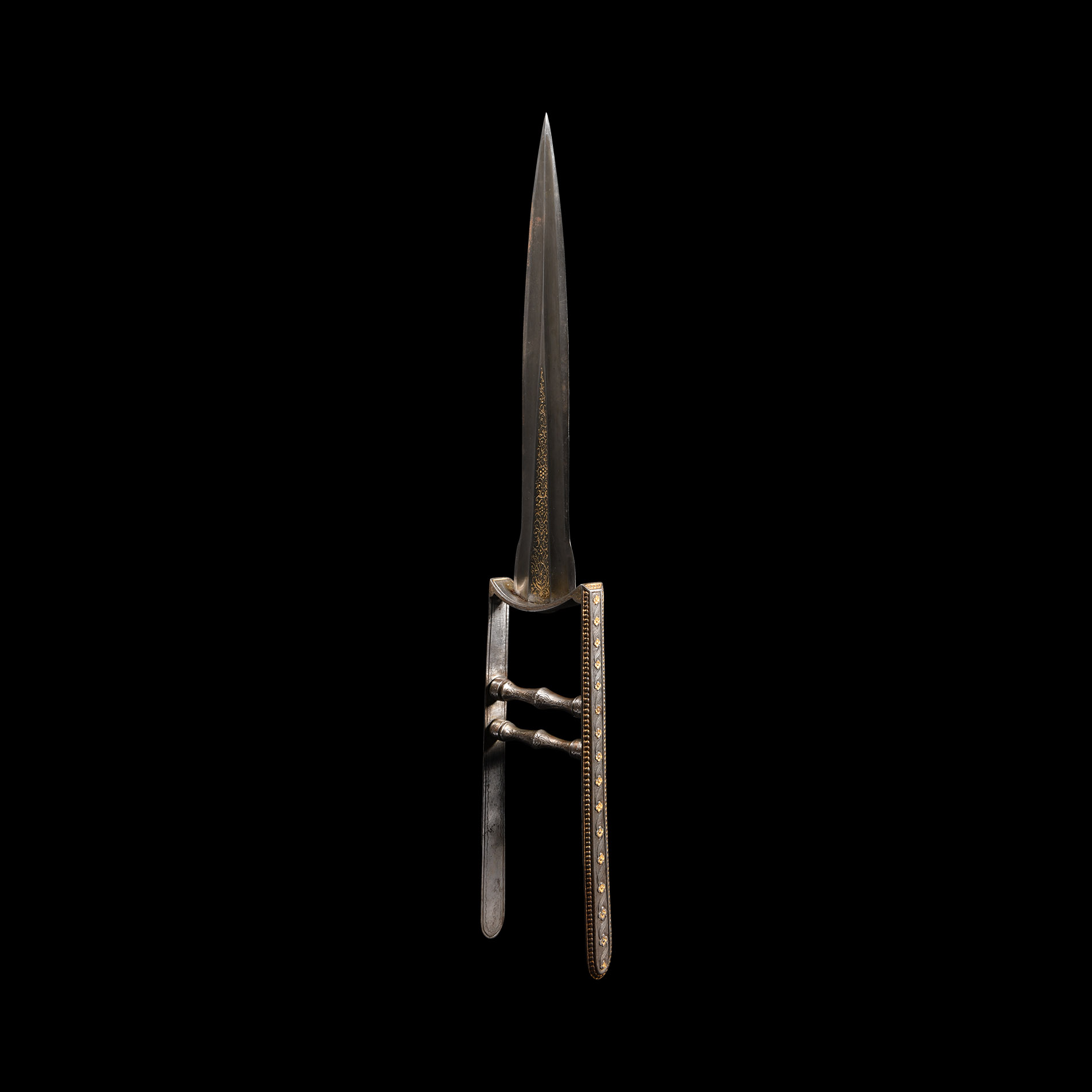
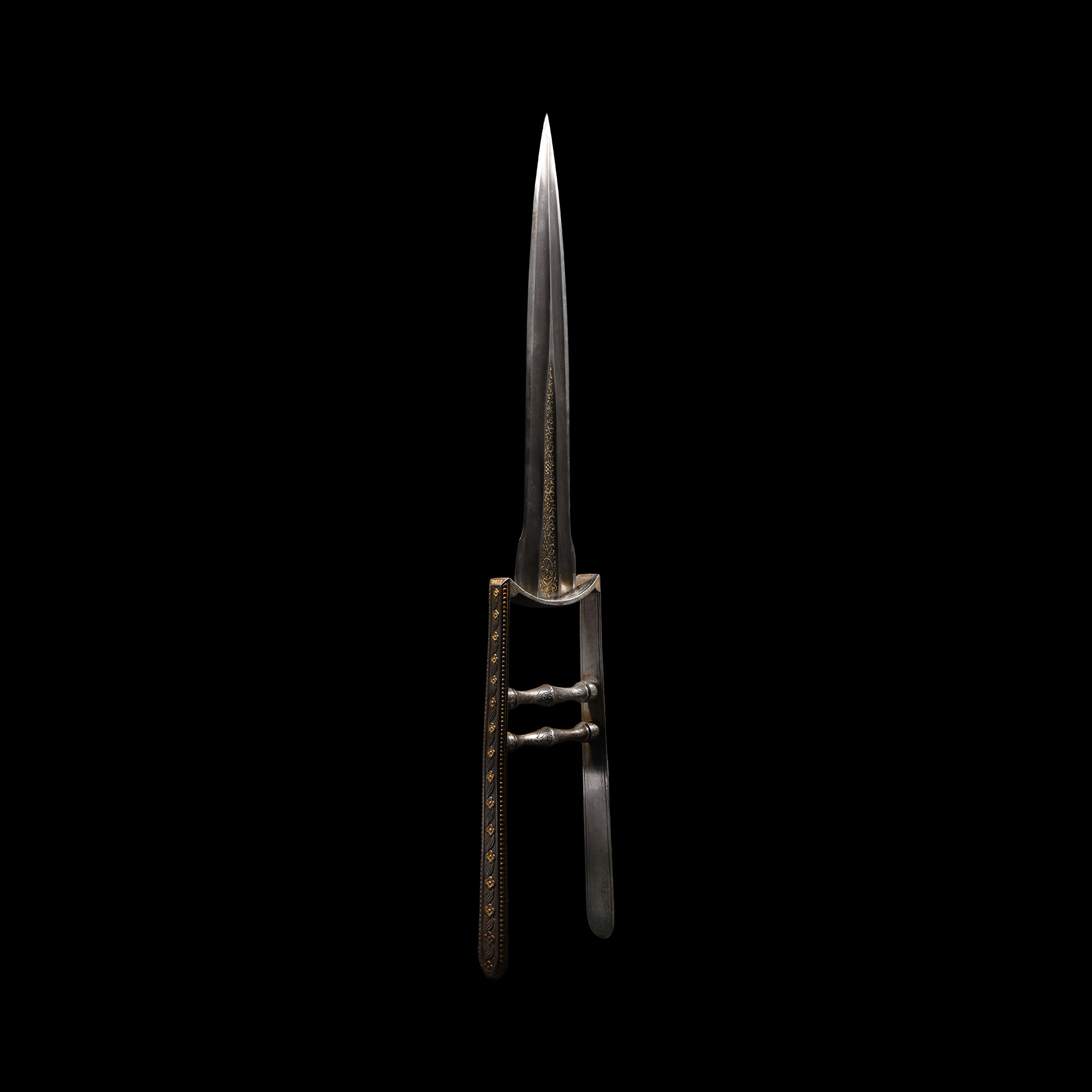
Indian Quatar Iron Dagger
18TH-19TH CENTURY A.D.
18 7/8 in. (488 grams, 48 cm).
Comprising a broad blade tapering to an armour-piercing point, the steel side bars and balustered grips decorated with copper Koftgari work flowers and scrolls.
ProvenanceProperty of a London gallery.
LiteratureCf. Mierzejewska, A., Chodiński, A.R., Broń Orientu, (Weapons of the Orient) Catalogue of the Toruń Regional Museum, Toruń, 2009, fig.35, p.48.
FootnotesUnique to South Asia, the quatar or katar was a dagger that held at the crossbars with a clenched fist. The weapon was meant to be thrust into the opponent or prey from a close range. Rajput and Mughal royalty used this weapon to hunt tigers and even crocodiles to demonstrate their bravery and martial skill.
CONDITIONTimeLine Auctions follows a vetting process to ensure the authenticity and legality of all items, reinforcing our commitment to integrity and responsible trading. Each antiquity, antique, and coin lot undergoes thorough examination by a vetting committee of at least ten external specialists, professional trade association members, scientists, and archaeologists: Our Vetting Process
AUCTIONS:
TimeLine is a leading auction house specialising in antiquities, ancient art, collectables, natural history, coins, medals, and books. Our auctions offer museums, collectors, historians, and enthusiasts the opportunity to acquire unique and historically significant pieces.
LOT 1113
Indian Quatar Iron Dagger
Estimate £900 - 1,200€1,040 - 1,390 (for guidance only)$1,220 - 1,620 (for guidance only)
-
Indian Quatar Iron Dagger
18th-19th century A.D.Estimate: £900 - 1,200 (+bp*)
Opening Bid: £500
Comprising a broad blade tapering to an armour-piercing point, the steel side bars and balustered grips decorated with copper Koftgari work flowers and scrolls. 488 grams, 48 cm
General condition very good.
Property of a London gallery.
Unique to South Asia, the quatar or katar was a dagger that held at the crossbars with a clenched fist. The weapon was meant to be thrust into the opponent or prey from a close range. Rajput and Mughal royalty used this weapon to hunt tigers and even crocodiles to demonstrate their bravery and martial skill. -
Luristan Bronze Short Sword
Circa 1000 B.C.Estimate: £400 - 600 (+bp*)
Opening Bid: £210
The blade with a tapering profile, triangular in overall form, with square shoulders, penannular guard with strong midrib, flanged hilt with crenellated grip, widening slightly into a fan-shaped pommel; tip repaired. 383 grams, 44 cm long
Acquired 1980-2015. Ex Abelita family collection.
These types of short sword or dirks were usually cast in one piece, and the penannular rib in relief was cast on at the same time with the handle of the blade. In some cases, however, the penannular rib was later cast on the dagger, possibly to strengthen a weak point at the junction of hilt and blade. The flanged hilt was originally filled with organic material like bone. -
.jpg)
German WWII Stick Grenade Group
1914-1945 A.D.Sold for (Inc. bp): £221
German practice stick grenade group including: a WWII model 24 Stielhandgranate with pierced red-coloured head; together with a restored relic head of WWI date. 684 grams, 44.5 cm
Acquired from The Lanes Armoury, Brighton, and Graham Currie Militaria. The Kusmirek Collection, UK. Accompanied by copies of the listings.
The brb-code name for Richard Rinker GmbH, was used for training German armed forces during WWII. Its distinctive appearance lead to it being dubbed the stick grenade' or 'potato masher' in British army slang. It used a friction igniter, with a pull cord running through the hollow wooden handle terminating in a porcelain ball.
